Stucco Repair and Restoration Florida: 2026 Guide
Florida's coastal climate presents unique challenges for building exteriors, particularly stucco surfaces that protect thousands of commercial and residential properties across the state. Salt-laden air, intense UV radiation, tropical storms, and high humidity levels constantly test the durability of exterior cladding systems. Property owners and managers throughout South Florida increasingly recognize that proactive stucco repair and restoration Florida services are essential investments rather than optional maintenance tasks. Understanding when repairs are needed, what methods work best, and how to prevent future damage can save substantial money while protecting building integrity and property values.
Understanding Stucco Damage in Florida's Climate
Florida's environment creates a perfect storm for stucco deterioration. The combination of salt air from ocean proximity, frequent rain during summer months, and temperature fluctuations causes expansion and contraction that weakens stucco bonds over time.
Common damage indicators include:
- Hairline cracks expanding into spiderweb patterns
- Hollow sounds when tapping the surface
- Discoloration or dark staining indicating moisture intrusion
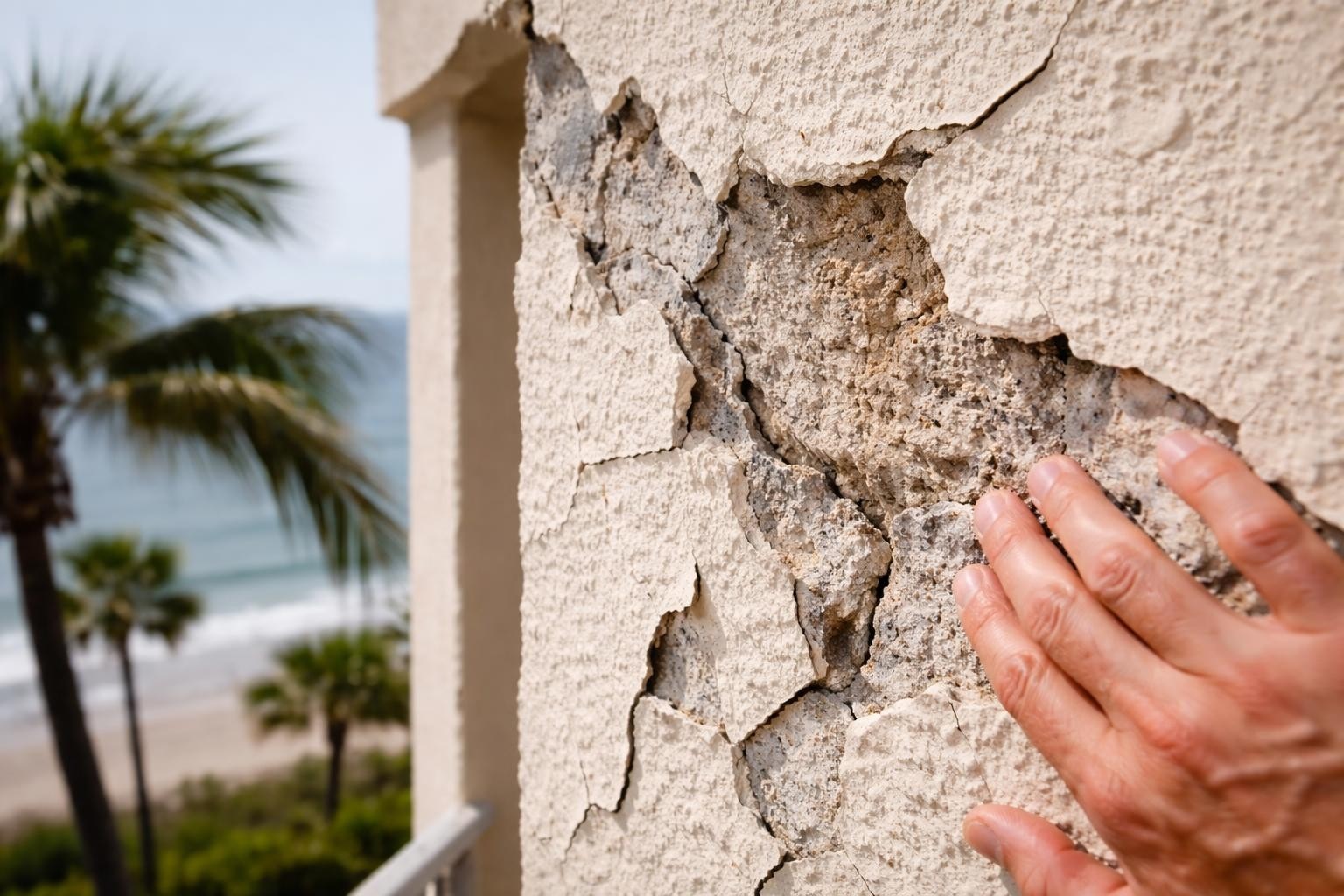
- Visible spalling or delamination where layers separate
- Soft spots that yield under pressure
- Efflorescence (white crystalline deposits) on the surface
The signs of stucco damage in Florida homes often appear gradually, making regular inspections critical for early detection. Many property owners dismiss minor cracks as cosmetic issues, but these openings allow moisture penetration that accelerates deterioration exponentially.
The Science Behind Stucco Failure
Stucco systems consist of multiple layers working together: a moisture barrier, metal lath, base coats, and finish coat. When water breaches the finish coat through cracks or damaged sealants, it becomes trapped behind the surface. Florida's warm temperatures create ideal conditions for moisture to remain, causing the metal lath to corrode and the base coat to lose adhesion.
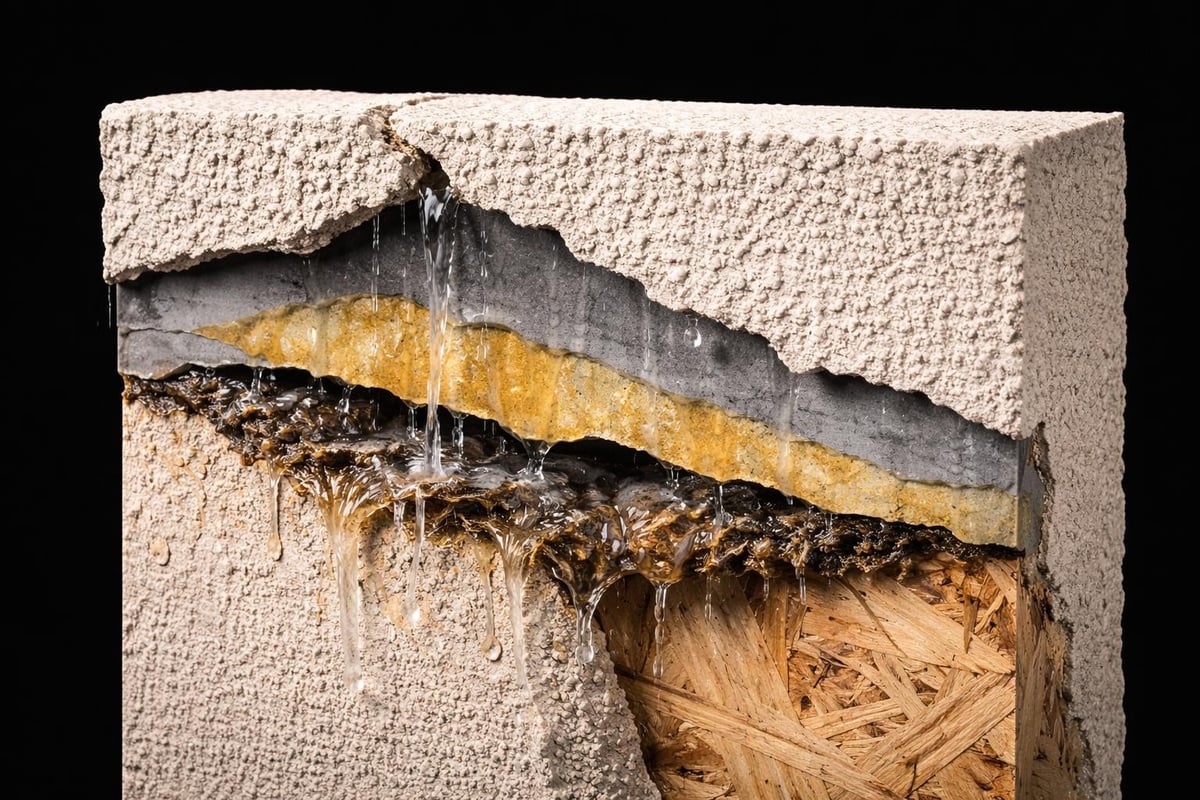
According to The Stucco Institute's analysis of Florida stucco, many failures result from improper installation rather than material deficiencies. Missing or improperly installed weep screeds, inadequate drainage planes, and insufficient curing time during application contribute significantly to premature failures.
Inspection Requirements and Building Recertification
Florida's building recertification programs now mandate comprehensive exterior inspections for aging structures. The milestone building recertification inspections process specifically examines stucco conditions as part of structural integrity assessments.
| Inspection Component | What's Evaluated | Why It Matters |
|---|---|---|
| Visual Assessment | Cracks, stains, delamination | Identifies visible damage patterns |
| Moisture Testing | Water intrusion levels | Detects hidden deterioration |
| Adhesion Testing | Bond strength | Determines repair extent |
| Structural Review | Underlying support | Ensures safety compliance |
Property managers dealing with recertification deadlines need qualified professionals who understand both stucco systems and Florida building codes. The forensic water intrusion investigations component often reveals that stucco damage extends beyond visible areas, requiring more extensive restoration than initially anticipated.
Documentation Standards for Compliance
Building departments require detailed documentation of stucco conditions and repairs. Engineers must provide photographs, moisture readings, and written assessments that meet specific regulatory standards. This documentation becomes part of the permanent building file and influences future inspection cycles.
Professional stucco repair and restoration Florida contractors maintain comprehensive records showing repair locations, methods used, and materials specified. This traceability proves essential during subsequent inspections and helps property owners demonstrate proactive maintenance.
Repair Methods and Material Selection
Modern stucco restoration employs various techniques depending on damage severity and building conditions. The International Masonry Institute's stucco restoration guidelines provide detailed protocols for assessing damage and selecting appropriate repair strategies.
Repair categories include:
- Cosmetic crack filling for minor surface cracks under 1/8 inch
- Partial depth repairs removing and replacing damaged sections while preserving sound material
- Full depth restoration removing stucco to the substrate and rebuilding all layers
- Complete removal and replacement for extensively compromised systems
Matching Existing Finishes
One significant challenge in stucco repair and restoration Florida projects involves matching textures and colors of existing finishes. Aged stucco develops unique patinas that new applications cannot immediately replicate.
Skilled contractors create sample panels testing different mix designs, application techniques, and curing methods before proceeding with full repairs. They may adjust cement types, add specific aggregates, or modify application tools to achieve acceptable matches.
| Material Component | Options Available | Selection Criteria |
|---|---|---|
| Cement Base | Portland, masonry, colored | Strength, appearance, compatibility |
| Aggregates | Sand, perlite, vermiculite | Texture, weight, thermal properties |
| Fibers | Fiberglass, synthetic | Crack resistance, durability |
| Additives | Water reducers, plasticizers | Workability, adhesion, flexibility |
The sealed stucco cladding design manual provides technical specifications ensuring repairs meet current performance standards for moisture management and structural attachment.
Water Intrusion and Drainage Solutions
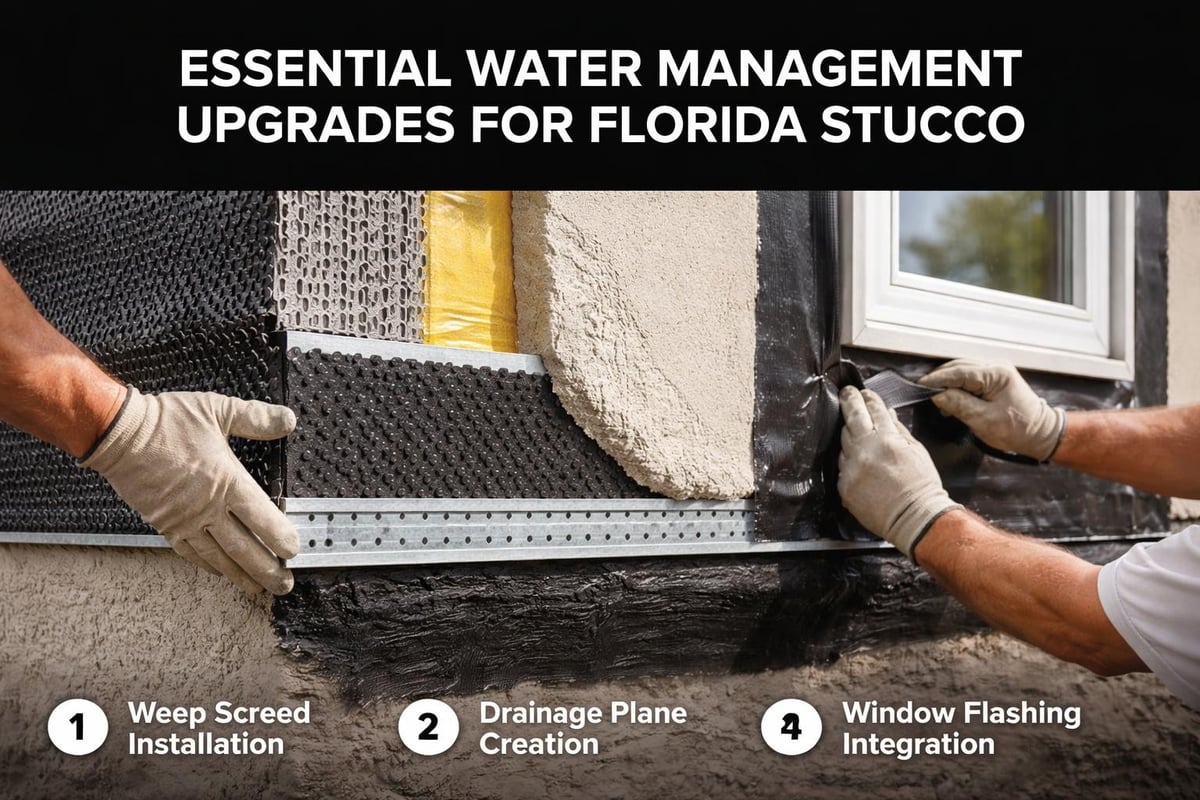
Effective stucco repair and restoration Florida services address underlying water management issues, not just surface damage. Simply patching visible cracks without correcting moisture sources leads to recurring failures.
Critical water management components include:
- Properly designed and installed weep screeds at grade transitions
- Functional drainage planes behind stucco assemblies
- Sealed penetrations around windows, doors, and utilities
- Adequate roof overhangs protecting walls from direct rain
- Functional gutters and downspouts directing water away from foundations
Many South Florida buildings built before modern moisture management standards lack adequate drainage systems. Restoration projects often require retrofitting water-resistive barriers and creating drainage pathways that weren't part of original construction.
The relationship between concrete restoration and structural repairs becomes evident when water damage extends beyond stucco into underlying concrete or masonry. Comprehensive assessments identify all affected building components requiring attention.
Modern Moisture Barrier Technologies
Contemporary stucco restoration incorporates advanced moisture barriers that weren't available during original construction of many South Florida buildings. These barriers provide redundant protection against water intrusion while allowing vapor transmission to prevent trapped moisture problems.
Building wraps, fluid-applied membranes, and self-adhering sheet products each offer specific advantages depending on substrate conditions and exposure levels. Professional contractors evaluate multiple factors when recommending moisture barrier systems for specific projects.
Cost Factors and Budget Planning
Stucco repair and restoration Florida pricing varies significantly based on damage extent, building height, access difficulties, and material specifications. Property managers need realistic budget estimates when planning 40-year recertification cost expenditures.
Primary cost drivers include:
- Square footage requiring repair or replacement
- Building height and scaffolding requirements
- Extent of underlying damage to substrates
- Color and texture matching complexity
- Required moisture barrier upgrades
- Permit and engineering fees
- Project schedule constraints
Simple crack repairs might cost $8-15 per square foot, while complete stucco removal and replacement with modern drainage systems can exceed $25-40 per square foot. Buildings requiring extensive structural repairs beneath stucco finishes face substantially higher costs.
Reserve Study Implications
Condominium associations and commercial property owners should account for stucco maintenance in long-term financial planning. The SIRS structural integrity reserve study process helps quantify future repair needs and establish appropriate funding levels.
Regular maintenance programs extending stucco service life prove far more economical than emergency repairs following catastrophic failures. Establishing dedicated reserve accounts for exterior envelope maintenance ensures funds availability when repairs become necessary.
Selecting Qualified Contractors
The quality of stucco repair and restoration Florida work depends heavily on contractor expertise and experience. Not all contractors possess the specialized knowledge required for lasting repairs in Florida's demanding environment.
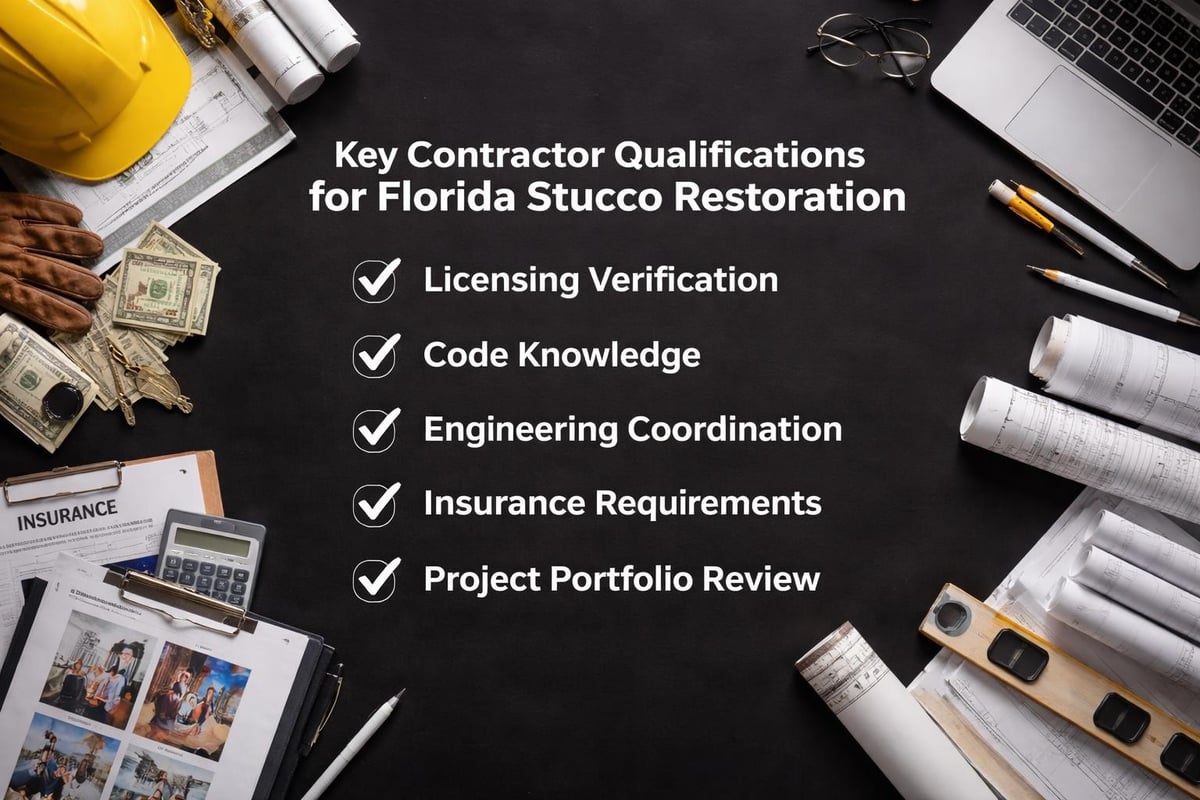
Evaluation criteria for contractors:
- Valid Florida contractor's license in appropriate classification
- Demonstrated experience with similar building types
- Understanding of current Florida Building Code requirements
- Capacity for engineering coordination and permit processing
- Liability insurance and workers' compensation coverage
- References from comparable recent projects
The stucco and masonry repair services sector includes contractors ranging from small residential specialists to large commercial restoration firms. Matching contractor capabilities to project requirements ensures successful outcomes.
Engineering Coordination Requirements
Complex stucco restoration projects require structural engineering design analysis repair services to ensure repairs adequately address underlying issues. Engineers design repair details, specify materials, and oversee implementation to ensure code compliance.
Building departments typically require sealed engineering drawings and calculations for significant stucco repairs, particularly when structural modifications or enhanced attachment systems are needed. The permitting process adds time and cost but ensures work meets safety standards.
Maintenance Programs for Extended Service Life
Preventive maintenance significantly extends stucco service life and reduces long-term costs. Property managers implementing regular inspection and minor repair programs avoid expensive emergency restoration projects.
| Maintenance Activity | Recommended Frequency | Purpose |
|---|---|---|
| Visual inspection | Quarterly | Early damage detection |
| Pressure washing | Annually | Remove contaminants, prevent staining |
| Crack sealing | As needed | Prevent moisture intrusion |
| Caulking inspection/replacement | Every 3-5 years | Maintain waterproofing at joints |
| Professional assessment | Every 5 years | Identify developing issues |
The Florida Community Association Journal regularly features articles on building maintenance best practices, including stucco care protocols appropriate for South Florida conditions.
Seasonal Considerations
Florida's distinct wet and dry seasons influence maintenance timing. Conducting major repairs during the dry season (November through April) provides optimal curing conditions and minimizes weather-related complications.
Storm preparation includes inspecting stucco for loose sections that high winds might dislodge, potentially causing additional building damage or creating dangerous debris. Post-storm inspections identify new damage requiring prompt attention before minor issues escalate.
Code Compliance and Modern Standards
Current Florida Building Code provisions addressing stucco installation and repair reflect lessons learned from past hurricane damage and building failures. Repair work must meet current standards even when original construction predates these requirements.
Key code considerations include:
- Wind load resistance requirements based on location
- Impact resistance for hurricane-prone regions
- Moisture management and drainage provisions
- Attachment specifications for various substrates
- Fire resistance ratings for specific occupancies
Projects involving violation and unsafe structures resolution often include stucco deficiencies contributing to code violations. Bringing these conditions into compliance requires understanding both current requirements and practical implementation strategies.
Product Approval and Testing
Materials used in Florida stucco repair and restoration must have appropriate product approvals demonstrating compliance with building code requirements. The Florida Building Code Product Approval system verifies that specific products meet performance standards for Florida conditions.
Contractors should specify approved products and maintain documentation proving compliance. Using unapproved materials risks inspection rejections and creates potential liability issues if failures occur.
Hurricane Resilience and Impact Resistance
South Florida's hurricane exposure makes impact resistance a critical consideration in stucco systems. While traditional stucco provides some impact protection, enhanced systems offer superior performance during severe weather events.
Modern impact-resistant stucco formulations incorporate fibers and polymers improving flexibility and damage resistance. These systems better withstand flying debris impacts common during hurricanes while maintaining their protective function.
The stucco delamination and spalling repairs often required after major storms demonstrate the importance of resilient exterior systems. Properties with properly maintained, high-quality stucco installations experience significantly less storm damage than those with deteriorated or substandard systems.
Post-Storm Assessment Protocols
Following hurricane events, comprehensive exterior assessments identify both obvious and hidden damage requiring repair. Insurance claims often depend on thorough documentation of storm-related damage versus pre-existing conditions.
Professional contractors experienced with insurance processes can provide detailed damage assessments supporting claims while identifying immediate repairs needed to prevent further deterioration. The distinction between storm damage and maintenance deficiencies significantly impacts insurance coverage and claim outcomes.
Integration with Building Systems
Stucco repair and restoration Florida projects don't exist in isolation. Exterior envelope work interconnects with roofing, windows, doors, and waterproofing systems requiring coordinated approaches.
Related building components requiring coordination:
- Roof-to-wall transitions and flashing details
- Window and door perimeter sealing
- Balcony and terrace waterproofing interfaces
- Expansion joint systems
- Foundation waterproofing connections
Comprehensive restoration projects address all interconnected systems simultaneously, ensuring compatibility and avoiding conflicts between different repair scopes. Piecemeal approaches addressing individual components separately often result in interface failures and recurring problems.
Projects requiring electrical system upgrades repairs or other interior improvements provide opportunities to coordinate exterior stucco restoration, minimizing disruption and optimizing scheduling efficiency.
Environmental and Sustainability Considerations
Modern stucco repair and restoration increasingly incorporates sustainable practices and materials. Energy efficiency improvements, reduction of construction waste, and use of low-VOC materials align with green building principles.
Stucco naturally provides thermal mass benefiting energy performance, particularly in Florida's climate. Properly maintained stucco systems contribute to building efficiency while protecting against moisture damage that could create mold and indoor air quality problems.
Some property owners choose to enhance stucco systems with insulation layers during restoration projects, improving thermal performance beyond original construction. These upgrades require careful moisture management design preventing trapped moisture issues.
Protecting your building's exterior through professional stucco repair and restoration addresses immediate damage while preventing costly future problems that compromise structural integrity and property values. Florida's unique climate demands specialized expertise combining construction knowledge, engineering principles, and code compliance to deliver lasting solutions. Whether you're facing milestone recertification requirements, addressing water intrusion concerns, or planning preventive maintenance, Souffront Construction and Engineering provides the comprehensive inspection, engineering, and restoration services South Florida property owners need to protect their investments with confidence.