Services of Civil Engineering: A Complete Guide 2026

Civil engineering forms the backbone of our built environment, encompassing everything from the design of infrastructure systems to the maintenance and rehabilitation of aging structures. For property owners and managers in South Florida, understanding the full scope of services of civil engineering is essential for protecting investments, ensuring safety, and maintaining compliance with evolving building codes. These professional services extend far beyond simple construction, incorporating detailed analysis, strategic planning, and expert execution that safeguard buildings against structural deterioration, environmental challenges, and regulatory requirements.
Understanding the Core Categories of Civil Engineering Services
The services of civil engineering span multiple specialized disciplines, each addressing distinct aspects of infrastructure and building performance. These services work together to create, maintain, and improve the structures that communities depend on daily.
Structural engineering represents one of the most critical branches, focusing on the analysis, design, and evaluation of load-bearing systems within buildings and infrastructure. Engineers in this field assess how structures withstand forces from gravity, wind, seismic activity, and environmental conditions. For South Florida properties, structural analysis becomes particularly vital given the region's exposure to hurricanes, saltwater corrosion, and soil settlement issues.
Geotechnical engineering examines soil conditions, foundation systems, and ground stability. This discipline becomes essential during new construction planning and when existing buildings experience foundation movement or settlement. Geotechnical investigations inform critical decisions about foundation design, soil improvement strategies, and remediation approaches for compromised structures.

Infrastructure and Utility Systems Design
Civil engineers design and coordinate the complex network of systems that make buildings functional and safe. This includes water supply lines, sanitary and storm drainage systems, electrical distribution networks, and transportation infrastructure connecting properties to public roadways.
Modern civil engineering services emphasize sustainable infrastructure solutions that minimize environmental impact while maximizing efficiency and longevity. For commercial and residential properties, this translates to utility systems that reduce operating costs, comply with environmental regulations, and adapt to changing usage patterns.
| Infrastructure System | Engineering Considerations | Typical Challenges |
|---|---|---|
| Water Supply | Pressure requirements, pipe sizing, backflow prevention | Aging pipes, contamination risks, pressure fluctuations |
| Drainage Systems | Flow capacity, elevation changes, stormwater management | Flooding, sediment buildup, inadequate capacity |
| Electrical Distribution | Load calculations, redundancy, safety codes | Outdated panels, insufficient capacity, code violations |
| Site Grading | Slope analysis, erosion control, accessibility | Poor drainage, settlement, ADA compliance |
Inspection and Assessment Services
Building inspections constitute a fundamental category within the services of civil engineering, particularly as structures age and regulations evolve. Engineers conduct comprehensive evaluations to identify deficiencies, assess structural integrity, and document conditions for compliance purposes.
In Florida, milestone building inspections have become mandatory for older buildings following recent legislation aimed at preventing structural failures. These inspections require licensed engineers to thoroughly examine structural and life-safety systems, documenting findings in detailed reports that guide repair priorities.
- Visual assessments identify obvious defects, deterioration, and code violations
- Non-destructive testing uses advanced technologies to evaluate hidden conditions
- Material sampling and testing determines the properties and condition of building components
- Load testing verifies that structural elements can safely carry design loads
Forensic Engineering and Problem Diagnosis
When buildings experience failures, leaks, or unexplained damage, forensic engineering services investigate root causes and develop remediation strategies. This specialized branch combines detective work with technical analysis to understand why systems fail and how to prevent recurrence.
Water intrusion investigations represent a common forensic challenge in South Florida's humid climate. Engineers trace moisture pathways through building envelopes, identify compromised waterproofing systems, and specify repairs that address underlying causes rather than merely treating symptoms.
The integration of artificial intelligence in civil engineering is transforming how engineers analyze complex failure patterns, using machine learning algorithms to identify correlations that might escape traditional investigation methods.
Design and Engineering Documentation
Professional design services produce the detailed drawings, specifications, and calculations that guide construction and repair projects. These documents serve multiple purposes: securing permits, communicating design intent to contractors, establishing quality standards, and creating legal records of project requirements.
Structural engineering design services for repair projects involve more than simply replacing damaged components. Engineers must analyze existing conditions, determine load paths through compromised structures, and design interventions that restore or improve original capacity while respecting architectural constraints and budget limitations.
Permit-Ready Engineering Solutions
One significant value that civil engineering services provide is preparing documentation that satisfies regulatory requirements. Building departments require sealed engineering drawings and calculations before issuing permits for structural modifications, system upgrades, or major repairs.
This process involves:
- Code research to determine applicable requirements for the specific project type and location
- Design development creating solutions that meet code minimums while addressing client needs
- Calculation preparation documenting structural analysis, load determinations, and safety factors
- Drawing production illustrating construction details with sufficient clarity for contractor execution
- Specification writing describing materials, methods, and quality standards
- Agency coordination responding to plan review comments and securing approvals

Construction Support and Project Management
The services of civil engineering extend beyond design into active construction phases, where engineers provide oversight, quality control, and technical problem-solving. Construction administration ensures that built work conforms to design intent and meets performance standards.
Site observation involves periodic visits during construction to verify that contractors follow approved plans and specifications. Engineers document progress, identify deficiencies, and approve or reject work based on conformance with project requirements.
Shop drawing review examines contractor-prepared fabrication and installation drawings before materials are manufactured or work begins. This review catches coordination conflicts, material substitutions, or construction method problems before they become expensive field issues.
Testing and inspection coordination ensures that required quality control measures occur at appropriate construction stages. Comprehensive civil engineering approaches integrate materials testing, structural verification, and system commissioning throughout project delivery.
Resolving Construction Challenges
Field conditions rarely match assumptions made during design. Engineers provide value during construction by adapting designs to actual conditions, solving unforeseen problems, and maintaining project progress when obstacles arise.
For buildings undergoing concrete restoration and structural repairs, engineers frequently encounter conditions worse than anticipated or discover additional problems as deteriorated finishes are removed. Effective construction support includes rapid response to these discoveries, field engineering to develop solutions, and clear communication with property owners about scope and cost implications.
Specialized Building Recertification Services
Building recertification represents a growing segment of civil engineering services, particularly in jurisdictions with aging building stock. These programs require periodic structural evaluations to verify that older buildings remain safe and code-compliant.
Florida's milestone inspection program mandates that buildings reaching 30 years (or 25 years if within three miles of coastline) undergo comprehensive structural and electrical evaluations by licensed engineers and architects. This creates ongoing demand for specialized inspection and assessment services.
| Recertification Component | Engineering Tasks | Deliverables |
|---|---|---|
| Structural Evaluation | Load-bearing system inspection, deterioration assessment | Sealed structural report with deficiency list |
| Life-Safety Systems | Egress routes, fire protection, accessibility review | Code compliance documentation |
| Building Envelope | Waterproofing, window systems, roof conditions | Water intrusion risk assessment |
| Reserve Study Support | Anticipated repairs, lifecycle estimates | Cost projections for capital planning |
The 40-year recertification process has intensified following recent structural failures, with enhanced requirements and stricter enforcement creating greater demand for thorough engineering evaluations.
Integration with Repair Planning
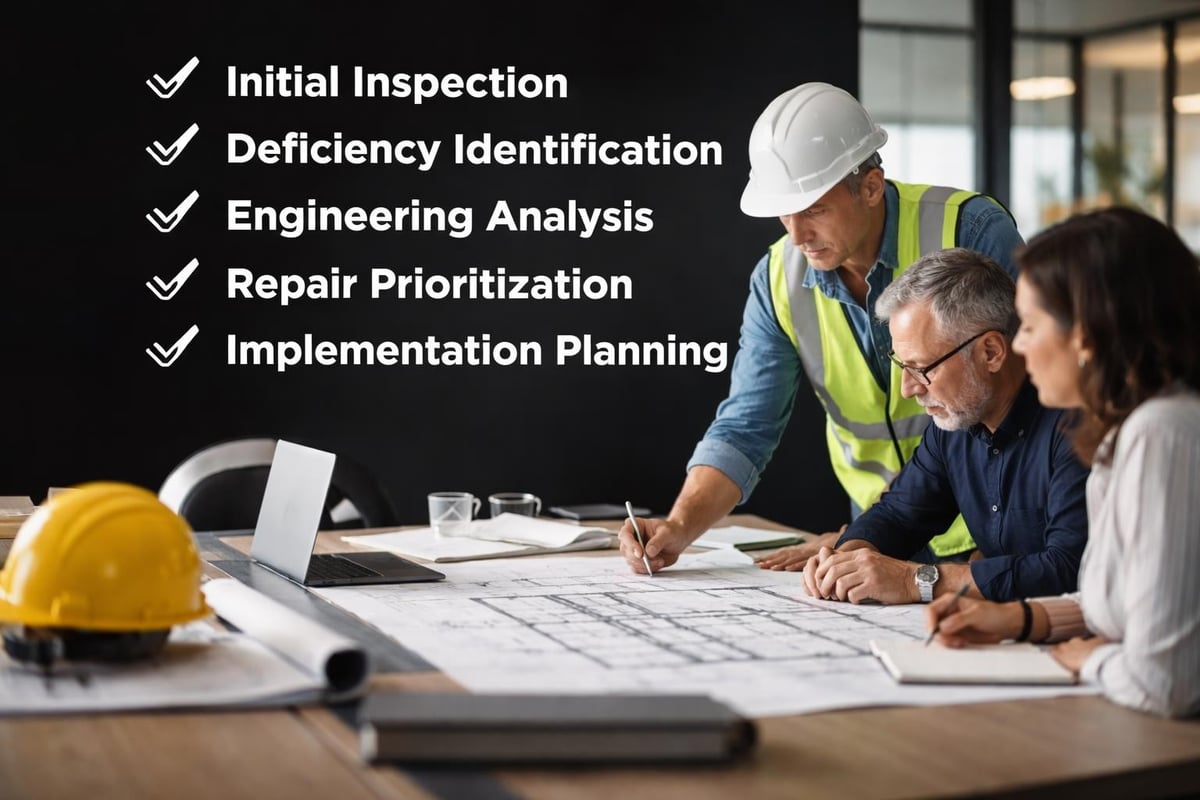
Recertification inspections identify deficiencies that require correction, but comprehensive services of civil engineering extend this process into actionable repair planning. Engineers translate inspection findings into prioritized repair recommendations, cost estimates, and phased implementation strategies that help property managers budget and plan maintenance programs.
This integration proves particularly valuable for condominium associations and commercial property owners facing multiple repair needs with limited budgets. Engineering analysis helps distinguish between urgent safety issues requiring immediate attention and deferred maintenance that can be scheduled strategically.
Electrical and MEP Engineering Coordination
While often considered separate from traditional civil engineering, electrical and mechanical/electrical/plumbing (MEP) system design represents an integral component of comprehensive building engineering services. These systems require careful integration with structural elements and coordination with civil infrastructure.
Electrical engineering services for existing buildings address capacity upgrades, code compliance improvements, and system modernization. Older buildings frequently have electrical systems designed for historical usage patterns that no longer meet current demand from modern appliances, HVAC equipment, and technology systems.
Common electrical engineering services include:
- Load calculations determining required service capacity
- Panel and distribution system design for upgrades
- Emergency power system integration
- Lighting design for energy efficiency and code compliance
- Fire alarm and life-safety system coordination
MEP coordination becomes critical during renovation projects where new systems must integrate with existing structural conditions and space constraints. Engineers develop creative solutions that accommodate required systems within buildings not originally designed for them.
Emerging Technologies in Civil Engineering Services
The civil engineering profession continues evolving with technological advancement, incorporating new tools and methodologies that improve accuracy, efficiency, and outcomes. Digital twin technology in civil engineering creates virtual replicas of physical structures, enabling engineers to simulate conditions, test interventions, and monitor performance over time.
Building Information Modeling (BIM) has transformed how engineers document existing conditions and design modifications. Three-dimensional models improve coordination between disciplines, reduce conflicts during construction, and create valuable records for future maintenance and modifications.
Non-destructive evaluation technologies allow engineers to assess hidden conditions without damaging finishes or creating access openings. Ground-penetrating radar maps reinforcing steel locations and identifies voids in concrete. Infrared thermography reveals moisture intrusion, insulation deficiencies, and electrical hot spots. Ultrasonic testing measures concrete thickness and detects delamination.
The integration of human and machine intelligence enhances engineering decision-making by processing vast datasets that would overwhelm traditional analysis methods, identifying patterns and correlations that inform better design and maintenance strategies.
Selecting Appropriate Engineering Services
Property owners and managers face decisions about which services of civil engineering their specific situations require. Several factors influence these decisions, including building age, observed conditions, regulatory requirements, and planned modifications or improvements.
Regulatory triggers often drive engineering engagement. Building permit applications for structural modifications require sealed engineering documents. Violation resolution typically demands engineering involvement to develop compliant correction plans. Milestone inspection deadlines create mandatory engineering assessment requirements.
Proactive maintenance planning represents another common driver. Forward-thinking property managers engage engineering services before problems become critical, conducting periodic assessments that identify emerging issues when repair costs remain manageable. This approach contrasts with reactive emergency responses that typically involve higher costs and more extensive damage.
Questions to Guide Service Selection
When evaluating engineering needs, consider these key questions:
- What specific problem or requirement drives the need for engineering services?
- Does the project involve structural elements or life-safety systems requiring licensed design?
- Are there regulatory deadlines or compliance requirements that must be met?
- Will construction work require permits and inspection from building authorities?
- Does the situation involve multiple interrelated systems requiring coordinated design?
Comprehensive civil engineering firms offering diverse capabilities provide value through integrated service delivery, eliminating coordination challenges between separate consultants and ensuring consistent design philosophy across project components.
Cost Considerations and Value Proposition
Engineering services represent professional costs that property owners must budget and justify. Understanding how these services create value helps frame appropriate investment decisions.
Risk mitigation stands as primary value. Proper engineering analysis identifies safety hazards, prevents failures, and ensures regulatory compliance that protects against liability exposure. The cost of comprehensive structural evaluation pales compared to potential losses from building failures, injury claims, or regulatory enforcement actions.
Optimized solutions deliver another value dimension. Experienced engineers develop repair strategies that address root causes efficiently, avoiding wasteful interventions that treat symptoms without solving underlying problems. Strategic approaches to infrastructure projects balance immediate needs against long-term performance, minimizing lifecycle costs.
Regulatory navigation saves time and frustration. Engineers familiar with local code requirements and permitting processes streamline approvals, reducing project delays and avoiding costly redesigns to address agency objections.
| Service Type | Typical Cost Drivers | Value Delivered |
|---|---|---|
| Structural Inspections | Building size, complexity, access challenges | Risk identification, compliance documentation |
| Repair Design | Damage extent, system complexity, performance requirements | Optimized solutions, permit-ready documents |
| Construction Oversight | Project duration, visit frequency, testing requirements | Quality assurance, contract administration |
| Forensic Investigation | Problem complexity, testing needs, analysis depth | Root cause determination, litigation support |
Quality Standards and Professional Credentials
The services of civil engineering carry significant responsibility for public safety and building performance. Professional licensing ensures that engineers possess required education, experience, and competency to practice. In Florida, only licensed Professional Engineers (PE) may prepare and seal engineering documents for building permits.
Specialty certifications demonstrate additional expertise beyond basic licensure. Structural engineering certification indicates advanced knowledge of building structural systems. Special inspection certifications qualify engineers to perform code-required testing and observation during construction.
Continuing education requirements ensure that practicing engineers maintain current knowledge as codes, technologies, and best practices evolve. This ongoing learning proves particularly important given the pace of change in building regulations and engineering methodologies.
When selecting engineering services, verify that professionals hold appropriate licenses for your jurisdiction and project type. Check credentials through state licensing boards and confirm that professional liability insurance provides adequate protection.
Coordination with Related Professionals
Successful building projects require coordination among various professionals beyond civil engineers. Architects address aesthetic and functional design aspects. General contractors manage construction execution. Specialty consultants provide expertise in areas like waterproofing, roofing, or environmental compliance.
Effective services of civil engineering integrate smoothly with these complementary disciplines. Engineers who communicate clearly, respect other professionals' expertise, and collaborate toward shared project goals deliver better outcomes than those working in isolation.
For building recertification projects, coordination between engineering and architectural inspections ensures comprehensive evaluation without duplication or gaps in coverage. During construction, engineering oversight must align with contractor schedules and general contractor coordination responsibilities.
Multi-discipline firms offering comprehensive services often streamline this coordination by maintaining in-house capabilities across related specialties. This integrated approach can improve communication, reduce schedule friction, and deliver more cohesive solutions than assembling separate consultants.
Long-Term Relationships and Ongoing Support
The most effective utilization of civil engineering services often involves establishing ongoing relationships rather than engaging engineers solely for isolated projects. Regular engineering involvement in building maintenance planning, periodic inspections, and system evaluations creates continuity that benefits property owners.
Engineers familiar with a building's history, previous repairs, and ongoing challenges provide more efficient service on subsequent projects. They understand structural systems, recognize recurring issues, and anticipate problems before they emerge. This institutional knowledge delivers value that new consultants cannot match without extensive investigation.
Preventive maintenance programs benefit from consistent engineering oversight. Annual or biennial inspections catch deterioration in early stages when repairs remain straightforward and affordable. Engineers tracking building conditions over time notice subtle changes that might escape attention during isolated evaluations.
For properties approaching milestone inspection deadlines, early engineering engagement allows phased addressing of anticipated deficiencies rather than confronting multiple problems simultaneously under time pressure. Proactive inspection planning reduces stress and often lowers total costs through strategic repair sequencing.
The diverse services of civil engineering provide essential support for maintaining safe, functional, and compliant buildings throughout their operational lives. From initial assessments through design, permitting, and construction oversight, qualified engineers deliver expertise that protects property investments while ensuring occupant safety. For South Florida property owners navigating milestone inspections, structural repairs, or building system upgrades, Souffront Construction and Engineering offers comprehensive engineering and construction services tailored to the unique challenges of coastal properties. Our integrated approach combines thorough inspections, strategic engineering solutions, and professional construction execution to help you maintain building integrity and meet all regulatory requirements.