Design for Structures: Engineering Safe Buildings
Modern buildings stand as testaments to the precision and expertise required in structural engineering. Whether you're managing a high-rise condominium in Miami or overseeing a commercial property in Broward County, understanding the fundamentals of design for structures ensures your building remains safe, compliant, and structurally sound for decades. The process involves complex calculations, material science, code adherence, and practical construction considerations that work together to create buildings that protect occupants and withstand environmental challenges.
Understanding Structural Design Fundamentals
Design for structures represents a systematic approach to creating buildings that perform reliably under all anticipated loads and conditions. This discipline combines theoretical engineering principles with practical construction knowledge to deliver safe, serviceable structures.
The foundation of structural design rests on understanding how forces interact with building materials. Engineers must account for dead loads (permanent weight of the structure itself), live loads (occupants, furniture, equipment), wind forces, seismic activity, and in coastal Florida, hurricane-force winds and potential storm surge impacts.
Core design considerations include:
- Load path continuity from roof to foundation
- Material strength and durability characteristics
- Connection details between structural elements
- Deflection limits to prevent serviceability issues
- Factor of safety margins for unpredictable conditions
Load Analysis and Distribution
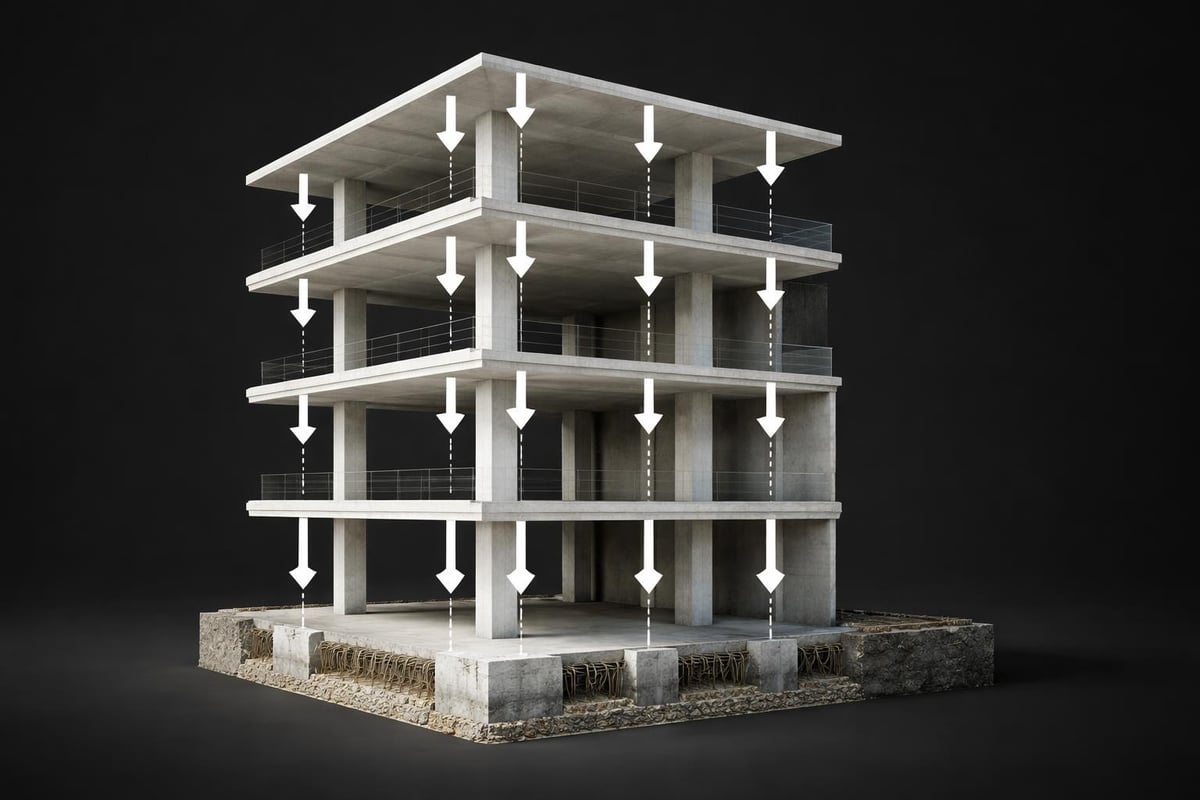
Every structure must efficiently transfer loads from points of application down through the building to the foundation and ultimately to the soil. This load distribution becomes especially critical in aging buildings where deterioration may compromise the original design assumptions.
Limit state design provides a modern framework for ensuring structures meet both ultimate strength requirements and serviceability criteria. This methodology considers multiple failure modes and serviceability conditions rather than relying on a single allowable stress approach.
For South Florida properties undergoing milestone building inspections, understanding original load paths helps engineers identify areas where degradation poses the greatest risk to structural integrity.
Material Selection and Performance
The choice of structural materials fundamentally shapes design for structures approaches and long-term building performance. Concrete and steel dominate modern construction, each offering distinct advantages and requiring specific design methodologies.
Concrete Structural Systems
Concrete remains the predominant structural material in South Florida construction due to its durability, fire resistance, and performance in humid, corrosive environments. Design of concrete structures follows rigorous principles codified in ACI standards that govern everything from mix design to reinforcement detailing.
Reinforced concrete design accounts for concrete's excellent compressive strength while addressing its weakness in tension through strategic steel reinforcement placement. The interaction between concrete and embedded steel creates a composite system capable of resisting diverse loading conditions.
| Concrete Design Factor | Consideration | Impact on Performance |
|---|---|---|
| Compressive Strength | Mix design, curing | Load-carrying capacity |
| Cover Depth | Reinforcement protection | Corrosion resistance, durability |
| Reinforcement Ratio | Steel percentage | Ductility, crack control |
| Water-Cement Ratio | Mix permeability | Long-term durability |
Engineers designing concrete restoration and structural repairs must understand how original design parameters have degraded over time and how repairs integrate with existing systems.
Steel and Composite Systems
Steel structural systems offer high strength-to-weight ratios and construction speed advantages. Eurocode 3 for steel structures exemplifies comprehensive design standards that address stability, connection design, and fatigue considerations.
Steel design advantages include:
- Predictable material properties
- Ductile behavior under extreme loads
- Ease of modification and expansion
- Speed of erection
Composite systems combining steel and concrete leverage the strengths of both materials. Eurocode 4 guidelines demonstrate how these hybrid systems achieve superior performance through material integration, particularly valuable in floor systems and high-rise construction.
For coastal properties, steel corrosion protection becomes paramount. Design for structures in marine environments requires enhanced protective coatings, increased member sizing, or alternative alloys to ensure longevity.
Code Compliance and Design Standards
Structural design operates within a framework of building codes, industry standards, and local regulations that establish minimum safety requirements. These codes evolve based on research, historical performance data, and lessons from structural failures.
The Florida Building Code governs design requirements throughout the state, with enhanced provisions for high-velocity hurricane zones covering most coastal areas. Compliance ensures structures meet life safety standards while addressing serviceability and durability expectations.
Design principles and standards establish the philosophical foundation for structural safety, including acceptable risk levels, load factor combinations, and resistance factors that account for material variability and construction tolerances.
Code-Mandated Design Considerations
Modern building codes require engineers to address multiple design scenarios simultaneously. Wind load provisions for South Florida demand rigorous analysis of both overall structural stability and individual component resistance to wind pressures and suctions.
- Determine applicable wind speed and exposure category
- Calculate wind pressures on all surfaces
- Design main wind force resisting system
- Verify component and cladding adequacy
- Detail connections for load transfer
- Document design assumptions and calculations
Seismic design receives less emphasis in Florida than wind design, yet code provisions still require consideration of lateral force resistance and structural ductility. The combination of wind and seismic provisions ensures structures possess adequate lateral stability regardless of load source.
Structural Analysis Techniques
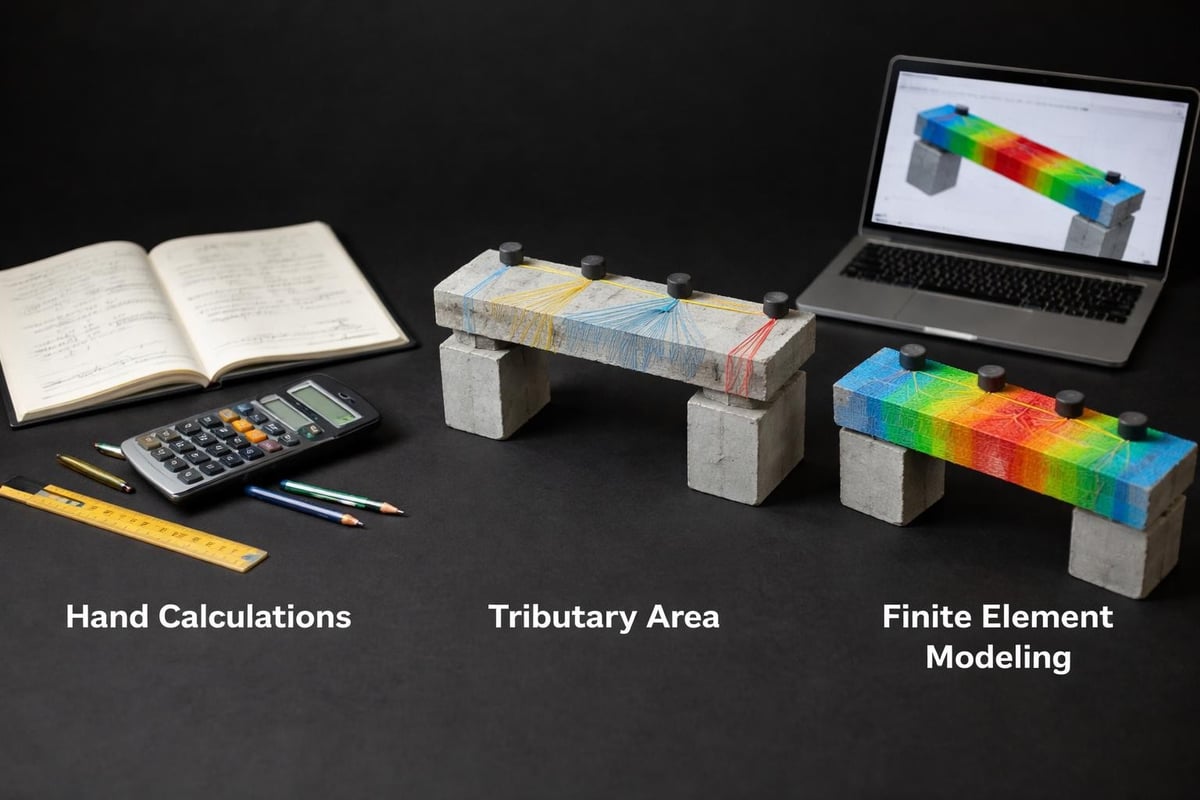
Design for structures relies on sophisticated analysis methods that predict how buildings respond to applied loads. Analysis complexity ranges from simple hand calculations for straightforward elements to advanced finite element modeling for complex assemblies.
Classical analysis methods including moment distribution, slope-deflection, and influence lines provide engineers with tools to understand structural behavior fundamentally. These techniques remain relevant for preliminary design and verification of computer-generated results.
Modern analysis approaches:
- Linear elastic analysis for service-level loads
- Nonlinear analysis for ultimate strength verification
- Dynamic analysis for wind and seismic response
- Finite element modeling for complex geometries
- Performance-based design for critical facilities
Computer software enables rapid iteration through design alternatives while maintaining code compliance checks throughout the process. However, engineering judgment remains essential to interpret results, identify errors, and optimize solutions.
Connection Design and Detailing
Connections represent critical elements where design for structures theory meets construction reality. Proper connection design ensures load transfer between members while accommodating construction tolerances and facilitating efficient installation.
Concrete Connection Details
Concrete structures achieve continuity through proper reinforcement lap splices, development lengths, and anchorage details. Connection regions often experience complex stress states requiring careful attention to reinforcement arrangement and confinement.
Cast-in-place concrete construction allows monolithic connections that provide excellent structural continuity. Precast concrete systems demand thoughtful connection design to achieve similar performance while enabling factory fabrication advantages.
Engineers performing structural engineering design analysis must evaluate existing connections during building assessments, identifying areas where original details may not meet current standards or have degraded due to corrosion or concrete deterioration.
Steel Connection Systems
Steel connections employ bolted or welded details depending on load magnitude, field conditions, and economic considerations. Connection design must address shear, tension, compression, and moment transfer while maintaining constructability.
| Connection Type | Application | Design Consideration |
|---|---|---|
| Simple Shear | Beam-to-column | Rotation capacity, bolt spacing |
| Moment | Rigid frames | Stiffness, welding accessibility |
| Braced Frame | Lateral resistance | Gusset plate design, net section |
| Base Plate | Column foundation | Bearing pressure, anchor bolts |
Modern connection design increasingly incorporates ductile detailing that allows controlled yielding during extreme events, protecting primary structural members through sacrificial connection elements.
Design for Durability and Service Life
Long-term structural performance depends on design decisions that extend beyond strength calculations to address durability, maintainability, and resistance to environmental degradation. This proves especially critical in South Florida's aggressive marine environment.
Concrete durability requires proper mix design, adequate cover over reinforcement, and control of permeability to resist chloride penetration from salt air. Design for structures in coastal zones often specifies enhanced concrete quality and supplementary cementitious materials that reduce long-term degradation rates.
Durability design strategies include:
- Increased concrete cover depths
- Lower water-cement ratios for reduced permeability
- Corrosion-resistant reinforcement materials
- Proper drainage and waterproofing details
- Expansion joint placement and detailing
Properties requiring building recertification inspections often reveal durability-related deterioration that original designers may not have adequately addressed. Modern repair design incorporates enhanced durability provisions to extend service life beyond original expectations.
Special Considerations for Existing Buildings
Design for structures takes on unique challenges when addressing existing buildings rather than new construction. Engineers must work within constraints of existing layouts, foundations, and structural systems while achieving current code compliance where required.
Structural assessment begins with understanding original design intent through document review, field investigation, and materials testing. This forensic approach reveals how buildings actually perform versus theoretical design assumptions.
Repair and Strengthening Design
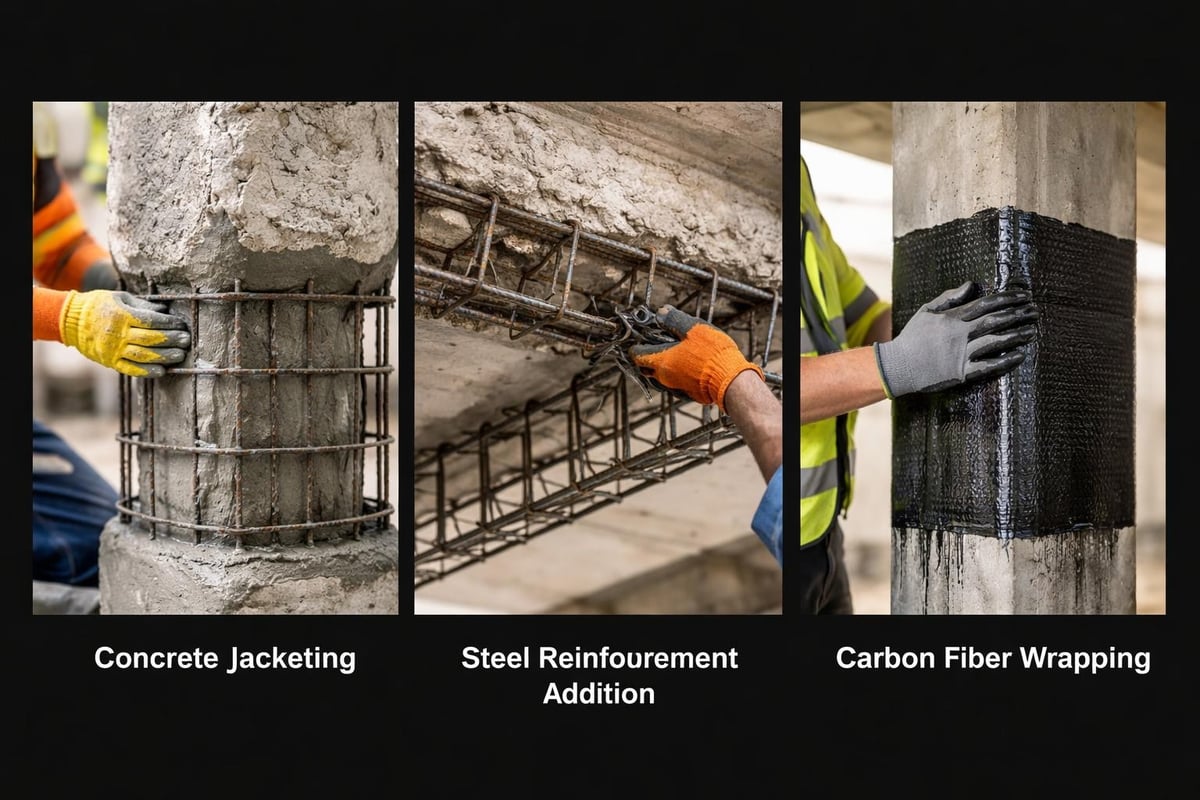
Strengthening existing structures demands careful integration of new elements with original systems. Design must address load transfer at new-to-existing interfaces while minimizing disruption to building operations.
High-strength steel reinforcement design offers opportunities to strengthen concrete members with minimal dimensional increases, valuable when preserving architectural features or working within tight clearances.
Modern strengthening techniques include:
- Carbon fiber reinforced polymer (CFRP) wrapping for columns and beams
- Shotcrete or concrete jacketing for increased capacity
- Steel plate bonding for flexural enhancement
- Post-tensioning for load redistribution
- Foundation underpinning for bearing capacity improvement
Engineers must verify that existing foundations can support additional loads introduced by strengthening measures, sometimes requiring foundation improvements as part of comprehensive upgrade projects.
Load Path Verification and Redundancy
Robust structural systems incorporate multiple load paths and redundancy that prevent progressive collapse if individual members fail. Design for structures philosophy now emphasizes resilience and alternate load paths rather than relying on single critical elements.
Load path verification traces forces from application points through the complete structural system, confirming continuity and adequate capacity at every connection and member. This systematic approach identifies potential weak links before construction.
Redundancy principles include:
- Multiple column lines in each direction
- Continuous reinforcement through connections
- Tie forces between structural elements
- Compartmentalization to limit failure propagation
- Alternate load paths for critical members
Buildings designed before modern redundancy requirements may lack adequate ties and continuity. Forensic water intrusion investigations sometimes reveal how water damage has compromised load paths, requiring restoration design that reestablishes structural integrity.
Foundation Design Integration
Foundation systems form the critical interface between superstructure and supporting soil, requiring design coordination between structural and geotechnical engineers. Foundation design must accommodate building loads while respecting soil bearing capacity and settlement limitations.
South Florida's variable subsurface conditions including limestone, sand, and organic soils present diverse foundation challenges. Shallow spread footings work well where competent bearing strata exist near grade, while deep foundations such as piles or caissons reach stronger soils at depth.
Foundation Type Selection
Design for structures includes selecting appropriate foundation systems based on soil conditions, loading magnitude, and economic factors. The decision impacts overall building design from framing layout to construction sequencing.
| Foundation Type | Soil Condition | Typical Application |
|---|---|---|
| Spread Footings | Good bearing capacity | Low-rise, light loads |
| Mat Foundation | Weak soils, heavy loads | High-rise, uniform bearing |
| Driven Piles | Deep competent layer | Medium to high-rise |
| Drilled Shafts | Rock or dense soil | Heavy loads, difficult access |
Foundation design must also address uplift resistance in high-wind zones, requiring adequate embedment, reinforcement development, and connection to superstructure. Properties undergoing structural integrity reserve studies should include foundation condition assessment as part of comprehensive evaluation.
Quality Control and Construction Oversight
Even excellent design for structures fails without proper construction execution. Quality control during construction verifies that installed work matches design intent and meets specified material and workmanship standards.
Structural observation by design engineers during critical construction phases helps identify field conditions that differ from design assumptions and allows real-time problem solving. This oversight proves particularly valuable for complex connections, reinforcement placement, and concrete placement procedures.
Essential quality control checkpoints:
- Reinforcement placement and clearances before concrete placement
- Concrete strength testing and cylinder breaks
- Bolt tightening verification in steel connections
- Weld inspection and non-destructive testing
- Dimensional verification of critical elements
Documentation created during construction provides valuable records for future renovation, repair, or assessment work. Buildings lacking proper as-built documentation pose challenges for engineers performing later modifications or violation and unsafe structure resolution work.
Sustainable Structural Design
Contemporary design for structures increasingly incorporates sustainability principles that reduce environmental impact while maintaining safety and performance. Material efficiency, adaptability for future uses, and design for deconstruction represent evolving priorities.
Structural systems designed for long service life with minimal maintenance deliver sustainability benefits through extended useful life and reduced material consumption over time. Concrete and steel structures both offer recyclability advantages when buildings eventually reach end of service.
Optimized structural design reduces material quantities through precise analysis and efficient member sizing. This approach decreases embodied carbon while maintaining required performance levels, demonstrating how engineering excellence aligns with environmental responsibility.
Documentation and Communication
Clear documentation transforms design calculations and decisions into constructible plans that contractors can execute reliably. Structural drawings must communicate design intent through standardized notation, details, and specifications that minimize ambiguity.
Design documentation includes:
- Structural drawings showing layout, sizing, and details
- Design calculations justifying member sizes and connections
- Material specifications defining quality requirements
- Special inspection requirements for quality control
- Design criteria documenting loads and code provisions
Effective communication between engineers, architects, contractors, and building owners ensures everyone understands structural requirements and constraints. For complex projects involving electrical engineering or mechanical systems integration, coordination becomes critical to avoid conflicts and ensure proper load accommodation.
Successful design for structures demands comprehensive understanding of materials, loads, codes, and construction practices working together to create safe, durable buildings. Property owners facing recertification requirements, structural repairs, or building modifications benefit from partnering with experienced professionals who understand both theoretical principles and practical Florida construction challenges. Souffront Construction and Engineering delivers the structural engineering expertise, inspection services, and construction capabilities South Florida property owners need to maintain compliant, safe buildings that protect occupants and preserve property value for decades to come.