Commercial Building Inspection South Florida Guide 2026
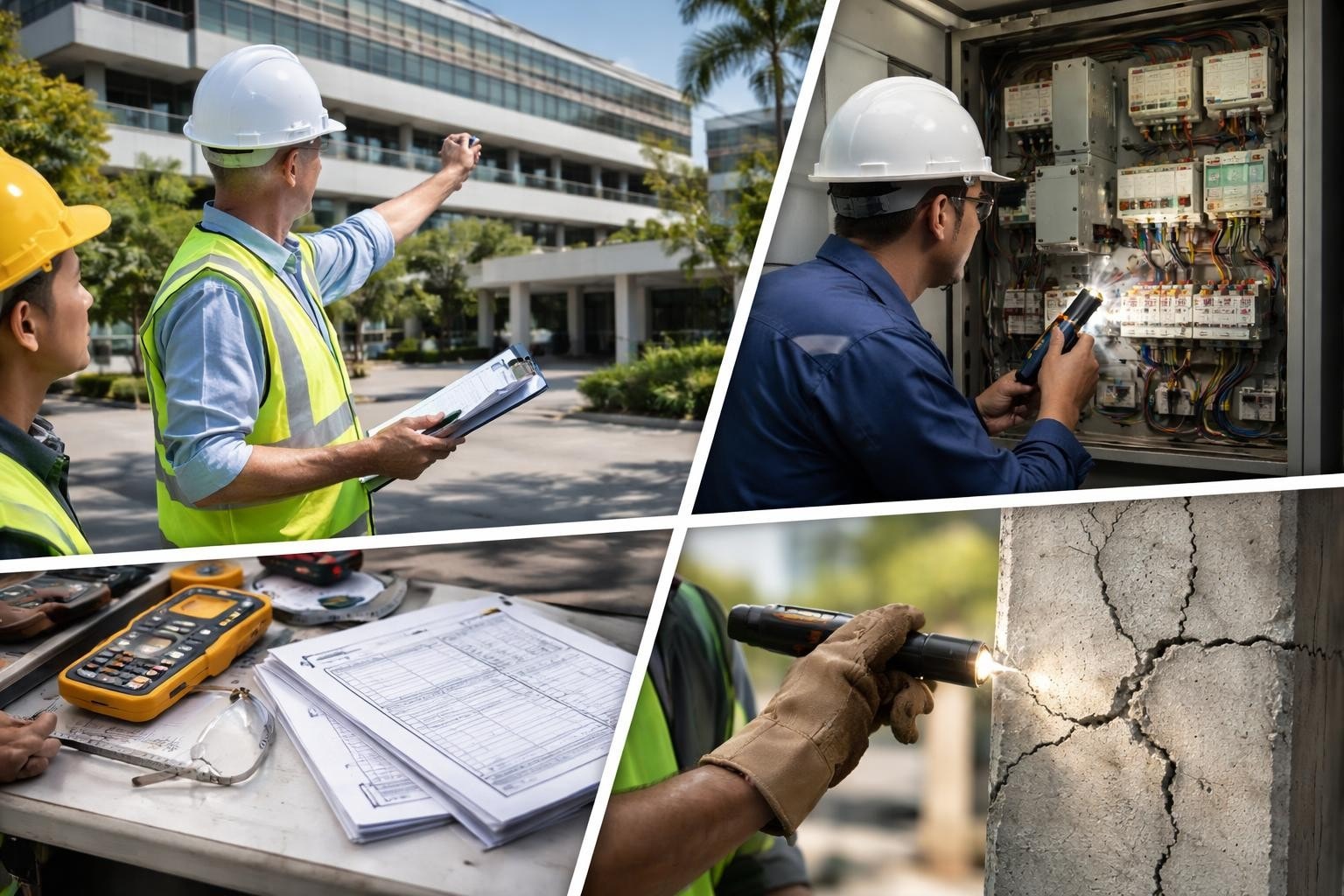
Commercial property owners in South Florida face increasingly stringent inspection requirements, particularly following legislative changes that have transformed building safety protocols. Whether you manage a multi-tenant office building, a retail complex, or a mixed-use development, understanding the commercial building inspection south florida landscape is essential for maintaining compliance, protecting your investment, and ensuring occupant safety. The regulatory framework continues to evolve, making professional guidance more valuable than ever for navigating these complex requirements.
Understanding Commercial Building Inspection Requirements in South Florida
The commercial building inspection south florida process has become substantially more rigorous since 2022, when Florida lawmakers responded to structural failures by implementing comprehensive safety protocols. These requirements affect buildings of various ages and occupancies across Miami-Dade, Broward, and Palm Beach counties.
Key inspection triggers for commercial properties include:
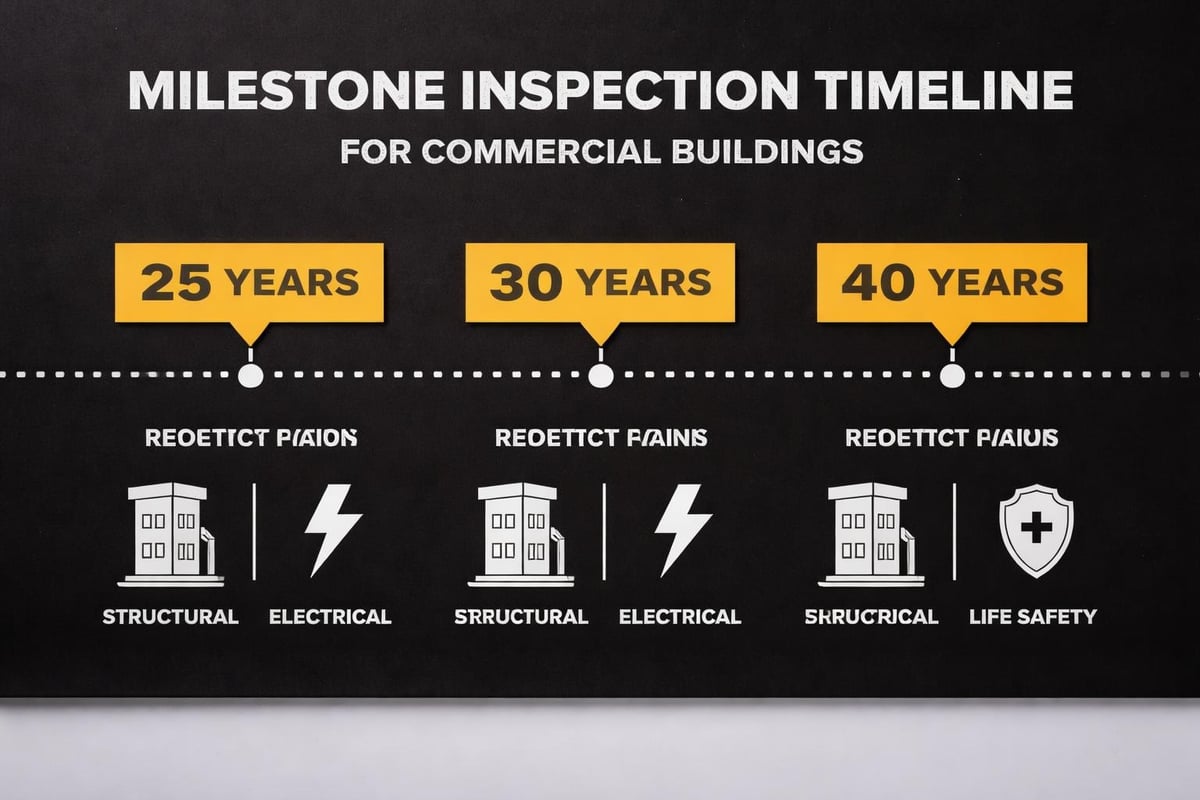
- Milestone age thresholds (typically 25, 30, or 40 years)
- Change of ownership or major renovations
- Violation notices from local building departments
- Insurance requirements for coverage renewal
- Tenant improvement projects requiring structural verification
The state's coastal environment presents unique challenges that make these inspections particularly critical. Salt air accelerates concrete deterioration, while hurricane exposure creates stress on structural systems that may not be immediately visible. Building departments now require more detailed documentation and faster response times when deficiencies are identified.
Regional Variations Across South Florida Counties
Each county in South Florida maintains slightly different enforcement approaches, though all align with state statutes. Miami-Dade County pioneered mandatory recertification programs following Hurricane Andrew, establishing protocols that other jurisdictions have since adopted with modifications.
Broward County emphasizes electrical safety inspection requirements as part of their commercial building review process. Palm Beach County focuses heavily on coastal properties, requiring enhanced corrosion assessments for buildings within specific distances from the ocean.
| County | Initial Inspection Age | Recertification Cycle | Special Requirements |
|---|---|---|---|
| Miami-Dade | 40 years (30 if coastal) | Every 10 years | Enhanced concrete testing |
| Broward | 30 years | Every 10 years | Electrical system audits |
| Palm Beach | 40 years | Every 10 years | Coastal corrosion review |
Property managers should verify specific requirements with their local building department, as ordinances can change and certain municipalities within counties may impose additional standards.
The Commercial Building Inspection South Florida Process
A comprehensive commercial building inspection south florida engagement typically unfolds across several distinct phases, each requiring specialized expertise and documentation. The process begins with an initial assessment and continues through detailed reporting and repair planning.
Phase One: Document Review and Preliminary Assessment
Licensed engineers begin by examining existing building records, previous inspection reports, and construction documents. This review identifies known vulnerabilities, previous repairs, and areas requiring focused attention. For buildings undergoing milestone building recertification inspections, this historical analysis proves invaluable for understanding structural evolution over time.
The preliminary walkthrough allows inspectors to develop a customized inspection plan addressing the building's specific characteristics, occupancy type, and regulatory requirements. Commercial properties often house critical infrastructure, life safety systems, and public assembly spaces that demand heightened scrutiny.
Phase Two: Physical Inspection and Testing
Detailed physical examination encompasses all major building systems and structural components. Engineers evaluate concrete integrity through visual inspection, hammer sounding, and potentially destructive testing when necessary. Understanding 40-year recertification costs helps owners budget appropriately for these comprehensive assessments.
Core inspection elements include:
- Structural frame assessment (columns, beams, load-bearing walls)
- Foundation and below-grade waterproofing evaluation
- Roof system integrity and drainage functionality
- Exterior envelope condition (facades, windows, sealants)
- Balconies, walkways, and elevated exterior spaces
- Parking structures and loading areas
- Life safety systems (fire suppression, emergency egress)
- Electrical distribution and emergency power systems
Testing methodologies vary based on findings. Non-destructive testing techniques like ground-penetrating radar help locate reinforcing steel and identify voids without damaging finishes. When visual indicators suggest problems, core sampling provides definitive information about concrete strength and reinforcement condition.
Phase Three: Reporting and Compliance Documentation
Engineers compile findings into detailed reports that meet specific formatting requirements established by local building departments. These documents must clearly identify deficiencies, classify them by severity, and provide recommended remediation approaches. The mandatory milestone inspections require specific certification language and professional seals.
Reports typically categorize findings as substantial structural deterioration, safety hazards requiring immediate attention, or maintenance items that can be addressed during normal repair cycles. This classification system helps property owners prioritize expenditures and develop realistic timelines for compliance.
Critical Systems Evaluated During Commercial Inspections
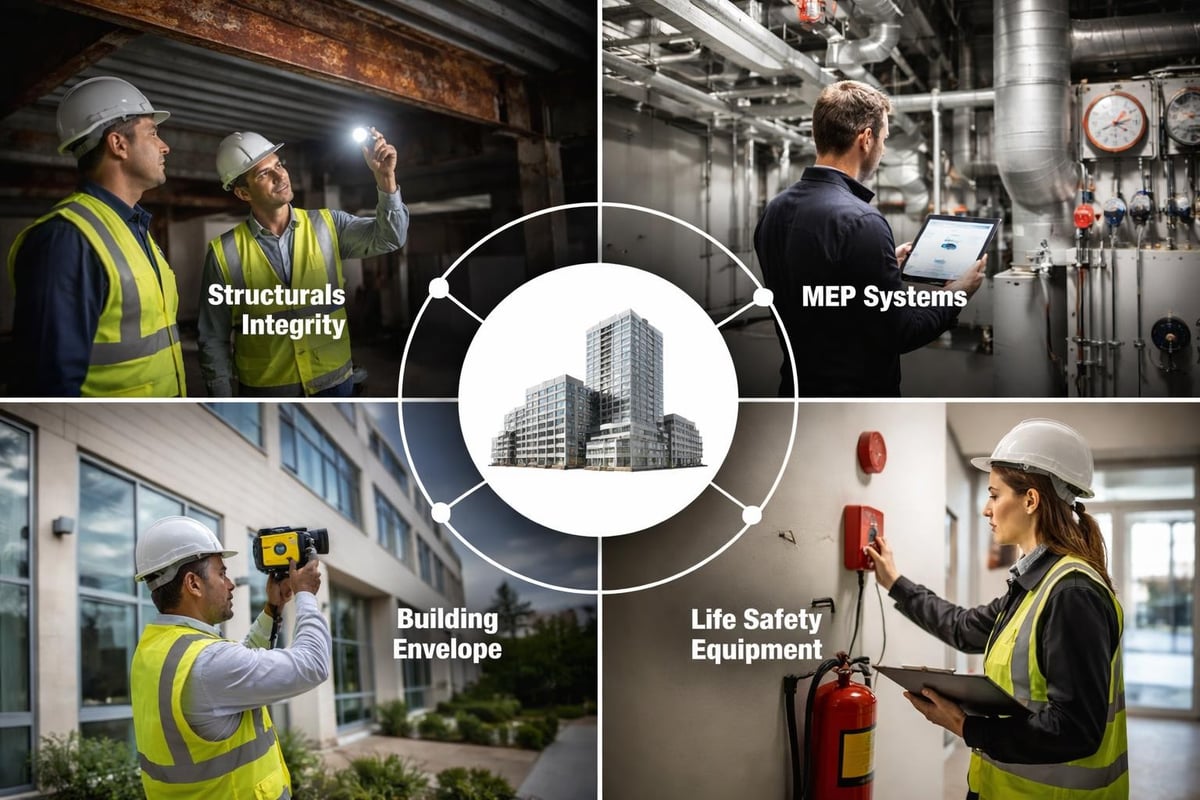
Commercial building inspection south florida protocols examine interconnected systems that collectively ensure building safety and functionality. Understanding which systems receive scrutiny helps owners prepare properties and anticipate potential findings.
Structural Integrity Assessment
The building's structural frame represents the primary focus of any commercial inspection. Engineers evaluate how well load-bearing elements perform their intended function and whether deterioration has compromised capacity. Concrete structures in South Florida face particular challenges from chloride penetration, which corrodes embedded reinforcing steel and causes spalling.
Common structural deficiencies include:
- Concrete delamination and spalling on columns
- Exposed or corroded reinforcing steel
- Settlement or movement in foundations
- Cracks indicating structural stress
- Deteriorated expansion joints
Parking structures warrant special attention, as they experience direct vehicle loading, exposure to the elements, and moisture intrusion from washing and weather. Professional concrete restoration services address these issues before they compromise structural capacity.
Electrical System Evaluation
Modern commercial buildings depend on reliable electrical distribution for life safety systems, HVAC operation, elevator function, and tenant needs. Inspectors verify that electrical infrastructure meets current code standards, even if it was compliant when originally installed. Electrical engineering system design audits identify potential hazards before they cause failures.
Panel boards, main switchgear, emergency generators, and transfer switches receive thorough evaluation. Fire alarm systems must demonstrate proper function, with testing protocols that verify detection, notification, and emergency power capabilities.
Water Intrusion and Building Envelope
South Florida's intense rainfall and hurricane events test every building's resistance to moisture penetration. Inspectors examine roof systems, exterior walls, windows, and below-grade waterproofing for signs of current or potential water intrusion. Specialized forensic water intrusion investigations track elusive leaks to their source.
| Building Element | Common Issues | Testing Methods |
|---|---|---|
| Roofing Systems | Membrane deterioration, ponding water | Visual inspection, moisture scanning |
| Exterior Walls | Sealant failure, stucco cracks | Water testing, thermography |
| Windows/Doors | Seal degradation, frame corrosion | Visual inspection, water testing |
| Below-Grade | Foundation cracks, hydrostatic pressure | Visual inspection, moisture testing |
Property managers should maintain documentation of all waterproofing work, as inspectors will request this information during reviews. Recent repairs may require re-evaluation to verify proper installation and performance.
Navigating Inspection Findings and Required Repairs
Receiving an inspection report that identifies deficiencies can feel overwhelming, particularly when substantial repairs are necessary. Understanding how to interpret findings and develop an action plan makes the process more manageable.
Categorizing and Prioritizing Deficiencies
Not all inspection findings demand immediate action, though building departments typically establish deadlines for addressing identified issues. Immediate safety hazards require temporary protection measures within days, followed by permanent repairs within months. Structural deficiencies that don't pose immediate danger may allow longer timelines, though annual progress reports often become mandatory.
Working with professionals experienced in violation and unsafe structures resolution helps owners navigate compliance requirements while managing costs. Engineers can often propose phased repair approaches that address critical items first while allowing strategic planning for larger expenditures.
Developing Repair Specifications and Bid Packages
Once priorities are established, detailed repair specifications must be developed for contractor bidding. These documents need sufficient detail to ensure consistent bids while meeting building department expectations for permit applications. Understanding the bid package construction process prevents delays and change orders during execution.
Essential bid package components include:
- Detailed scope of work narratives
- Technical specifications for materials and methods
- Structural repair drawings when applicable
- Timeline expectations and milestone requirements
- Quality control and testing protocols
- Permitting responsibility clarification
South Florida's active construction market means contractor availability fluctuates. Starting the bidding process early, ideally while inspection reports are being finalized, helps ensure timely compliance and competitive pricing.

Cost Considerations for Commercial Building Inspection South Florida
Budget planning for commercial building inspection south florida requirements involves multiple cost categories beyond the inspection fee itself. Comprehensive financial planning prevents surprises and ensures adequate resources for compliance.
Inspection and Engineering Fees
Professional fees vary based on building size, complexity, and accessibility. A 50,000-square-foot office building typically requires more extensive evaluation than a single-story retail center of equal area due to structural complexity and system quantity. Fees generally range from $0.50 to $2.50 per square foot for standard milestone inspections, with specialized assessments commanding premium rates.
Engineers licensed in multiple disciplines (structural, electrical, mechanical) can sometimes provide bundled services at better value than hiring separate consultants. Verify that your inspection team includes all required professional stamps for your building department's submittal requirements.
Testing and Investigation Costs
Destructive and non-destructive testing adds to overall project costs but provides essential information for accurate condition assessment. Ground-penetrating radar, concrete core sampling, rebar location, and strength testing each carry specific fees. These investigations become particularly important when visual inspection reveals concerning conditions requiring verification.
Budget approximately 10-15% of base inspection fees for standard testing protocols. Buildings showing significant deterioration may require expanded testing, potentially doubling investigation costs.
Repair and Remediation Expenses
Actual repair costs dwarf inspection expenses when substantial deficiencies are identified. Concrete restoration pricing depends on access, extent of damage, and whether structural reinforcement is necessary. Projects addressing 40-year recertification inspection requirements frequently encounter unexpected conditions that increase scope.
Reserve studies help commercial property owners anticipate these expenses. The recently implemented Structural Integrity Reserve Study requirements mandate financial planning for buildings meeting specific criteria, ensuring funds are available when repairs become necessary.
Selecting Qualified Inspection Professionals
The commercial building inspection south florida market includes numerous engineering firms and inspection companies, but not all possess equal qualifications or experience. Choosing the right professional team significantly impacts the inspection quality, report usefulness, and ultimate compliance success.
Essential Qualifications and Credentials
Florida requires licensed professional engineers to conduct and certify milestone building inspections. Verify that proposed inspectors hold active Florida PE licenses in relevant disciplines (typically structural and electrical). The building recertification inspection process demands engineers familiar with local building department expectations and submission requirements.
Key qualifications to verify include:
- Active Florida Professional Engineer licenses
- Experience with your building type and construction era
- Familiarity with your jurisdiction's specific requirements
- Professional liability insurance coverage
- References from similar projects in South Florida
Some building departments maintain preferred vendor lists or approved inspector rosters. While these lists don't restrict your choice, professionals appearing on them have demonstrated competence and familiarity with local procedures.
Evaluating Experience and Local Knowledge
South Florida's unique construction methods, environmental conditions, and regulatory landscape make local experience invaluable. Engineers practicing in the region understand how salt air affects specific concrete mixes, which waterproofing systems perform best in hurricane zones, and how local building officials interpret code requirements.
Request sample reports from previous commercial projects. These documents reveal the firm's communication style, thoroughness, and ability to provide actionable recommendations. Detailed reports with clear photography, specific repair recommendations, and cost estimates prove most valuable for planning purposes.
Understanding Service Scope and Deliverables
Clarify exactly what your inspection fee includes before engaging professionals. Some firms provide comprehensive services from initial assessment through construction administration and final certification, while others limit involvement to inspection and reporting. Understanding the full scope prevents misunderstandings and ensures you receive necessary support throughout the compliance process.
Discuss timeline expectations upfront. Building departments impose strict deadlines, and delays in inspection completion can result in violations, fines, or occupancy restrictions. Experienced firms like those offering comprehensive commercial property inspection services understand these pressures and schedule accordingly.
Proactive Maintenance Between Inspections
Smart commercial property owners don't wait for mandatory inspections to address building maintenance. Implementing systematic preventive programs reduces emergency repairs, extends building life, and minimizes findings during official inspections.
Establishing Regular Inspection Cycles
Quarterly or semi-annual building assessments by qualified maintenance professionals identify minor issues before they escalate. Focus on high-stress areas like roofs, parking structures, mechanical rooms, and exterior sealant joints. Documenting these routine inspections demonstrates responsible stewardship when building departments review your compliance history.
Recommended inspection frequency by system:
| System | Inspection Frequency | Focus Areas |
|---|---|---|
| Roofing | Twice yearly | Membrane condition, drainage, penetrations |
| Concrete | Annually | Spalling, cracks, exposed rebar |
| Electrical | Annually | Panel condition, connections, grounding |
| Plumbing | Semi-annually | Leak detection, drainage, backflow |
| HVAC | Quarterly | System performance, condensate drainage |
Trend analysis from these routine inspections helps predict when major component replacements become necessary, allowing strategic financial planning rather than emergency responses.
Implementing Targeted Maintenance Programs
Specific building elements benefit from focused maintenance protocols. Concrete sealers applied proactively reduce chloride penetration and extend structural life. Regular resealing of expansion joints prevents water intrusion that accelerates deterioration. Power washing and facade cleaning remove salt deposits before they cause damage.
Coordinate maintenance activities with professional structural engineering design analysis to ensure interventions address actual needs without creating new problems. Well-intended but improperly executed maintenance can sometimes worsen existing conditions or mask symptoms that require investigation.
Maintaining Comprehensive Documentation
Thorough records of all maintenance, repairs, and improvements prove invaluable during official inspections. Engineers can review this documentation to understand building history, identify recurring issues, and focus inspection efforts appropriately. Complete records also demonstrate compliance with previous inspection requirements and ordered repairs.
Digital documentation systems that photograph work in progress, store contractor warranties, and track expenditures streamline information retrieval when needed. Cloud-based platforms ensure records survive even if property management changes or offices relocate.
Recent Regulatory Changes Affecting Commercial Properties
Florida's building inspection landscape continues evolving, with lawmakers responding to structural failures and safety concerns by implementing more stringent requirements. Commercial property owners must stay informed about these changes to maintain compliance and avoid penalties.
Expanded Inspection Requirements
Legislative changes following the Surfside condominium collapse extended mandatory inspection requirements beyond residential buildings to include certain commercial structures. Buildings meeting specific height, age, and occupancy criteria now face milestone inspection obligations previously limited to condominiums.
The definition of "threshold building" has expanded in some jurisdictions, capturing mid-rise commercial structures that previously escaped mandatory recertification. Consult with building officials to determine if recent ordinance changes affect your property.
Accelerated Timeline Requirements
Many jurisdictions have shortened compliance timelines, requiring faster turnaround between inspection notification and report submission. Properties receiving deficiency notices face tighter deadlines for developing repair plans and commencing work. These compressed schedules make proactive planning essential, as contractors may have limited availability for emergency mobilization.
Some counties now require annual progress reports when substantial repairs span multiple years. These interim certifications verify that work continues advancing toward full compliance and helps building departments track unresolved violations.
Enhanced Reserve Study Mandates
Recent legislation requires structural integrity reserve studies for specific building types, compelling owners to set aside funds for future major repairs. These SIRS requirements apply to buildings meeting defined thresholds, typically including larger commercial properties with significant structural elements.
Reserve study preparation involves comprehensive building assessment, cost estimation for future repairs, and development of multi-year funding plans. While adding upfront cost, these studies improve long-term financial planning and prevent assessment surprises when repairs become necessary.
Special Considerations for Different Commercial Property Types
The commercial building inspection south florida process adapts based on specific building characteristics and use patterns. Different property types present unique challenges requiring specialized expertise and focused evaluation.
Office Buildings and Professional Centers
Multi-tenant office properties house diverse occupancies with varying electrical loads, HVAC requirements, and interior modifications. Inspections must verify that tenant improvements haven't compromised structural elements or life safety systems. Suspended ceiling systems can hide structural deficiencies, requiring removal of representative sections for visual access.
Elevator systems in mid-rise and high-rise offices demand specialized evaluation beyond basic structural inspection. Emergency power systems, fire pump functionality, and stairwell pressurization all require testing to verify code compliance.
Retail and Shopping Centers
Open floor plans common in retail construction concentrate loads on fewer structural members, making their condition critical. Large roof areas with minimal slope challenge drainage systems and create leak potential. Exterior canopies and covered walkways experience accelerated deterioration from reduced protection and constant exposure.
Parking lot lighting, signage structures, and landscape irrigation all fall within inspection scope for comprehensive retail evaluations. These ancillary systems can present liability concerns if improperly maintained or structurally compromised.
Industrial and Warehouse Facilities
Heavy floor loads, overhead crane systems, and specialized equipment in industrial buildings create unique structural demands. Inspectors evaluate whether foundations continue supporting actual loads and verify that structural modifications over time haven't exceeded design capacity. Many industrial properties also house hazardous materials requiring specialized containment and ventilation that must meet current codes.
Roof drainage becomes particularly critical in large warehouse structures where minor slope variations create ponding areas that accelerate membrane deterioration and increase dead loads.
Commercial building inspection south florida requirements have never been more comprehensive or consequential for property owners. Understanding the process, maintaining proactive maintenance programs, and working with qualified professionals ensures compliance while protecting your investment and occupants. Souffront Construction and Engineering brings decades of experience helping South Florida commercial property owners navigate milestone inspections, develop cost-effective repair strategies, and maintain safe, compliant buildings. Contact our team today to schedule your commercial building assessment and ensure your property meets all current regulatory requirements.