Building and Civil Engineering: A 2026 Field Guide

The intersection of building and civil engineering continues to evolve as we navigate through 2026, driven by aging infrastructure, stricter building codes, and heightened safety awareness. From the concrete foundations beneath our feet to the structural frameworks that support coastal high-rises, the discipline encompasses a vast array of specializations that keep our built environment safe and functional. For property owners, managers, and associations in South Florida, understanding these engineering principles isn't just academic curiosity-it's essential knowledge for maintaining compliance, protecting investments, and ensuring occupant safety.
The Foundations of Building and Civil Engineering
Building and civil engineering represents one of humanity's oldest professional disciplines, yet it remains remarkably dynamic. The field encompasses everything from designing transportation networks to analyzing structural integrity in existing buildings. Civil engineering traditionally divides into multiple sub-disciplines, each addressing specific aspects of infrastructure development and maintenance.
In South Florida's unique environment, these principles take on added complexity. Salt air, humidity, and hurricane-force winds create demanding conditions that test every engineering decision. The region's rapid development during the mid-20th century means countless structures now approach critical milestone inspection requirements.
Core Disciplines Within the Field
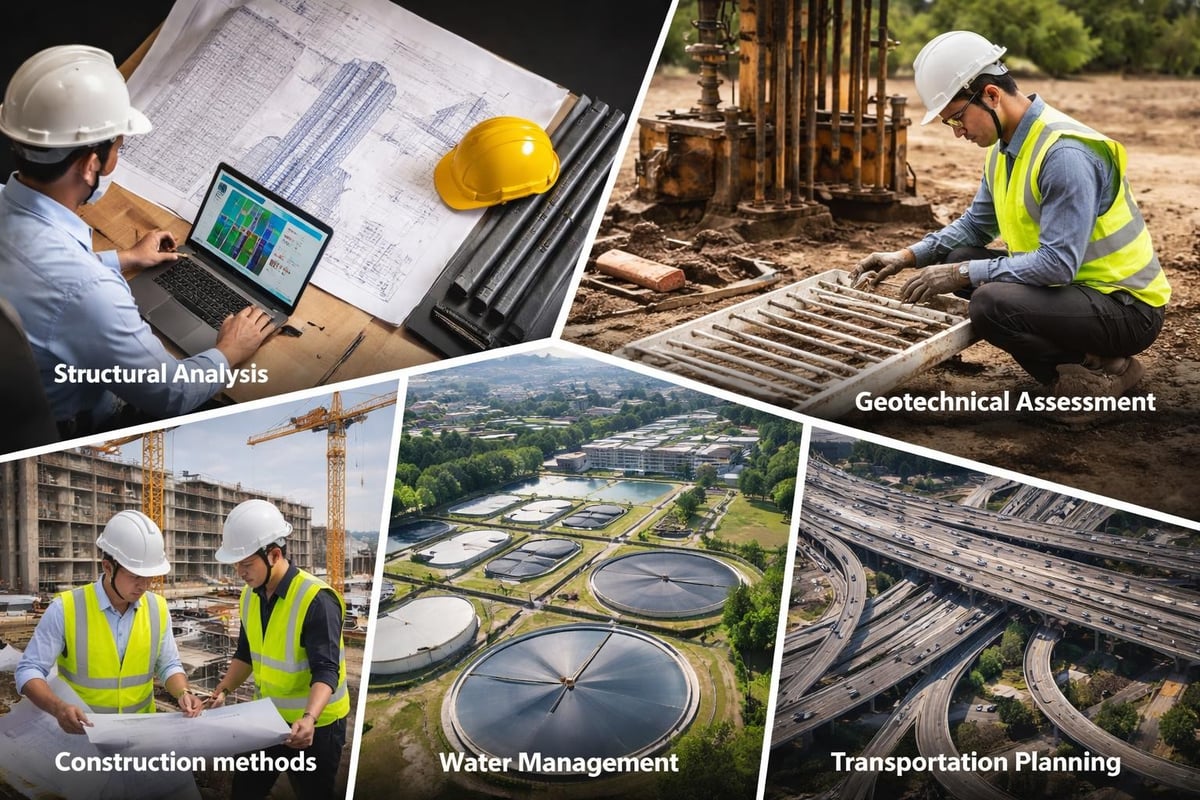
The breadth of building and civil engineering becomes clearer when examining its specialized branches:
- Structural Engineering – Analysis and design of load-bearing systems, from residential frameworks to commercial towers
- Geotechnical Engineering – Soil mechanics, foundation design, and ground improvement techniques
- Construction Engineering – Project execution, material science, and building methods
- Water Resources – Drainage systems, flood control, and water intrusion prevention
- Transportation Engineering – Roads, bridges, and infrastructure connectivity
Each discipline contributes essential knowledge to the building lifecycle. When structural engineering design and analysis reveals deficiencies in an aging structure, it often requires coordinated input from multiple specialties to develop comprehensive repair solutions.
Professional Practice and Standards in 2026
The practice of building and civil engineering operates within a framework of codes, standards, and professional requirements that continue to expand. Florida's building codes have undergone significant revisions following high-profile structural failures, particularly regarding older concrete structures in coastal environments.
Professional engineers must navigate an increasingly complex regulatory landscape. The American Society of Civil Engineers publishes regular updates on code changes, best practices, and emerging technologies that shape contemporary practice. These resources prove invaluable for engineers tackling challenging recertification projects.
| License Type | Requirements | Renewal Period | Continuing Education |
|---|---|---|---|
| Professional Engineer (PE) | Bachelor's degree, FE exam, experience, PE exam | Biennial | 18+ hours per cycle |
| Structural Engineer (SE) | PE license + additional structural exam | Biennial | Specialized courses |
| Building Inspector | Training program + certification exam | Annual | Code update courses |
The Milestone Inspection Revolution
South Florida has witnessed dramatic changes in building inspection requirements since the Surfside tragedy in 2021. The implementation of stricter milestone inspection protocols represents a fundamental shift in how building and civil engineering professionals approach existing structures.
Property owners must now engage qualified professionals for comprehensive evaluations at specific building ages. These milestone building inspections require detailed structural analysis, concrete testing, and assessment of critical building systems. The process goes far beyond visual observation, demanding advanced diagnostic techniques and thorough documentation.
Concrete Restoration and Structural Integrity
Concrete structures dominate South Florida's building stock, and understanding concrete behavior represents a cornerstone of building and civil engineering practice. The material's durability advantages make it ideal for coastal construction, yet it remains vulnerable to specific deterioration mechanisms that engineers must recognize and address.
Chloride intrusion from salt air initiates corrosion of embedded reinforcing steel. As steel corrodes, it expands, creating internal pressure that causes concrete to crack and spall. This progressive deterioration accelerates once started, making early detection critical.
Common Concrete Distress Patterns
Engineers encounter predictable deterioration patterns when evaluating aging concrete structures:
- Surface spalling – Concrete fragments breaking away from structural members
- Reinforcement exposure – Corroded steel bars visible at concrete surfaces
- Delamination – Internal separation of concrete layers without visible surface cracking
- Efflorescence – White mineral deposits indicating moisture movement through concrete
- Cracking patterns – Structural versus non-structural crack identification
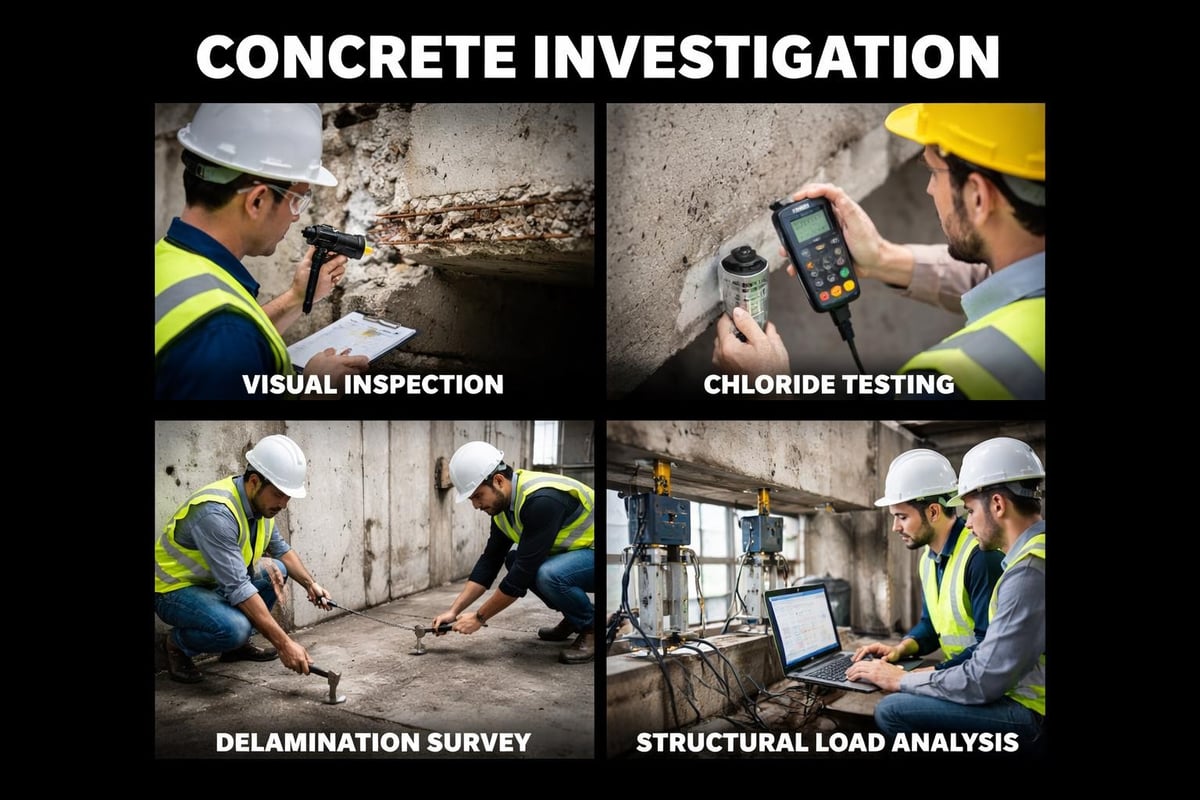
Concrete restoration and structural repairs demand careful diagnosis before work begins. Engineers must determine whether observed distress results from structural overload, material deterioration, poor original construction, or environmental factors. Each cause requires different remediation approaches.
The Engineering Resource provides comprehensive guidance on concrete evaluation methodologies, helping professionals select appropriate testing protocols for specific situations.
Water Intrusion and Building Envelope Performance
Water intrusion ranks among the most destructive forces affecting building performance, making its prevention and remediation a critical aspect of building and civil engineering. South Florida's climate creates relentless pressure on building envelopes, with driving rain, high humidity, and occasional flooding testing every seal and joint.
Building envelope engineering examines how structures resist weather intrusion while allowing necessary vapor transmission. Modern diagnostic techniques include infrared thermal imaging, moisture meters, and blower door testing to identify breach points that visual inspection alone might miss.
Investigation Methodologies
Professional water intrusion assessments follow systematic protocols:
- Exterior survey documenting potential entry points including windows, doors, expansion joints, and penetrations
- Interior investigation identifying active leaks, staining patterns, and moisture damage
- Testing protocols using controlled water application to reproduce leak conditions
- Moisture mapping with specialized equipment revealing hidden water accumulation
- Remediation planning developing sequenced repair strategies addressing root causes
Understanding water movement through building assemblies requires knowledge of material properties, pressure differentials, and capillary action. Engineers must consider how different building components interact, as seemingly unrelated defects often contribute to complex moisture problems.
Structural Engineering Analysis and Design
The analytical backbone of building and civil engineering lies in structural calculations that ensure safety under all anticipated loading conditions. Engineers evaluate both new designs and existing structures using principles of statics, dynamics, and material mechanics.
Modern structural analysis employs sophisticated computer modeling, but fundamental understanding remains essential. Engineers must validate computer outputs against engineering judgment developed through experience and continued study. Resources like those compiled by Monash University provide access to databases and reference materials supporting evidence-based design decisions.
| Load Type | Description | Design Consideration |
|---|---|---|
| Dead Load | Permanent structural weight | Concrete, steel, finishes, fixed equipment |
| Live Load | Occupancy and furniture | Code-specified minimums vary by use |
| Wind Load | Hurricane-force pressures | Critical for coastal high-rises |
| Seismic Load | Earthquake forces | Less critical in Florida but still required |
| Impact Load | Accidental contact events | Vehicle barriers, guardrail systems |
Forensic Engineering Applications
When structures show distress or fail, forensic engineering principles guide investigation efforts. These examinations combine field observation, materials testing, historical research, and analytical reconstruction to determine failure causes and prevent recurrence.
The violation and unsafe structures resolution process often requires forensic approaches when buildings receive municipal citations. Engineers must quickly assess actual risk levels, develop immediate safety measures if needed, and create compliant repair solutions.
Electrical and Mechanical Building Systems
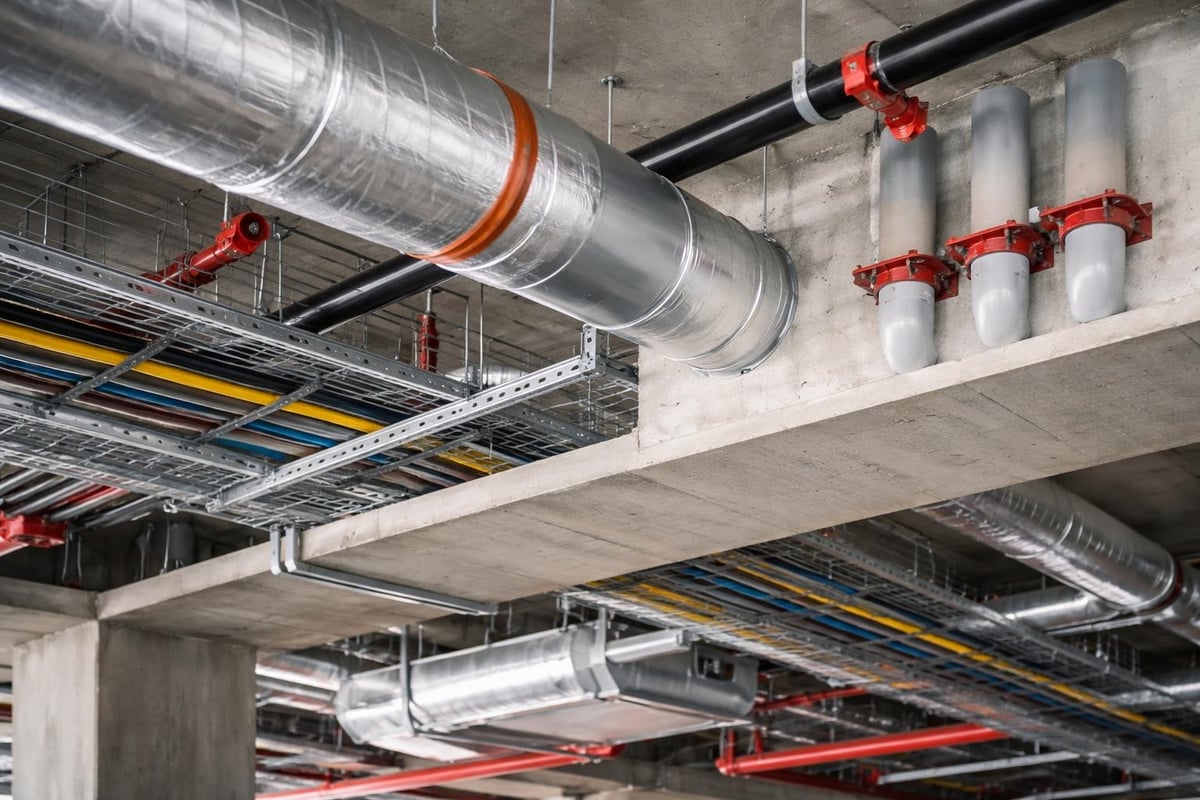
Building and civil engineering extends beyond structural concerns to encompass the complex systems making structures functional. Electrical, plumbing, HVAC, and fire protection systems require specialized engineering knowledge and careful integration with architectural and structural elements.
Electrical system aging presents particular challenges in older buildings. Deteriorating wiring insulation, outdated panel boards, and insufficient capacity for modern loads create safety hazards and code violations. Electrical engineering system design and audits evaluate existing installations against current standards, identifying upgrade requirements.
System Integration Challenges
Modern building codes require careful coordination between disciplines:
- Structural openings must accommodate mechanical and electrical penetrations without compromising load paths
- Fire protection systems require both dedicated electrical service and structural support for piping networks
- Emergency power demands generator placement, fuel storage, and automatic transfer switching
- Building automation integrates HVAC, lighting, and security through networked control systems
- Life safety systems including fire alarms, emergency lighting, and egress illumination
These interdependencies mean building and civil engineering professionals cannot work in isolation. Successful projects require collaborative approaches where structural, architectural, and systems engineers coordinate from initial planning through final commissioning.
Permitting and Regulatory Compliance
Navigating the permitting process represents a significant aspect of building and civil engineering practice. Every repair, alteration, or new construction requires proper approvals, with increasingly stringent review procedures for structural work following recent code changes.
Permit-ready design packages must demonstrate code compliance across multiple dimensions. Structural calculations prove adequate strength and stability. Construction drawings show compliant details. Product specifications verify approved materials. Special inspections identify work requiring third-party verification during construction.
The building recertification inspection process itself generates permit requirements when deficiencies require correction. Property owners discover that inspection and repair permitting often proceed on parallel tracks, with tight deadlines requiring careful coordination between engineers, contractors, and building officials.
Documentation Requirements
Building departments now demand comprehensive documentation:
- Sealed engineering drawings prepared by licensed professionals
- Structural calculations demonstrating compliance with current codes
- Product data sheets for specified materials and systems
- Special inspection agreements identifying required testing and observation
- Construction administration plans outlining engineer involvement during work
These requirements reflect lessons learned from construction failures and increased emphasis on accountability throughout the building process. The University of Texas at Austin maintains resources documenting notable projects and engineering landmarks that inform contemporary practice standards.
Emerging Technologies and Methods
Building and civil engineering continues evolving as new technologies enhance assessment capabilities and repair methodologies. Infrared thermal imaging, ground-penetrating radar, and ultrasonic testing reveal conditions impossible to detect through visual observation alone.
3D laser scanning creates precise as-built documentation of existing structures, enabling accurate analysis and detailed repair planning. These point cloud models support structural evaluation, conflict detection, and construction sequencing for complex renovation projects.
Repair materials and methods have similarly advanced. High-performance concrete mixes designed specifically for restoration applications offer enhanced durability in aggressive environments. Fiber-reinforced polymer systems provide strengthening solutions where traditional methods prove impractical. Corrosion-inhibiting admixtures extend service life for new concrete exposed to chloride environments.
Sustainable Practice Integration
Contemporary building and civil engineering increasingly incorporates sustainability considerations. Energy efficiency, material selection, and lifecycle cost analysis influence design decisions. Existing building renovation often proves more sustainable than demolition and replacement, preserving embodied energy while updating performance.
The Northern Arizona University guide to current civil engineering publications tracks emerging topics including sustainable infrastructure development and resilient design approaches that will define future practice.
Professional Development and Knowledge Resources
Maintaining competence in building and civil engineering requires continuous learning as codes evolve, technologies advance, and lessons emerge from recent projects. Professional organizations provide essential resources supporting ongoing education.
Multiple universities maintain specialized research guides supporting civil engineering practice. The University of North Dakota compiles essential reference books including the ACI concrete code collection and standard civil engineering handbooks that practitioners consult regularly.
Continuing education takes many forms beyond formal coursework. Technical conferences, manufacturer training programs, and peer-reviewed publications all contribute to professional knowledge expansion. Engineers must balance billable work demands against necessary investment in skills development.
| Resource Type | Purpose | Access Method |
|---|---|---|
| Code Commentaries | Understanding intent behind requirements | Purchase from code organizations |
| Technical Papers | Research findings and case studies | Professional society membership |
| Manufacturer Data | Product specifications and installation guides | Direct from manufacturers |
| Online Databases | Searchable technical literature | University or professional subscriptions |
| Webinars | Updates on code changes and new methods | Professional organizations |
The Morgan State University resources for finding civil engineering articles demonstrate the breadth of available technical literature supporting evidence-based practice decisions.
Risk Management in Engineering Practice
Professional liability concerns shape how building and civil engineering services are delivered. Engineers must balance thoroughness against project economics while maintaining appropriate professional skepticism. Every investigation, analysis, and recommendation carries potential consequences requiring careful documentation and clear communication.
Standard of care defines the benchmark against which professional performance is measured. Engineers must provide services consistent with what reasonably competent practitioners would deliver under similar circumstances. This doesn't guarantee perfect outcomes but requires demonstrable competence and appropriate effort.
Quality assurance procedures help manage risk throughout project execution. Independent calculation checks, drawing reviews, and construction observation protocols catch errors before they become costly problems. Professional liability insurance provides financial protection, but preventing claims through diligent practice remains the primary goal.
When engaging in structural integrity reserve studies, engineers must clearly communicate limitations of their assessments. These evaluations project future repair needs based on current conditions and typical deterioration rates, but unexpected factors can accelerate degradation requiring earlier intervention.
The Human Element in Technical Practice
Despite advancing technology, building and civil engineering remains fundamentally a human endeavor requiring judgment, creativity, and communication skills alongside technical knowledge. Engineers must translate complex analytical findings into actionable recommendations for clients who may lack technical backgrounds.
Client education forms an essential service component. Property owners facing expensive structural repairs need to understand why work is necessary, what alternatives exist, and what consequences result from delayed action. Effective engineers develop this understanding without oversimplifying technical realities or creating unnecessary alarm.
Collaboration with other professionals enriches project outcomes. Architects bring aesthetic sensibilities and user experience perspectives. Contractors contribute constructability insights and cost-effective methods. Building officials ensure public safety through code enforcement. Successful projects harness these diverse viewpoints through respectful professional dialogue.
The University of the Witwatersrand reference resources include guidance on professional communication and technical writing, recognizing that conveying engineering conclusions clearly represents a critical professional skill.
Building and civil engineering provides the technical foundation ensuring our structures remain safe, functional, and code-compliant throughout their service lives. For South Florida property owners navigating milestone inspections and aging infrastructure challenges, partnering with experienced professionals makes all the difference. Souffront Construction and Engineering delivers comprehensive inspection, engineering, and construction services helping property owners meet regulatory requirements while protecting their investments through reliable, code-conscious solutions.