Structural Design Civil Engineering: A Complete Guide

Structural design civil engineering forms the backbone of safe, resilient buildings and infrastructure across South Florida and beyond. Whether you're managing a commercial property facing milestone recertification or overseeing a residential complex in need of concrete restoration, understanding the fundamentals of structural design helps you make informed decisions about your building's integrity. This comprehensive guide explores the essential principles, processes, and modern applications that define structural design civil engineering in 2026, with particular attention to how these concepts apply to building inspections, repairs, and compliance requirements.
The Foundation of Structural Design Civil Engineering
Structural design civil engineering encompasses the science and art of planning, analyzing, and constructing load-bearing systems that support buildings and infrastructure. This discipline combines physics, materials science, and mathematical principles to ensure structures can withstand environmental forces, occupancy loads, and the test of time.
At its core, structural design civil engineering involves calculating how forces move through a building. Engineers must account for dead loads (the weight of the structure itself), live loads (people, furniture, equipment), wind forces, seismic activity, and in coastal areas like South Florida, hurricane-force winds and potential flooding. The American Society of Civil Engineers provides comprehensive technical guidelines that establish safety benchmarks for these calculations.
Key Components of Structural Analysis
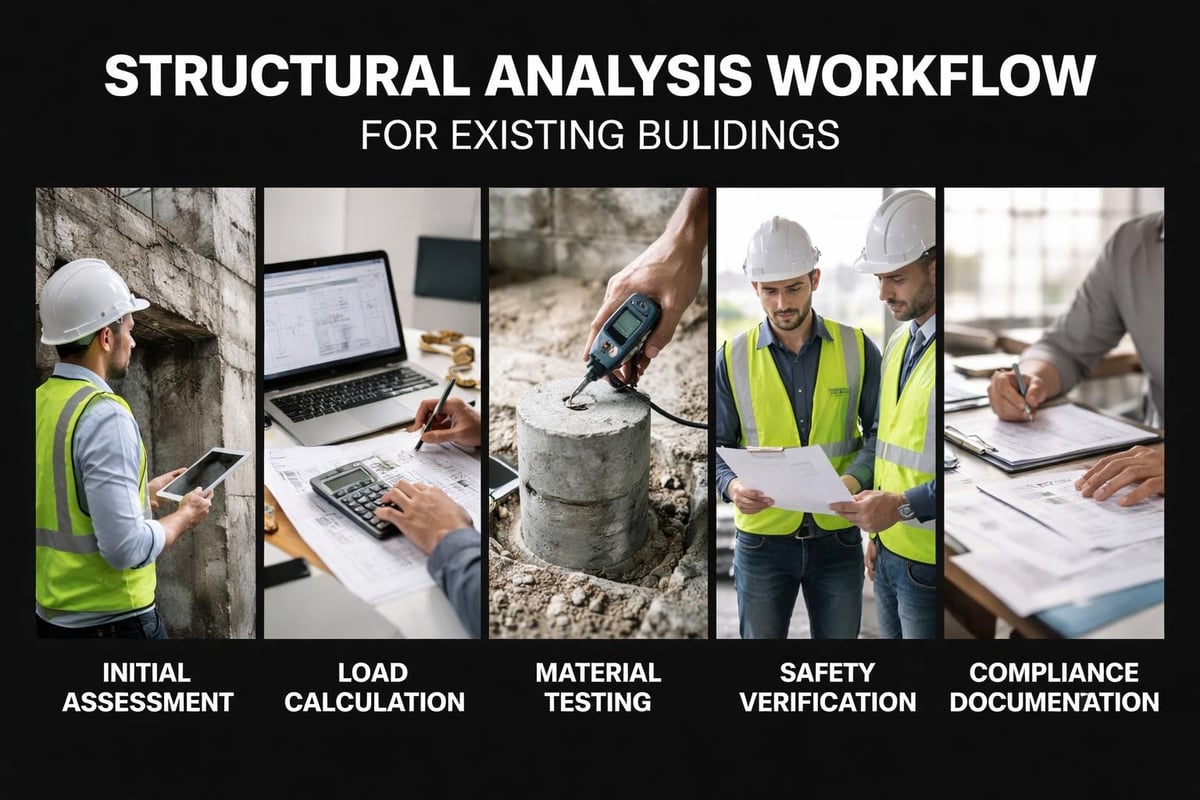
The structural analysis process begins with understanding the building's purpose and environmental context. Engineers evaluate:
- Material properties including concrete strength, steel grade, and reinforcement specifications
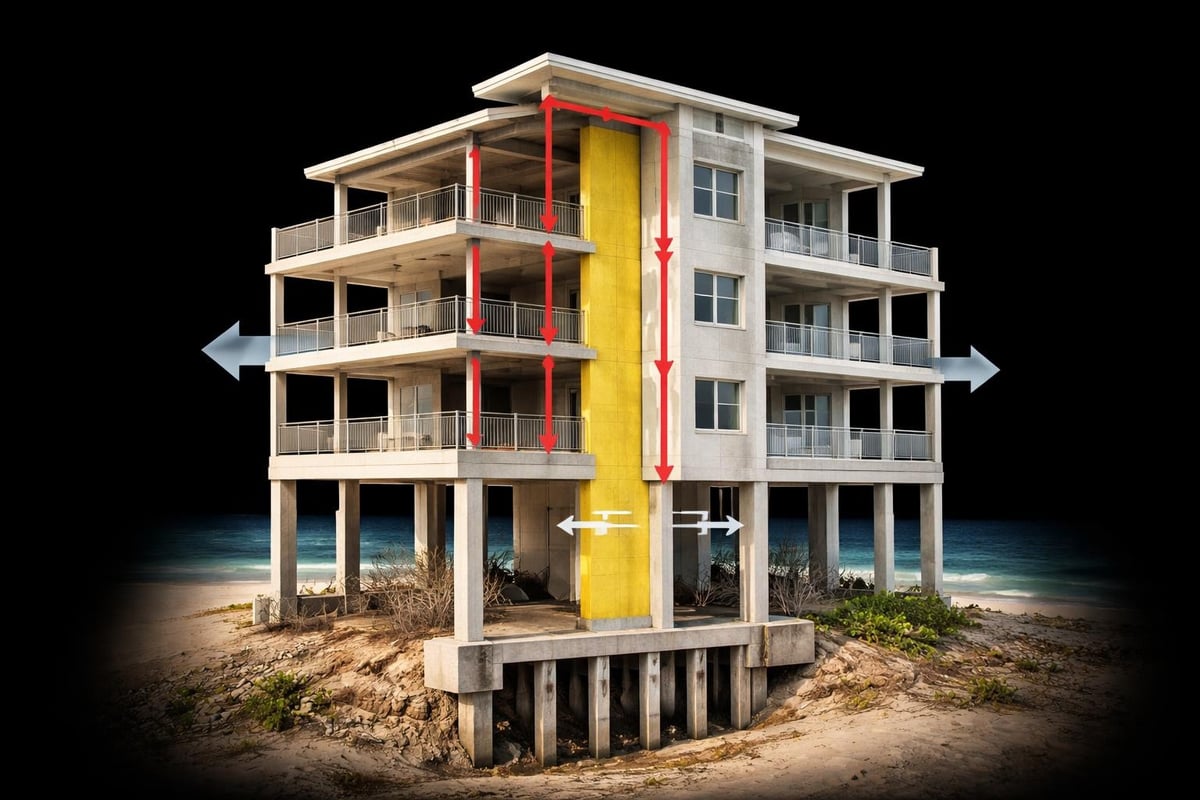
- Load paths that trace how forces transfer from roof to foundation
- Connection details where different structural elements meet
- Safety factors that provide cushion beyond expected maximum loads
- Code compliance ensuring alignment with local and national standards
For property owners in South Florida, these considerations become particularly critical during building recertification milestone inspections, where structural integrity must be verified and documented.
Modern Structural Design Methodologies
Structural design civil engineering has evolved significantly with technological advancement. Today's engineers employ sophisticated software tools that model complex load scenarios and predict structural behavior under various conditions. This represents a dramatic shift from the slide-rule calculations of previous generations.
Computer-Aided Design and Analysis
Modern structural engineers leverage finite element analysis (FEA) software to create detailed three-dimensional models of buildings. These digital twins allow engineers to simulate stress distribution, identify potential failure points, and optimize material usage before construction begins. For existing buildings undergoing assessment, these tools help evaluate whether original designs meet current code requirements.
The integration of Building Information Modeling (BIM) has revolutionized how structural engineers collaborate with architects, contractors, and building owners. BIM creates a shared digital environment where all stakeholders can visualize structural components, identify conflicts, and coordinate repairs or modifications. This proves invaluable for concrete restoration structural repairs where precision matters.
Performance-Based Design Approaches
Rather than simply meeting minimum code requirements, performance-based structural design civil engineering focuses on specific outcomes. Engineers define performance objectives (such as "building remains operational after a Category 3 hurricane") and design systems to achieve those goals. This approach offers several advantages:
- Tailored solutions that address unique building characteristics
- Enhanced resilience beyond baseline code requirements
- Cost optimization by focusing resources where they matter most
- Transparent risk assessment that helps owners make informed decisions
- Flexibility for innovative materials and construction methods
For South Florida properties, performance-based design aligns perfectly with the region's hurricane preparedness needs and the stringent requirements documented in structural integrity reserve studies.
Materials Selection in Structural Engineering
The choice of structural materials fundamentally shapes a building's performance, longevity, and maintenance requirements. Structural design civil engineering considers numerous factors when specifying materials, including strength characteristics, durability in local environmental conditions, availability, and lifecycle costs.
| Material Type | Primary Advantages | Common Applications | South Florida Considerations |
|---|---|---|---|
| Reinforced Concrete | Compressive strength, fire resistance, durability | Foundations, columns, slabs, parking structures | Requires proper cover depth and corrosion-resistant rebar in coastal zones |
| Structural Steel | High strength-to-weight ratio, speed of construction | Long spans, high-rise frames, renovations | Must be protected from corrosion; galvanizing recommended |
| Post-Tensioned Concrete | Reduced cracking, longer spans, thinner slabs | Residential buildings, parking garages | Requires specialized inspection and maintenance protocols |
| Masonry | Aesthetic flexibility, thermal mass, local availability | Load-bearing walls, veneers | Must be properly reinforced and detailed for wind resistance |
Concrete in South Florida Construction
Concrete dominates structural design civil engineering in coastal Florida due to its hurricane resistance and availability. However, the aggressive marine environment presents unique challenges. Salt-laden air accelerates rebar corrosion, while thermal cycling and moisture exposure can degrade concrete over time.
Modern concrete specifications for South Florida include:
- Minimum compressive strength of 4,000 PSI for most applications
- Low permeability mixes that resist chloride penetration
- Adequate concrete cover over reinforcement (typically 2-3 inches depending on exposure)
- Corrosion-resistant reinforcement including epoxy-coated or stainless steel rebar
- Proper curing procedures to achieve design strength and durability
When buildings require restoration, structural engineering design analysis repair services evaluate existing concrete quality and develop specifications for compatible repair materials.

Code Compliance and Regulatory Framework
Structural design civil engineering operates within a comprehensive regulatory framework designed to protect public safety. In Florida, the structural provisions of the Florida Building Code (FBC) govern design requirements, incorporating and modifying the International Building Code for local conditions.
Florida Building Code Essentials
The FBC addresses structural design through multiple chapters covering:
- Wind load requirements based on wind speed maps and exposure categories
- Seismic design criteria (minimal in most of Florida but still required)
- Foundation design accounting for soil conditions and high water tables
- Material standards referencing industry specifications like ACI 318 for concrete
- Special inspection requirements for critical structural elements
Understanding permissible stress design philosophies helps clarify how codes establish safety margins. The FBC has evolved significantly following Hurricane Andrew in 1992, with continuous updates that reflect lessons learned from subsequent storms.
Property owners often encounter code compliance questions during 40-year building recertification inspections, when existing buildings must demonstrate they meet current structural safety standards or receive appropriate upgrades.
The Role of Professional Engineering
Florida law requires that structural design civil engineering work be performed by or under the supervision of a licensed Professional Engineer (PE). This licensure ensures engineers have demonstrated competency through education, examination, and experience. The PE stamp on structural drawings represents legal accountability for the design's adequacy and code compliance.
For building owners, engaging licensed engineers provides:
- Assurance of technical competency and current knowledge
- Professional liability insurance protection
- Accepted authority for permit submissions
- Expert witness capabilities if disputes arise
- Ethical obligations under state professional practice acts
Structural Assessment of Existing Buildings
While much structural design civil engineering focuses on new construction, assessing existing buildings represents an equally important application. South Florida's aging building stock requires ongoing evaluation to ensure continued safety and functionality.
Comprehensive Structural Inspections
Structural inspections for existing buildings follow systematic procedures that evaluate all major load-bearing components. Engineers examine foundations, columns, beams, slabs, walls, and connections for signs of distress, deterioration, or inadequate capacity. Common findings in South Florida buildings include:
- Concrete spalling from rebar corrosion
- Cracking in slabs, beams, or columns
- Deflection exceeding acceptable limits
- Water intrusion damage compromising structural elements
- Connection failures at critical joints
- Foundation settlement or movement
Professional forensic water intrusion investigations often work hand-in-hand with structural assessments, as moisture problems frequently correlate with structural deterioration.
Non-Destructive Testing Methods
Modern structural assessment employs various non-destructive testing (NDT) techniques that gather data without damaging the building. These methods help engineers evaluate structural condition and inform repair strategies.
| Testing Method | Information Provided | Typical Applications |
|---|---|---|
| Ground Penetrating Radar | Rebar location, void detection, concrete thickness | Slab analysis, subsurface investigation |
| Ultrasonic Testing | Concrete quality, delamination detection | Column and beam assessment |
| Rebound Hammer | Surface hardness correlation to strength | Quick strength estimates |
| Core Sampling | Actual compressive strength, depth analysis | Definitive strength verification |
| Half-Cell Potential | Corrosion probability mapping | Parking deck and balcony evaluation |
These techniques enable precise diagnosis that supports targeted repairs rather than wholesale replacement, often resulting in significant cost savings for property owners.
Load Analysis and Distribution
Understanding how loads transfer through a structure forms the essence of structural design civil engineering. Engineers must trace load paths from their point of application down through the building to the foundation and ultimately to the supporting soil.
Types of Structural Loads
Structural systems must resist various load types simultaneously:
Gravity loads include dead loads (permanent construction materials) and live loads (temporary occupancy). The Florida Building Code specifies minimum live loads based on occupancy type - 40 pounds per square foot for residential floors, 100 PSF for assembly areas, and varying requirements for other uses.
Lateral loads from wind and seismic events push buildings horizontally. South Florida's coastal location subjects buildings to design wind speeds ranging from 140 to 180 mph depending on location and proximity to the coast. Structural design civil engineering addresses these forces through shear walls, braced frames, or moment-resisting frames that provide lateral stiffness.
Environmental loads including temperature effects, settlement, and moisture-related expansion create additional stresses that must be accommodated through expansion joints, control joints, and appropriate detailing.
Structural System Selection
Different structural systems offer varying advantages for load resistance. Common systems in South Florida include:
- Bearing wall systems using concrete or masonry walls to carry gravity and lateral loads
- Frame systems with columns and beams supporting floor and roof slabs
- Flat plate construction where slabs connect directly to columns without beams
- Post-tensioned systems providing longer spans and reduced cracking
- Hybrid systems combining multiple approaches for optimal performance
The structural engineer's role includes selecting the most appropriate system for the building's use, site conditions, and budget while ensuring adequate strength, stiffness, and ductility.
Structural Repairs and Restoration
When assessments reveal structural deficiencies, structural design civil engineering expertise guides the repair design process. Successful restoration requires understanding both the original design intent and modern repair technologies that restore or enhance capacity.
Common Repair Strategies
Structural repairs range from minor concrete patching to major structural strengthening. The appropriate strategy depends on the severity of damage, code compliance requirements, and building use:
Concrete restoration addresses deteriorated elements through:
- Removal of loose and delaminated concrete
- Preparation of sound substrate surfaces
- Installation of corrosion inhibitors or replacement rebar
- Application of repair mortars engineered to match existing concrete properties
- Protective coatings to slow future deterioration
Structural strengthening increases load capacity through:
- Adding steel reinforcement plates or carbon fiber wraps
- Installing new structural elements to share loads
- Post-tensioning existing members to reduce tensile stresses
- Grouting voids or consolidating weak materials
Professional concrete restoration services integrate structural engineering analysis with proven repair methodologies to ensure lasting results.
Balcony and Railing Systems
Balconies represent a particular structural challenge in South Florida due to extreme weather exposure and high use intensity. Structural design civil engineering for balcony systems must address:
- Cantilever design resisting gravity and uplift forces
- Connection details preventing water intrusion at building interfaces
- Railing attachment capable of resisting code-mandated lateral loads
- Drainage systems preventing ponding and accelerated deterioration
- Material selection for corrosion resistance in marine environments
When balcony replacement becomes necessary, engineering analysis determines whether existing structural support remains adequate or requires upgrading to meet current codes.
Foundation Design Considerations
Foundations transfer all building loads to the supporting soil, making them perhaps the most critical structural component. Structural design civil engineering for foundations requires understanding soil mechanics, groundwater conditions, and local geological characteristics.
South Florida Subsurface Conditions
The geology beneath South Florida presents unique challenges for foundation design. Typical soil profiles include:
- Fill materials of variable quality near the surface
- Organic soils and muck with very low bearing capacity
- Limestone at varying depths, sometimes with voids or solution cavities
- High water tables often within a few feet of ground surface
- Marine clays with moderate strength but significant settlement potential
Foundation types commonly specified include:
| Foundation Type | Soil Conditions | Advantages | Typical Applications |
|---|---|---|---|
| Shallow spread footings | Competent limestone near surface | Economical, simple construction | Low-rise buildings with good soil |
| Driven concrete piles | Deep competent bearing layer | High capacity, proven performance | Mid-rise and high-rise construction |
| Auger-cast piles | Variable conditions | Less vibration, adaptable | Urban sites, noise-sensitive areas |
| Mat foundations | Weak soils requiring load distribution | Reduces differential settlement | Heavy structures on poor soils |
Understanding subsurface conditions requires geotechnical investigation, typically involving soil borings that sample and test materials at various depths. These investigations inform geotechnical engineering foundations soils analysis that establishes design bearing pressures and settlement predictions.
Specialized Structural Applications
Structural design civil engineering encompasses numerous specialized applications beyond conventional building design. Each requires specific expertise and consideration of unique loading conditions and performance requirements.
Parking Structures
Multi-level parking garages present distinct structural challenges including repetitive heavy vehicle loads, exposure to automotive fluids and de-icing salts (in northern climates), and large open floor areas requiring long spans. Design considerations include:
- Durability specifications addressing chemical exposure and abrasion
- Drainage systems preventing water accumulation and chloride infiltration
- Traffic capacity for concentrated wheel loads and impact forces
- Ramp geometry balancing slopes with structural efficiency
- Expansion joints accommodating thermal movement in large plan areas
Parking structures represent significant investment and require proactive maintenance to prevent deterioration that leads to costly repairs or structural failure.
Coastal and Marine Structures
Seawalls, piers, and waterfront buildings face extraordinary environmental challenges. Salt spray, wave action, tidal cycling, and marine borer attack all threaten structural integrity. Structural design civil engineering for coastal applications emphasizes:
- Material selection prioritizing corrosion resistance
- Robust connection details preventing storm damage
- Consideration of sea level rise and changing flood elevations
- Scour protection preventing foundation undermining
- Regular inspection and maintenance protocols
Property owners with waterfront exposure benefit from understanding basic principles of coastal structure maintenance and the importance of early intervention when deterioration appears.
The Future of Structural Design Civil Engineering
The structural design civil engineering field continues evolving through technological innovation, materials development, and changing environmental conditions. Several trends shape the profession's direction as we move through 2026 and beyond.
Sustainable and Resilient Design
Climate change and sustainability concerns drive increasing emphasis on structures that minimize environmental impact while maximizing resilience to extreme events. Strategies include:
- Low-carbon concrete mixes incorporating supplementary cementitious materials
- Adaptive reuse preserving existing structures rather than demolition and replacement
- Enhanced hurricane resistance exceeding minimum code requirements
- Flood-resistant design anticipating future sea level conditions
- Energy-efficient structural systems reducing operational carbon footprints
Research published in civil and structural engineering journals advances understanding of these emerging design approaches and their real-world performance.
Digital Transformation
Technology reshapes how structural engineers approach design, analysis, and construction administration. Key developments include:
- Artificial intelligence assisting with optimization and code checking
- Digital twins enabling real-time structural health monitoring
- Drone inspections accessing difficult areas safely and economically
- 3D printing creating complex structural components
- Cloud collaboration facilitating global project teams
These tools enhance engineer productivity while improving design quality and construction safety. For building owners, technology enables more thorough inspections at lower cost and better documentation for regulatory compliance and asset management.
Interdisciplinary Coordination
Structural design civil engineering rarely occurs in isolation. Successful projects require seamless coordination with multiple disciplines to create buildings that function as integrated systems rather than collections of separate parts.
Architectural Integration
Structural engineers work closely with architects to realize design visions while ensuring structural feasibility and safety. This collaboration involves:
- Early concept discussions identifying structural implications of architectural features
- Material selection balancing aesthetic preferences with structural requirements
- Space planning accommodating columns, beams, and shear walls within architectural layouts
- Exterior envelope design coordinating weather barriers with structural framing
- Detail development ensuring waterproofing at critical structural connections
Open communication between structural and architectural teams prevents costly redesigns and construction problems.
MEP Systems Coordination
Mechanical, electrical, and plumbing systems must route through structural elements without compromising strength or creating maintenance access problems. Coordination addresses:
- Penetrations through structural slabs and beams
- Equipment loads and vibration isolation requirements
- Clearances for ductwork and pipe runs
- Structural support for heavy mechanical equipment
- Electrical room locations and structural loading
For properties undergoing electrical engineering system design audits, structural capacity for new electrical equipment must be verified before installation proceeds.
Construction Team Collaboration
Structural engineers maintain involvement through construction to address field conditions, review shop drawings, and respond to contractor questions. This ongoing participation ensures the design intent translates accurately into built reality. Site observations during critical construction phases verify:
- Proper foundation installation and concrete placement
- Correct reinforcement placement before concrete pours
- Appropriate connection details at critical structural joints
- Compliance with special inspection requirements
- Field modifications when unforeseen conditions arise
Active construction administration prevents costly errors and ensures the completed structure performs as designed.
Continuing Education and Professional Development
The dynamic nature of structural design civil engineering demands ongoing learning throughout a career. Engineers maintain competency through various channels that keep pace with code changes, technological advancement, and evolving best practices.
Professional organizations including the Structural Engineering Institute (SEI) and ASCE offer continuing education programs, technical committees, and networking opportunities. Engineers can explore resources through academic structural design guides that compile current research and practice developments.
Florida's professional licensure requirements mandate continuing education for license renewal, ensuring practicing engineers stay current with code changes and new technologies. This commitment to lifelong learning benefits building owners who rely on engineering expertise for critical safety decisions.
Structural design civil engineering provides the technical foundation for safe, durable buildings that protect occupants and property investments for decades. From initial design through ongoing maintenance and eventual recertification, structural engineering principles guide decisions that determine building performance and longevity. Whether you're facing milestone inspection requirements, planning concrete restoration, or evaluating structural modifications, partnering with experienced professionals ensures code compliance and structural integrity. Souffront Construction and Engineering brings comprehensive structural engineering expertise to South Florida property owners, combining thorough analysis with practical, permit-ready solutions that keep buildings safe and compliant.