Structural Design and Engineering for Building Safety

The foundation of every safe, durable building begins with sound structural design and engineering principles. Whether you're managing a high-rise condominium, overseeing a commercial property, or preparing for mandatory recertification inspections, understanding how structural systems work together determines whether your building can withstand decades of environmental stress, occupant loads, and the unique challenges posed by South Florida's coastal climate. For property owners and managers in regions requiring milestone inspections, the quality of structural design and engineering directly impacts compliance, safety ratings, and long-term property values.
The Core Principles Behind Structural Systems
Structural design and engineering encompasses the science of creating buildings that resist forces while maintaining functionality and safety. Structural engineering theory applies physics and mathematics to predict how structures behave under various loads, from gravity and wind to seismic activity and water intrusion.
Load Path Analysis and Distribution
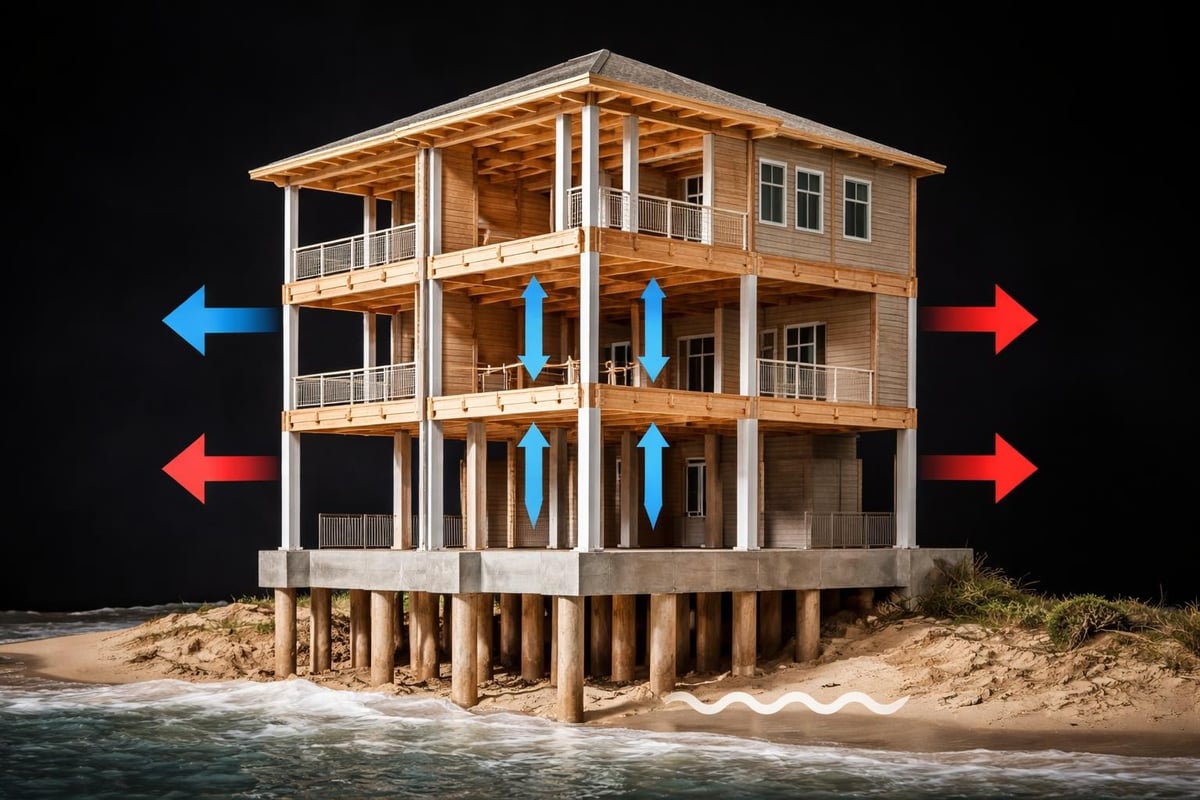
Every building transfers loads from the roof down through beams, columns, and eventually to the foundation. Understanding this load path reveals potential weak points.
- Dead loads: permanent structural weight (concrete, steel, walls)
- Live loads: temporary forces (occupants, furniture, equipment)
- Environmental loads: wind pressure, rain, thermal expansion
- Special loads: impact, vibration, soil settlement
Engineers calculate these forces to determine appropriate member sizes, reinforcement patterns, and connection details. In coastal areas, wind loads from hurricanes demand additional analysis that affects everything from window specifications to foundation anchoring systems.
Material Selection and Performance
The relationship between structural design and engineering practices and material science determines building longevity. South Florida's salt air, high humidity, and intense UV exposure accelerate deterioration in ways that Northern climates rarely experience.
| Material | Advantages | South Florida Challenges |
|---|---|---|
| Reinforced Concrete | Fire resistance, durability | Chloride penetration, spalling |
| Structural Steel | High strength-to-weight ratio | Corrosion in coastal environments |
| Post-Tensioned Concrete | Crack control, span capability | Tendon corrosion if poorly maintained |
| Masonry | Aesthetic options, thermal mass | Water intrusion, expansion joints |
Property managers must understand these material behaviors when planning concrete restoration and structural repairs as buildings age.
Building Codes and Regulatory Compliance
Modern structural design and engineering operates within a comprehensive framework of codes and standards. These regulations represent decades of lessons learned from structural failures, natural disasters, and technological advances.
Key Code References for Florida Properties
The Florida Building Code (FBC) incorporates national standards while adding provisions specific to hurricane zones and high water tables. Engineers reference multiple specialized documents:
- ACI 318: Concrete design and reinforcement requirements
- AISC Steel Manual: Structural steel connections and member design
- ASCE 7: Minimum design loads for buildings
- FBC High Velocity Hurricane Zone: Enhanced wind resistance provisions
- Local amendments: Miami-Dade and Broward County modifications
Understanding these design principles, codes, and standards becomes critical during building recertification milestone inspections, where existing structures must demonstrate continued code compliance or identify necessary upgrades.
Buildings constructed before certain code changes may require structural evaluations to verify safety margins. This particularly affects properties approaching their 40-year recertification deadline, where engineers assess whether older design approaches still provide adequate protection.
Structural Assessment for Existing Buildings
While new construction follows current codes, existing buildings present unique challenges. Structural design and engineering for recertification requires evaluating decades-old construction methods, material degradation, and changed use patterns.
Common Deterioration Patterns
Coastal buildings face accelerated aging compared to inland properties. Salt-laden air penetrates concrete, corroding reinforcing steel and creating expansive forces that crack and spall protective concrete cover.
- Balcony cantilevers showing severe concrete spalling
- Post-tensioned slab tendons with corrosion damage
- Parking structure columns with delaminated concrete
- Facade connections weakened by thermal cycling
- Foundation settlement from changing water tables
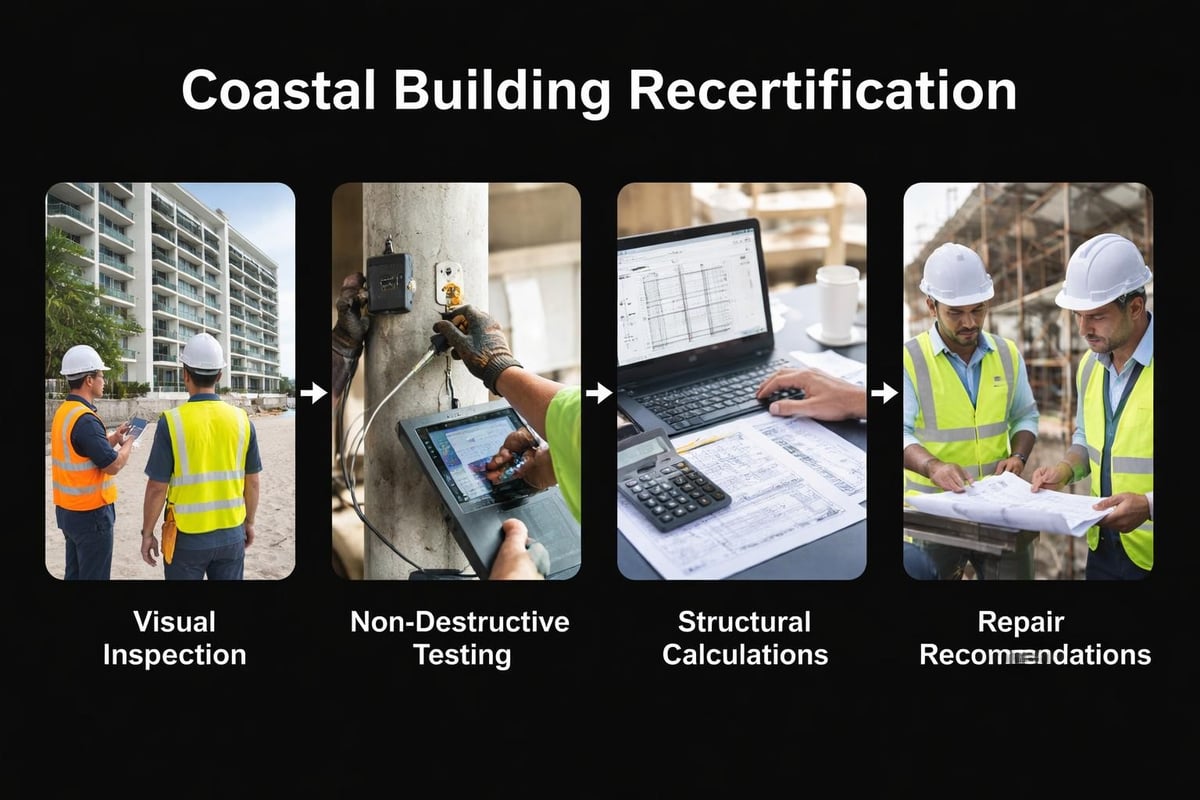
These conditions require systematic investigation combining visual observation, non-destructive testing, and laboratory analysis. Engineers document existing conditions, calculate remaining structural capacity, and design targeted repairs that restore safety margins.
Investigation Methodologies
Professional structural assessments follow documented procedures to ensure thorough evaluation. The structural engineering design analysis repair process typically involves:
- Document review: original drawings, previous inspection reports, permit histories
- Visual survey: identifying visible distress, weathering patterns, maintenance issues
- Non-destructive testing: ground-penetrating radar, chloride testing, rebound hammer analysis
- Selective probes: exposing reinforcement to verify size, spacing, condition
- Structural calculations: comparing existing capacity to current code requirements
This investigative approach informs repair priorities, helps property managers budget appropriately, and provides the documentation required for milestone building inspection reports.
Water Intrusion and Structural Integrity
Water represents the single greatest threat to structural systems in South Florida. The intersection of structural design and engineering with waterproofing systems determines whether buildings maintain their designed capacity or suffer progressive deterioration.
How Water Damages Structural Elements
When water penetrates concrete, it initiates chemical and physical processes that compromise strength. Moisture carries dissolved salts to reinforcing steel, breaking down the protective oxide layer. As steel corrodes, it expands up to seven times its original volume, generating internal pressures that crack surrounding concrete.
This deterioration follows predictable patterns:
- Surface staining: early warning of internal corrosion
- Hairline cracks: initial concrete expansion
- Spalling: concrete cover breaks away from reinforcement
- Exposed rebar: accelerated corrosion in open air
- Structural deficiency: reduced load-carrying capacity
Early detection through forensic water intrusion investigations prevents minor maintenance issues from becoming major structural repairs. Property managers who address leaks promptly protect their structural investment.
Critical Waterproofing Locations
Certain building elements require special attention during both initial construction and ongoing maintenance. These vulnerability points concentrate water exposure and structural loads:
| Location | Waterproofing System | Failure Consequences |
|---|---|---|
| Plaza decks | Traffic-bearing membrane | Interior damage, slab deterioration |
| Balconies | Sloped membrane, drainage | Cantilever spalling, safety hazards |
| Parking garages | Wearing surface, sealers | Column/beam corrosion, structural deficiency |
| Below-grade walls | Exterior membrane, drainage board | Foundation damage, interior flooding |
| Roof-to-wall transitions | Flashing, sealant joints | Wall cavity moisture, interior damage |
Repair Design and Implementation
Once structural deficiencies are identified, engineers must design repairs that restore capacity, prevent recurring damage, and meet code requirements. This application of structural design and engineering principles to existing buildings requires different approaches than new construction.
Repair Strategy Selection
Not all structural damage requires the same solution. Engineers evaluate multiple factors when recommending repair approaches:
- Extent and severity of existing damage
- Accessibility for construction equipment
- Building occupancy during repairs
- Long-term performance expectations
- Life-cycle cost considerations
- Permit and inspection requirements
Minor surface spalls might receive patch repairs, while extensive deterioration could require complete section replacement. The key lies in matching repair methods to actual structural needs rather than applying one-size-fits-all solutions.
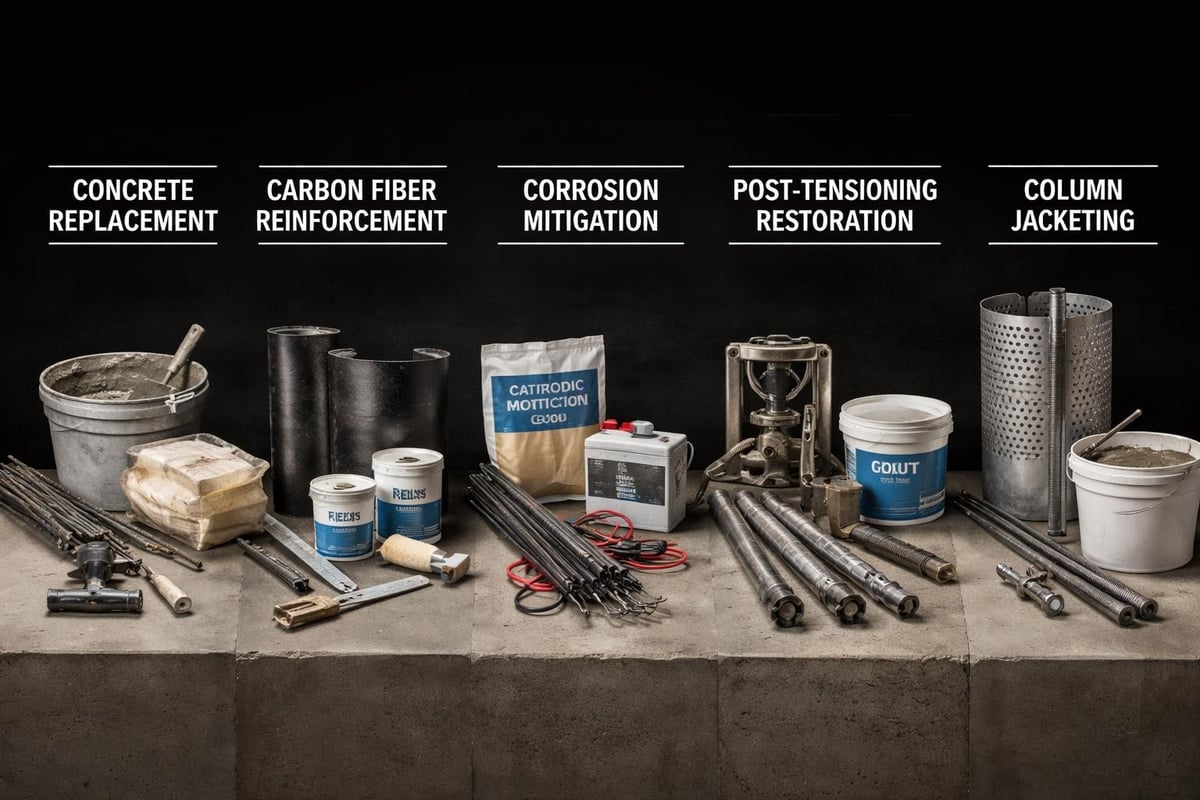
Common Structural Repair Methods
- Concrete replacement: removing deteriorated sections, installing new formwork, placing repair concrete
- Carbon fiber reinforcement: bonding high-strength composite materials to increase flexural capacity
- Corrosion mitigation: cathodic protection systems that electrically prevent ongoing steel deterioration
- Post-tensioning restoration: replacing damaged tendons, re-stressing cables to design levels
- Column/beam jacketing: adding external reinforcement to increase strength and ductility
Each method requires detailed engineering calculations, shop drawings, and construction observation to ensure proper installation. Resources from organizations like the Institution of Structural Engineers provide technical guidance for complex repair scenarios.
Integration with Building Systems
Modern structural design and engineering doesn't exist in isolation. Structural systems interact with architectural, mechanical, electrical, and plumbing components in ways that affect both performance and maintenance.
MEP System Coordination
Mechanical, electrical, and plumbing installations frequently penetrate structural members. Engineers must verify that these openings don't compromise load-carrying capacity or violate code requirements for minimum concrete cover over reinforcement.
- HVAC ductwork requiring beam penetrations
- Electrical conduit running through slabs
- Plumbing risers penetrating floor systems
- Fire protection piping attached to structural framing
- Communication infrastructure routing through ceiling plenums
Poor coordination during initial construction creates maintenance headaches decades later. When property managers discover structural damage, they often find that improper MEP installations contributed to the problem through concentrated moisture exposure or inadvertent load path disruptions.
Accessibility and Life Safety Updates
Buildings undergoing major structural repairs often trigger requirements for accessibility improvements and life safety upgrades. This reflects how building codes have evolved to incorporate better protection for occupants.
Structural work might require:
- Egress stair modifications for wider treads and risers
- Ramp installations requiring new foundation elements
- Fire-rated assemblies affecting structural connections
- Seismic upgrades to lateral force-resisting systems
- Elevator modernization with changed pit and overhead dimensions
Professional Engineering Responsibility
The practice of structural design and engineering carries significant professional and legal responsibilities. Florida law requires licensed Professional Engineers to seal construction documents, certifying that designs meet applicable codes and standards.
Engineer Qualifications and Licensing
Structural engineers complete extensive education and experience requirements before receiving licensure. The path typically includes a four-year engineering degree, passing the Fundamentals of Engineering exam, four years of progressive experience under licensed supervision, and passing the Professional Engineering examination.
For building recertification work, many jurisdictions require special qualifications. Engineers must demonstrate specific experience with building assessments, familiarity with local codes, and professional liability insurance adequate to protect property owners.
Additional certifications enhance an engineer's capabilities:
- SECB: Structural Engineering Certification Board designation
- SE: Structural Engineer licensure in states offering this specialty
- ICC certifications: Building inspector qualifications
- Forensic engineering training: Investigation and expert testimony skills
Standard of Care and Documentation
Engineers owe clients and the public a duty to perform work according to accepted professional standards. This "standard of care" reflects what a reasonably competent engineer would do under similar circumstances.
Proper documentation protects all parties involved in structural projects. Complete records should include:
- Original design drawings with engineer's seal and signature
- Calculation packages supporting member sizes and connections
- Field observation reports documenting construction compliance
- Material test results verifying concrete strength, steel properties
- As-built drawings showing actual installed conditions
These documents become invaluable during future inspections, renovations, or structural integrity reserve studies required under current Florida law.
Emerging Technologies and Methods
The field of structural design and engineering continues evolving as new materials, analysis methods, and construction technologies emerge. Property managers benefit from understanding these developments when planning building improvements or evaluating engineer recommendations.
Advanced Analysis Software
Modern engineers utilize sophisticated computer programs that model structural behavior with remarkable accuracy. Finite element analysis breaks buildings into thousands of small elements, calculating stresses and deflections under various load combinations. This detailed analysis reveals potential problems that traditional hand calculations might miss.
Benefits include:
- Optimized member sizing reducing material costs
- Better understanding of complex load paths
- Visualization of stress concentrations
- Parametric studies comparing design alternatives
- Integration with building information modeling (BIM)
These tools particularly help when evaluating existing buildings where construction doesn't match original drawings or unknown modifications have occurred over decades.
Performance-Based Design
Traditional code-based design follows prescriptive rules. Performance-based approaches instead establish performance objectives and allow engineers to demonstrate compliance through advanced analysis and testing.
This methodology proves valuable for:
- Historic buildings requiring seismic upgrades
- Unconventional structural systems
- Buildings with mixed-use occupancies
- Adaptive reuse projects changing building function
- Situations where code provisions conflict
Performance-based structural design and engineering requires greater engineering effort but often produces more economical and elegant solutions than strict code compliance.
Cost Considerations and Value Engineering
Property owners and association boards inevitably face budget constraints when addressing structural issues. Understanding how engineering resources and professional organizations approach cost management helps stakeholders make informed decisions.
Initial Investment versus Life-Cycle Costs
The lowest initial bid rarely delivers the best long-term value. Structural repairs represent significant investments that should provide decades of service. Evaluating proposals requires looking beyond first costs to consider:
| Cost Factor | Short-Term Impact | Long-Term Impact |
|---|---|---|
| Material quality | Higher initial price | Reduced maintenance, longer service life |
| Installation workmanship | Schedule and labor costs | Fewer callbacks, warranty claims |
| Design thoroughness | Engineering fees | Avoided change orders, proper solutions |
| Warranty coverage | Contract price | Protection against premature failures |
| Maintenance requirements | Minimal immediate cost | Ongoing inspection and upkeep expenses |
Experienced property managers recognize that structural design and engineering investments protect property values far beyond the repair warranty period.
Phasing Strategies for Budget Management
When facing extensive structural deficiencies, phasing repairs over multiple budget cycles helps manage cash flow while addressing critical safety issues promptly.
Typical prioritization considers:
- Life-safety hazards: immediate threats requiring emergency repairs
- Code violations: items triggering enforcement actions or inspection failures
- Progressive deterioration: conditions worsening rapidly without intervention
- Deferred maintenance: items stable but requiring eventual attention
- Improvements: upgrades beyond minimum requirements
This approach requires honest communication between engineers, property managers, and ownership about risks associated with delayed repairs.
The Recertification Connection
For South Florida property owners, structural design and engineering intersects most directly with regulatory requirements through building recertification programs. These mandatory inspections verify that buildings maintain safe conditions as they age.
Milestone Inspection Requirements
Florida's recertification programs mandate periodic inspections of structural and electrical systems for buildings reaching specified ages. The process examines whether buildings still perform as originally designed despite decades of environmental exposure and occupant use.
Engineers conducting these inspections evaluate:
- Overall structural stability and load-carrying capacity
- Deterioration patterns in primary structural elements
- Adequacy of lateral force-resisting systems
- Condition of load-bearing walls and columns
- Integrity of floor and roof assemblies
- Safety of balconies, stairs, and railings
When deficiencies are identified, engineers prepare detailed repair recommendations with estimated costs, helping property managers develop funding strategies and construction schedules. Resources available through professional engineering databases provide technical guidance for complex evaluation scenarios.
Reserve Study Implications
Recent legislative changes require Structural Integrity Reserve Studies (SIRS) for certain buildings. These studies go beyond simple visual inspections to assess the overall health of structural systems and project future repair needs.
The SIRS process combines:
- Comprehensive structural assessment by licensed engineers
- Estimation of remaining useful life for major components
- Financial modeling for required reserve contributions
- Prioritized maintenance and replacement schedules
- Updated analysis as conditions change
This forward-looking approach to structural design and engineering helps associations avoid special assessments by accumulating reserves before emergency repairs become necessary.
Protecting buildings through sound structural design and engineering practices ensures safety, maintains property values, and meets evolving regulatory requirements in South Florida's challenging coastal environment. Whether addressing immediate repair needs, planning for milestone recertification, or developing long-term maintenance strategies, professional engineering expertise provides the foundation for informed decision-making. Souffront Construction and Engineering brings decades of structural engineering experience to property owners, associations, and managers throughout South Florida, delivering comprehensive inspection, design, and construction services that keep buildings safe, compliant, and structurally sound for generations to come.