Structural Company: Guide to Selecting the Right Partner
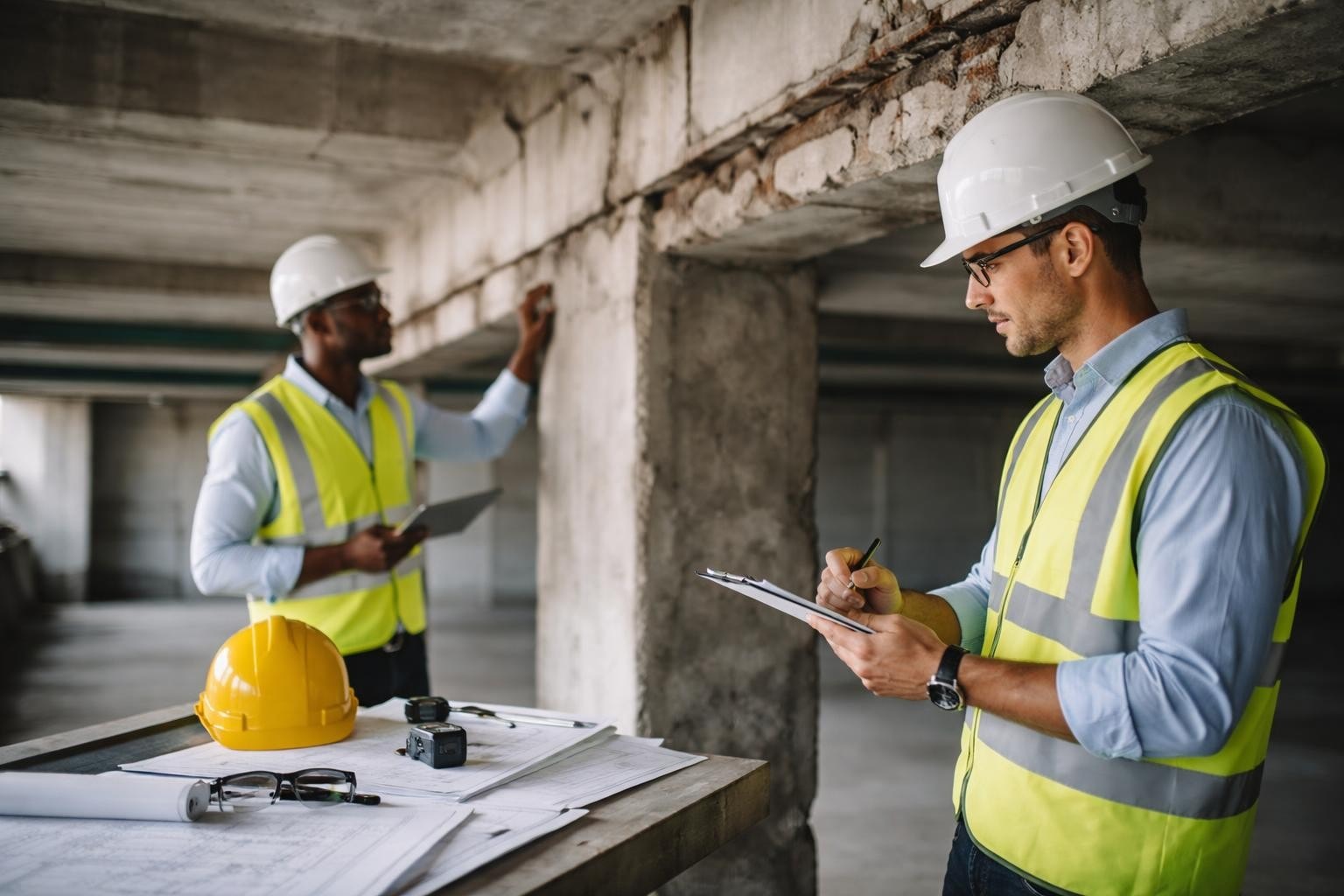
Choosing a structural company for your building's safety, compliance, and long-term integrity isn't a decision to take lightly. Whether you're managing a residential high-rise in Miami Beach or overseeing commercial properties throughout South Florida, the right engineering and construction partner can mean the difference between a building that passes its milestone inspection and one that faces costly violations. As Florida's building codes continue to evolve in 2026, particularly following the tragic events that shaped recent legislation, property owners need professional partners who understand both the technical requirements and the practical realities of keeping aging structures safe and compliant.
What Defines a Quality Structural Company
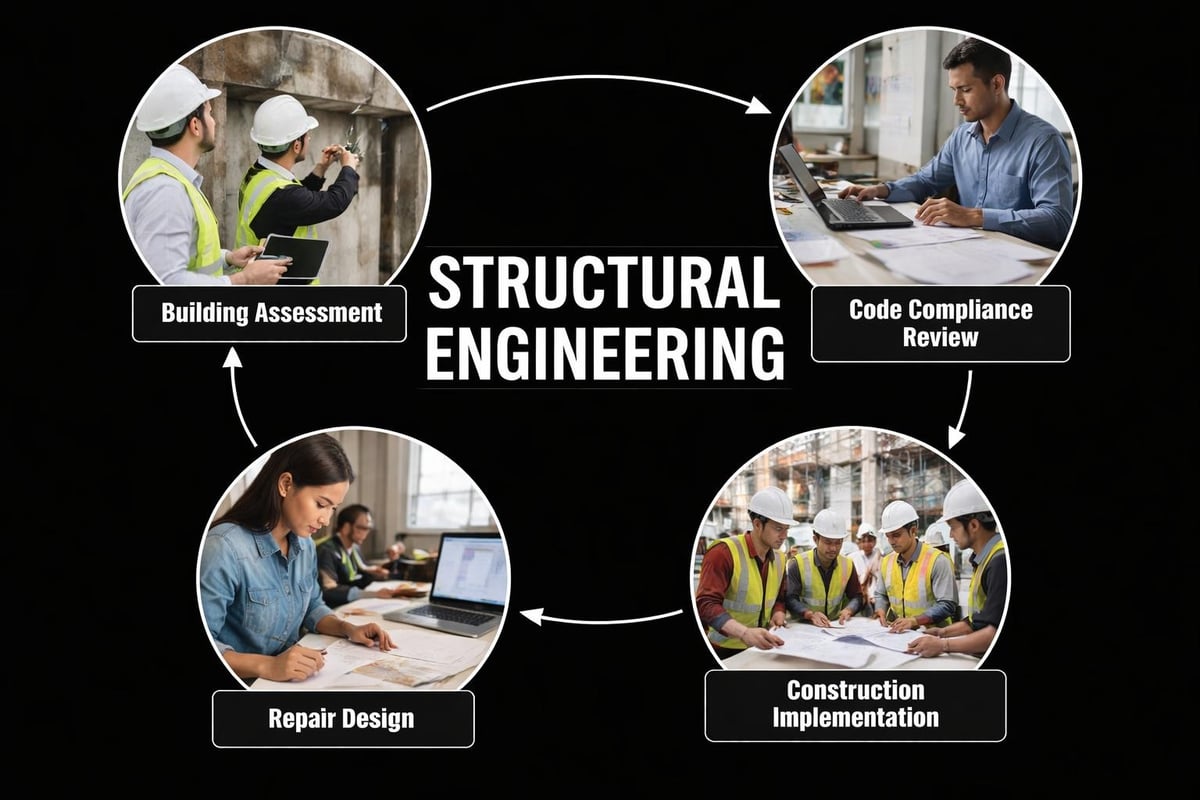
A structural company provides more than just engineering calculations and inspection reports. These firms combine technical expertise with construction knowledge to assess, design, and repair the built environment around us.
The best firms operate at the intersection of multiple disciplines. They employ licensed structural engineers who understand load paths and material science. They maintain construction crews who can execute complex repairs safely and efficiently. They work with specialized inspectors who know exactly what regulators are looking for during milestone building recertification inspections.
Core Services That Matter
When evaluating potential partners, look for companies offering comprehensive capabilities:
- Structural engineering and analysis for load-bearing assessments and repair design
- Building inspection services including 40-year and 50-year recertifications
- Concrete restoration addressing spalling, corrosion, and deterioration
- Water intrusion investigations to identify and resolve moisture problems
- Permit coordination ensuring all work meets local code requirements
This integrated approach prevents the communication gaps and delays that plague projects when you're coordinating between separate engineering firms, contractors, and inspection specialists.
The Recertification Landscape in 2026
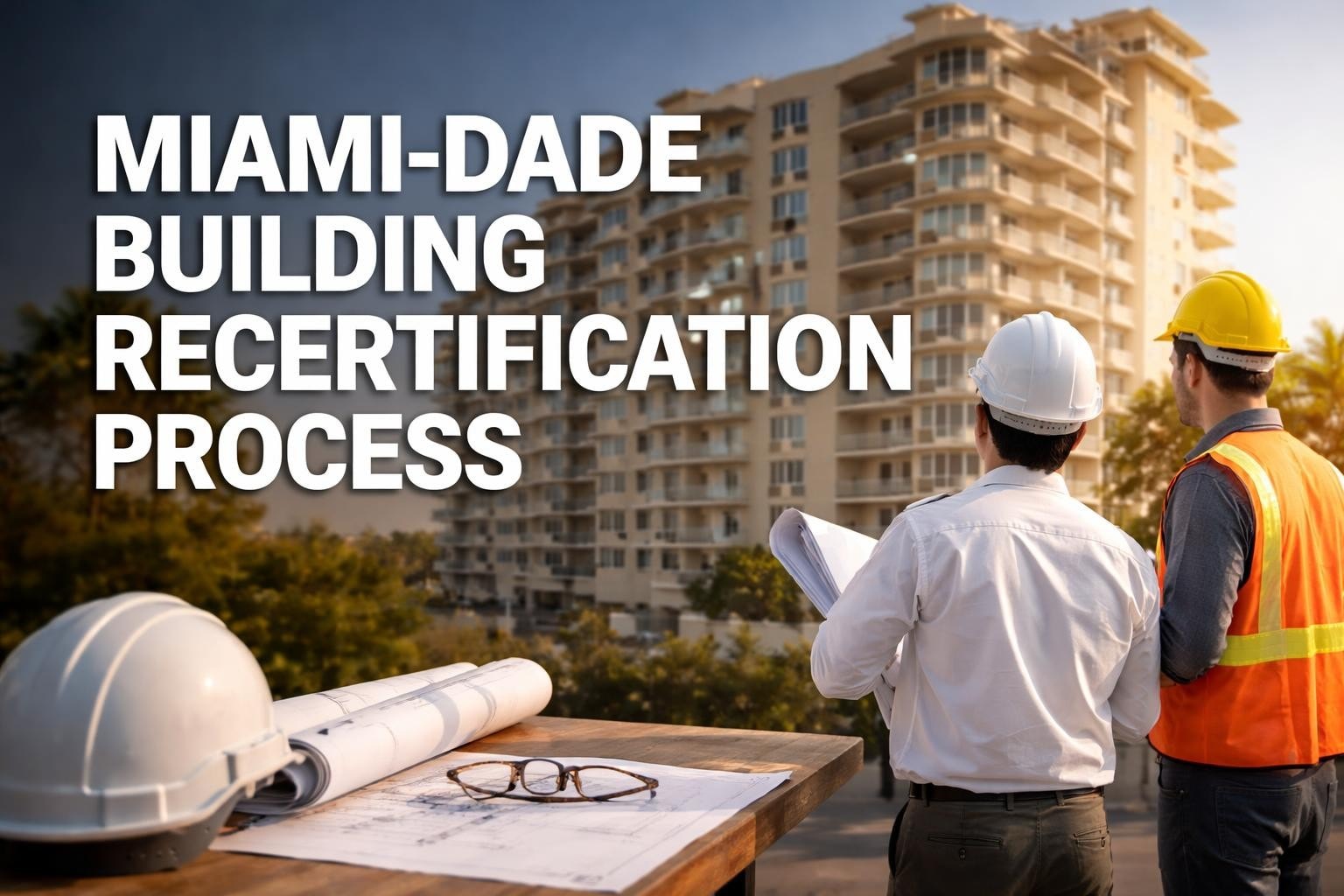
Florida's building recertification requirements have transformed dramatically over the past few years. What started as a Miami-Dade and Broward County requirement has influenced building safety programs statewide.
Current Requirements by County
| County | Initial Inspection Age | Inspection Frequency | Key Focus Areas |
|---|---|---|---|
| Miami-Dade | 40 years (30 near coast) | Every 10 years | Structural, electrical, life safety |
| Broward | 40 years (30 near coast) | Every 10 years | Structural integrity, building systems |
| Palm Beach | Varies by municipality | Varies | Typically follows neighboring counties |
A qualified structural company stays current with these evolving requirements. They understand that understanding codes and standards for structural inspections means continuously educating their teams about regulatory changes. This knowledge directly impacts your project timeline and budget.
The Structural Integrity Reserve Study (SIRS) requirement adds another layer of complexity. Property associations now need detailed analyses of their building's condition and projected capital needs. Working with a structural company experienced in SIRS assessments ensures you receive accurate projections that satisfy both your board and state requirements.
Technical Expertise vs. Practical Experience
Engineering credentials matter, but they're not the whole story. A structural company needs both technical depth and field-tested practical knowledge.
Professional engineers bring scientific rigor to structural assessments. They calculate load capacities, analyze soil conditions, and design repair solutions that meet code. But the most valuable structural company partners also understand constructability. They know which repair methods work in real-world conditions and which look good on paper but create problems during installation.
Consider concrete restoration projects. An engineer can specify the right repair mortar mix and reinforcement schedule. But experienced contractors know how South Florida's heat and humidity affect curing times, which application methods work on vertical surfaces, and how to sequence repairs to keep buildings occupied during construction.
Industry Standards and Best Practices
Leading structural companies align their work with recognized industry standards. Organizations like the American Concrete Institute (ACI), International Code Council (ICC), and Structural Engineering Institute (SEI) publish guidelines that inform professional practice.
When researching potential partners, ask about their approach to building best practices in construction. Companies committed to excellence participate in continuing education, maintain multiple professional certifications, and contribute to industry knowledge sharing.
The development and adoption of industry standards ensures consistent quality across projects. Your structural company should reference these standards in their proposals, not as bureaucratic box-checking, but as evidence of their commitment to proven methodologies.
Common Structural Issues in South Florida Buildings
South Florida's coastal environment creates unique challenges for building structures. A structural company working in this region must understand these specific deterioration patterns.
Concrete Deterioration Mechanisms
Reinforced concrete buildings face multiple threats in our climate:
- Chloride intrusion from salt air penetrates concrete and corrodes reinforcing steel
- Carbonation reduces concrete alkalinity, eliminating corrosion protection
- Thermal cycling causes expansion and contraction that stresses connections
- Alkaline-silica reaction in certain aggregates leads to cracking and spalling
Addressing these issues requires more than patching visible damage. Proper concrete restoration involves testing to determine deterioration extent, removing contaminated material, applying corrosion inhibitors, and rebuilding with appropriate materials.
Water intrusion compounds these problems exponentially. A small roof or facade leak can saturate concrete, accelerate corrosion, and cause extensive hidden damage. That's why comprehensive water intrusion assessments form a critical part of structural evaluation.
Selecting Your Structural Company Partner
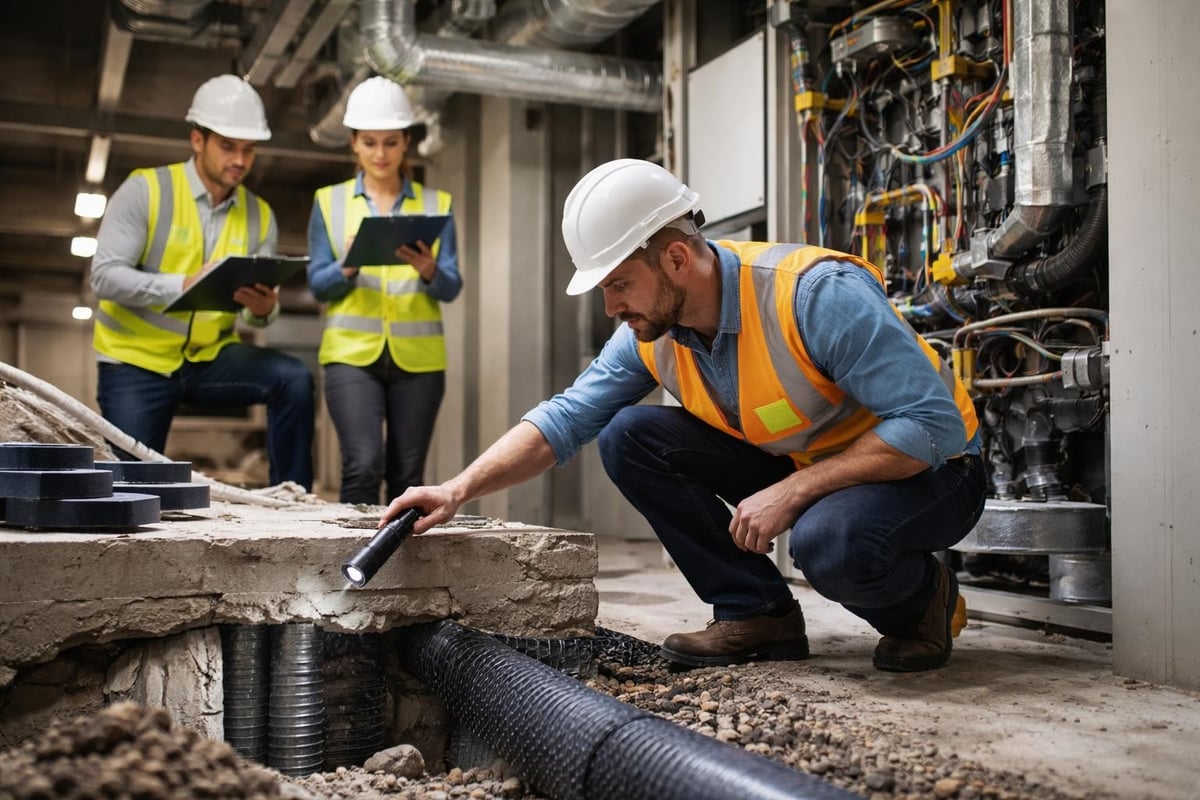
The selection process for a structural company should be systematic and thorough. Your building's safety and your financial exposure depend on making the right choice.
Credentials and Qualifications Checklist
Before shortlisting candidates, verify these essential qualifications:
- Professional engineering licenses in Florida (verify through state database)
- General contractor license for firms handling construction
- Threshold inspector certification for engineers conducting recertification inspections
- Insurance coverage including professional liability and comprehensive general liability
- Building code compliance officer on staff or as consultant
Request references from recent projects similar to yours in scope and complexity. A structural company with experience in high-rise concrete restoration brings different expertise than one primarily working on single-family homes.
Evaluating Proposals and Approaches
Quality proposals demonstrate understanding of your specific situation. They should include:
| Proposal Element | What to Look For |
|---|---|
| Scope Definition | Detailed breakdown of inspection areas, testing, and deliverables |
| Timeline | Realistic schedule accounting for permit review and weather |
| Team Composition | Named individuals with specific roles and qualifications |
| Fee Structure | Clear explanation of what's included and potential additional costs |
| Communication Plan | Regular update schedule and primary contact assignment |
Be wary of proposals that seem too good to be true. Structural engineering and construction involve real costs for labor, testing, materials, and insurance. Dramatically low bids often indicate corners will be cut or surprise change orders will follow.
Integration of Engineering and Construction Services
The most efficient structural company model integrates engineering design with construction execution. This alignment eliminates common friction points in traditional design-bid-build approaches.
When engineers and contractors work for the same organization, communication flows more smoothly. The engineer designing a repair understands the contractor's capabilities and limitations. The construction team can provide input during design to optimize constructability.
Benefits of Single-Source Responsibility
Consider a building facade repair project requiring structural engineering, waterproofing design, and construction execution. With separate firms, you're coordinating between:
- Structural engineer producing calculations and drawings
- Architect or waterproofing consultant designing the building envelope
- General contractor managing construction
- Various subcontractors performing specialized work
Each handoff creates opportunity for miscommunication, finger-pointing when problems arise, and delays while questions get answered. A comprehensive structural company with in-house capabilities streamlines this process significantly.
This integrated approach particularly benefits projects requiring structural engineering design and analysis combined with immediate repair implementation. Instead of waiting months for separate design and bidding phases, construction can begin as soon as permits are secured.
Modern Technology in Structural Assessment
Today's structural company leverages advanced technology to provide more accurate and efficient services. Traditional visual inspections remain important, but they're now supplemented with sophisticated diagnostic tools.
Non-Destructive Testing Methods
Modern assessment techniques reveal hidden conditions without damaging building components:
- Infrared thermography detects moisture intrusion, insulation deficiencies, and electrical hotspots
- Ground-penetrating radar maps reinforcing steel location and identifies voids
- Ultrasonic testing measures concrete thickness and identifies delamination
- Cover meter surveys determine concrete cover depth over reinforcement
These technologies enable more informed repair decisions. Rather than assuming worst-case scenarios and over-specifying repairs, engineers can target interventions precisely where needed. For property owners, this translates to lower costs and less disruption.
Infrared thermal inspection services have become particularly valuable for identifying water intrusion sources that cause structural damage. These non-invasive assessments can scan entire building envelopes in hours, documenting moisture patterns that would take weeks to discover through traditional destructive testing.

Code Compliance and Permit Navigation
A structural company's value extends beyond technical expertise to include regulatory knowledge and relationships. Successfully navigating municipal building departments requires understanding both written codes and local interpretation practices.
Florida Building Code provides the foundation, but each jurisdiction adds its own amendments and enforcement priorities. Miami-Dade County maintains some of the nation's strictest building requirements due to hurricane exposure. Understanding these local variations prevents costly redesigns when plans reach the building department.
The Permit Process Timeline
Realistic project planning accounts for permit review duration:
- Plan preparation and submission (1-2 weeks)
- Initial plan review (2-4 weeks for structural permits)
- Response to review comments (1 week)
- Final review and approval (1-2 weeks)
- Permit issuance (immediate to 3 days)
Experienced structural companies maintain relationships with plan reviewers and understand each department's preferences. They know which details trigger lengthy reviews and how to present information for efficient approval.
The recent updates to building component safety standards reflect the industry's ongoing evolution. A structural company committed to professional development stays current with these changes, incorporating new requirements into their standard practices before they become enforcement issues.
Financial Considerations and Project Budgeting
Structural work represents a significant investment in your property's future. Understanding cost drivers helps you budget appropriately and evaluate proposals fairly.
Typical Cost Components
Structural projects involve multiple cost categories:
- Engineering fees for analysis, design, and construction observation (typically 8-15% of construction cost)
- Testing and inspection including materials testing and special inspections during construction
- Permits and fees varying by jurisdiction and project scope
- Construction costs for materials, labor, equipment, and contractor overhead
- Project contingency for unforeseen conditions (recommend 15-20% for older buildings)
The cheapest structural company option rarely delivers the best value. Consider the total cost of ownership including warranty coverage, likelihood of call-backs, and disruption to building operations during construction.
Emergency Response Capabilities
Building emergencies don't wait for convenient timing. A qualified structural company maintains capacity to respond quickly when urgent situations arise.
Structural failures, severe weather damage, and unsafe conditions require immediate professional assessment. Companies with 24/7 availability and emergency response protocols provide peace of mind beyond their routine services.
When evaluating potential partners, ask about their emergency procedures. How quickly can they mobilize? Do they maintain relationships with emergency permitting contacts? Can they coordinate temporary shoring and protection while permanent repairs are designed?
Long-Term Partnership Value
The relationship with your structural company shouldn't end when a project closes out. The most valuable partnerships extend over years and multiple building lifecycles.
Regular maintenance inspections identify small problems before they become expensive emergencies. Firms familiar with your building's history provide more efficient service on subsequent projects. They understand your property's unique characteristics, previous repairs, and ongoing concerns.
Building a relationship with a trusted structural company creates institutional knowledge that benefits your property long-term. Engineers who performed your 40-year recertification bring valuable context to your 50-year inspection. Contractors familiar with your building complete repairs more efficiently.
Maintenance Planning and Preventive Programs
Progressive structural companies help clients develop preventive maintenance programs extending building life and reducing lifecycle costs. These programs might include:
- Annual facade inspections identifying minor deterioration before it spreads
- Balcony and railing system assessments preventing accidents and liability
- Waterproofing maintenance schedules protecting structural elements
- Building system evaluations coordinating structural with mechanical and electrical needs
This proactive approach aligns with the intent behind Florida's enhanced recertification requirements. Rather than waiting decades to discover major problems, regular professional oversight keeps buildings safe and reduces the sticker shock of deferred maintenance.
Professional Ethics and Standards
The structural engineering profession operates under strict ethical guidelines prioritizing public safety above all other considerations. Your structural company should demonstrate unwavering commitment to these principles.
Professional engineers are legally and ethically obligated to protect public health, safety, and welfare. This means they must refuse to approve inadequate designs or unsafe construction practices regardless of client pressure or financial consequences.
When interviewing potential partners, assess their professional integrity. Do they explain why certain repairs are necessary from a safety standpoint? Are they willing to discuss alternative approaches and their relative merits? Do they document their work thoroughly?
Quality Assurance and Control
Established structural companies maintain formal quality management systems ensuring consistent delivery. These systems typically include:
| QA/QC Element | Purpose |
|---|---|
| Calculation checking | Independent review of all structural calculations by senior engineer |
| Drawing review | Multi-level review before submission to client or building department |
| Field observation protocols | Standardized inspection procedures and documentation requirements |
| Testing coordination | Verification that all required materials and in-place testing occurs |
| Document control | Systematic management of plans, specifications, and project records |
These procedures might seem bureaucratic, but they prevent errors that could compromise structural safety or result in costly rework.
Selecting the right structural company requires careful evaluation of technical credentials, practical experience, and professional integrity. As buildings age and regulations evolve, property owners need partners who combine engineering expertise with construction capability and deep knowledge of local requirements. Souffront Construction and Engineering brings this integrated approach to South Florida properties, delivering comprehensive inspection, engineering, and construction services that keep buildings safe, compliant, and valuable. Whether you're facing an upcoming recertification deadline or addressing an urgent structural concern, our team provides the professional guidance and reliable execution your property deserves.