Construction Management and Engineering in 2026

The built environment across South Florida faces unique challenges that demand sophisticated approaches to project delivery and building safety. Construction management and engineering form the backbone of successful building projects, combining technical expertise with organizational leadership to ensure structures meet rigorous standards throughout their lifecycle. For property owners and managers navigating mandatory recertification requirements, understanding how these disciplines work together becomes essential to protecting investments and ensuring occupant safety.
The Intersection of Management and Engineering Disciplines
Construction management and engineering represent two complementary yet distinct professional domains that must function in harmony. Engineering focuses on the technical aspects: structural calculations, material specifications, load-bearing analysis, and compliance with codes and standards established by organizations like ASCE. Management, meanwhile, orchestrates the people, processes, and resources needed to transform engineering designs into physical reality.
The relationship between these disciplines becomes particularly critical in:
- Building recertification projects requiring both technical assessment and remediation planning
- Structural repair programs demanding engineering oversight and construction coordination
- Complex restorations involving multiple trades and regulatory approvals
- Time-sensitive projects where safety concerns require immediate response
South Florida's coastal environment intensifies these demands. Salt air accelerates concrete deterioration, hurricane codes mandate specific engineering solutions, and aging building stock requires increasingly sophisticated intervention strategies.
Why Integrated Approaches Matter for Building Owners
Property owners who understand construction management and engineering as interconnected rather than separate functions achieve better outcomes. When structural engineering design and analysis directly informs construction sequencing, projects experience fewer delays and change orders. When construction managers understand engineering constraints, they can develop realistic schedules and budgets.
This integration proves especially valuable during milestone building recertification inspections, where findings must translate quickly into actionable repair plans. The engineering team identifies deficiencies, quantifies their severity, and develops remediation designs. The construction management team then creates schedules, procures materials, coordinates trades, and ensures work meets the engineer's specifications.

Project Planning and Feasibility Assessment
Effective construction management and engineering begins long before ground breaks or restoration work commences. The planning phase establishes project parameters, identifies constraints, and determines feasibility. Research on project management fundamentals demonstrates that thorough planning reduces overall project costs and timelines.
Initial Assessment Components
Building owners initiating recertification or major repair projects should expect comprehensive evaluation across multiple dimensions:
- Structural condition assessment - Engineers inspect foundation integrity, concrete condition, reinforcement exposure, and load-bearing capacity
- Code compliance review - Comparison of existing conditions against current building codes and safety standards
- Budget development - Cost estimation based on identified deficiencies and required remediation scope
- Schedule analysis - Timeline development accounting for engineering, permitting, construction, and inspection phases
- Risk identification - Assessment of safety hazards, regulatory deadlines, and project complexity factors
For South Florida properties, this assessment must account for region-specific concerns. Water intrusion investigations frequently reveal hidden damage affecting structural elements. Balcony and railing systems require special attention given their exposure to harsh weather and heavy use.
| Assessment Type | Primary Focus | Typical Duration | Key Deliverable |
|---|---|---|---|
| Structural Engineering | Load capacity, material integrity | 1-3 weeks | Technical report with repair recommendations |
| Construction Planning | Sequencing, resources, logistics | 2-4 weeks | Project schedule and budget |
| Regulatory Review | Code compliance, permit requirements | 1-2 weeks | Compliance checklist and permit strategy |
Engineering Analysis and Design Development
The engineering component of construction management and engineering projects establishes the technical foundation for all subsequent work. Professional engineers apply scientific principles and industry standards to ensure buildings can safely support intended loads while withstanding environmental stresses.
Modern structural engineering for existing buildings involves:
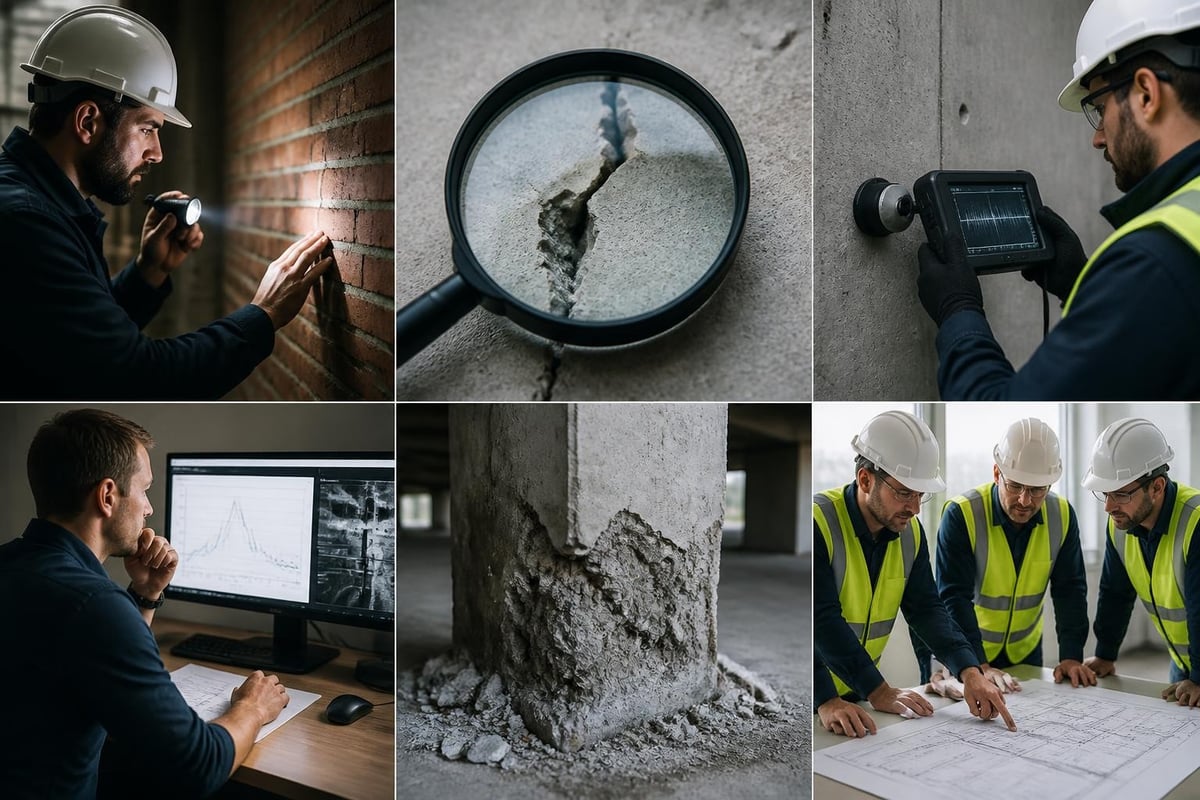
- Non-destructive testing to assess concrete strength and reinforcement condition without causing damage
- Load calculations determining whether existing structural elements meet current code requirements
- Material analysis identifying composition, deterioration mechanisms, and compatibility with repair materials
- Design development creating detailed repair specifications and construction drawings
South Florida's building stock presents unique engineering challenges. Many structures were constructed before current hurricane codes took effect. Concrete deterioration accelerates due to salt exposure and chloride penetration. Foundation settlement occurs in areas with expansive soils or proximity to water bodies.
Engineers performing concrete restoration and structural repairs must balance multiple objectives: restoring structural capacity, preventing future deterioration, maintaining architectural character, and controlling costs. This requires deep knowledge of materials science, structural mechanics, and construction methodology.
The Role of Specialized Engineering Services
Complex building issues often require specialized engineering expertise beyond general structural analysis. Geotechnical engineering for foundations and soils becomes essential when settlement, sinkholes, or bearing capacity concerns arise. Electrical engineering system design and audits ensure power distribution, emergency systems, and safety equipment meet current standards.
Forensic investigations represent another critical engineering specialty within construction management and engineering frameworks. When water damage, structural cracks, or building performance issues appear, engineers must identify root causes before developing solutions. Industry publications like Engineering News-Record regularly feature case studies demonstrating how thorough investigation prevents recurring problems and costly misdiagnoses.
Construction Management Fundamentals
While engineering provides the technical blueprint, construction management transforms plans into completed projects. Construction managers coordinate the complex web of activities, resources, and stakeholders required to execute building work safely, efficiently, and to specification.
The Construction Management Association of America identifies key management functions that distinguish professional practice from simple construction oversight:
- Scope management - Defining exactly what work will be performed and preventing scope creep
- Schedule control - Sequencing activities, managing dependencies, and maintaining progress
- Cost management - Budget development, expenditure tracking, and change order administration
- Quality assurance - Ensuring workmanship and materials meet specifications
- Safety management - Protecting workers, occupants, and the public throughout construction
- Stakeholder communication - Coordinating between owners, engineers, contractors, and regulatory agencies
For recertification and repair projects, construction management becomes particularly challenging because work occurs on occupied buildings. Residents must maintain access to units. Common areas remain functional. Life safety systems cannot be compromised during construction.
Contractor Selection and Procurement
Construction management and engineering projects require careful contractor selection. The lowest bid rarely represents the best value, especially for complex technical work. Property managers should evaluate contractors based on multiple criteria:
| Evaluation Criteria | Why It Matters | Assessment Method |
|---|---|---|
| Technical capability | Can they execute engineering specifications? | Review similar projects, certifications |
| Financial stability | Will they complete the project? | Financial statements, bonding capacity |
| Safety record | What's their risk profile? | OSHA incident rates, EMR scores |
| Quality systems | How do they ensure consistent results? | QA/QC procedures, references |
| Schedule reliability | Do they finish on time? | Past performance data |
Many South Florida property owners benefit from working with firms that integrate construction and engineering services. When the same team providing building inspections also performs remediation work, communication improves and accountability increases.
Regulatory Compliance and Permitting
Construction management and engineering must navigate complex regulatory environments. Building codes, zoning regulations, environmental rules, and safety standards all impose requirements on construction projects. Florida's building regulations rank among the nation's most stringent, particularly regarding structural and hurricane provisions.
The Permitting Process
Securing construction permits represents a critical path activity that can significantly impact project schedules. The process typically involves:
- Plan preparation - Engineers prepare detailed construction drawings showing existing conditions, proposed work, and specifications
- Permit application - Submit plans, calculations, and supporting documentation to building department
- Plan review - Building officials review submissions for code compliance
- Revisions - Address reviewer comments and resubmit corrected plans
- Permit issuance - Receive approved permits authorizing construction to commence
- Inspections - Building officials inspect work at designated milestones
- Certificate of completion - Final approval confirming work meets permitted scope
For milestone recertification projects, permit timelines directly affect compliance deadlines. Property owners facing mandatory inspection deadlines cannot afford permitting delays. Experienced construction management teams anticipate reviewer requirements and submit complete, code-compliant packages that expedite approval.
Common permitting challenges include:
- Incomplete engineering calculations or specifications
- Conflicts with existing building conditions not shown on original drawings
- New code requirements affecting grandfathered conditions
- Multiple jurisdictional approvals for complex properties
- Special inspections required for structural work
Quality Control and Project Execution
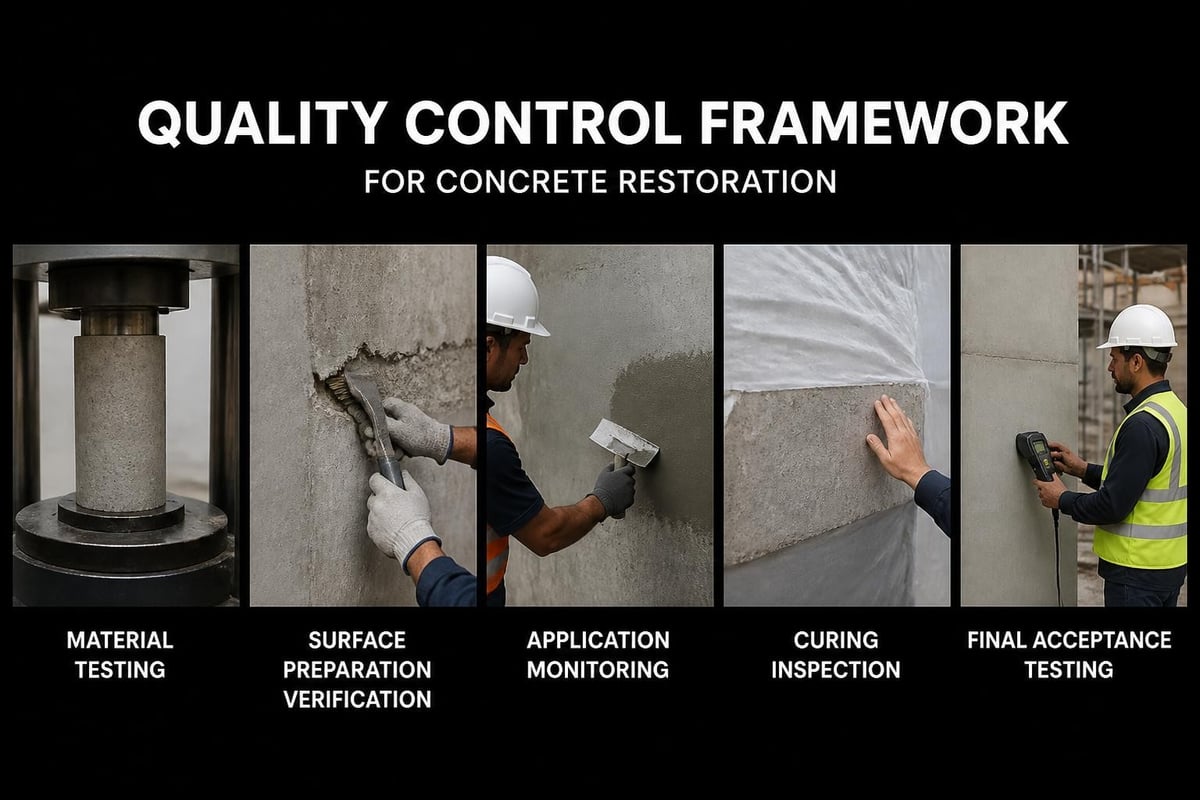
Once permits are secured and construction begins, construction management and engineering attention shifts to execution. Quality control ensures completed work matches engineering specifications and meets industry standards. This phase demands constant vigilance and systematic verification.
Professional construction managers implement formal quality assurance programs that document compliance at every stage. For concrete restoration projects, this might include:
- Pre-construction meetings reviewing specifications and quality expectations with all trades
- Material testing verifying concrete mix designs, reinforcement specifications, and coating systems
- Installation monitoring ensuring proper surface preparation, placement techniques, and curing procedures
- Third-party inspections engaging independent special inspectors as required by code
- Photo documentation creating visual records of conditions before, during, and after work
Research on Total Quality Management practices in construction demonstrates that systematic quality programs improve project outcomes and reduce lifecycle costs. When defects are caught during construction rather than after substantial completion, correction costs remain minimal.
Safety Management During Construction
Construction management and engineering share responsibility for job site safety. Engineers design work procedures that protect workers and building occupants. Construction managers implement and enforce safety protocols daily.
South Florida construction projects face specific safety concerns:
- Fall protection for balcony and exterior work on multi-story buildings
- Concrete dust control protecting workers and occupants from silica exposure
- Heat stress prevention given Florida's climate and outdoor work requirements
- Electrical safety during system upgrades or repairs
- Traffic control managing pedestrian and vehicle movement around active work zones
Occupied building projects require additional safety measures. Construction areas must be isolated from residential spaces. Dust barriers protect indoor air quality. Noise restrictions limit work hours. Emergency egress paths remain clear and functional.
Technology Integration in Modern Practice
Construction management and engineering increasingly leverage technology to improve outcomes. Digital tools enhance communication, documentation, and decision-making throughout project lifecycles.
Key technologies transforming construction management:
- Building Information Modeling (BIM) - Three-dimensional models coordinating architectural, structural, and MEP systems
- Project management software - Cloud-based platforms tracking schedules, budgets, and communications
- Mobile inspection apps - Field documentation tools enabling real-time reporting and photo capture
- Thermal imaging - Infrared thermal inspection services identifying moisture intrusion and insulation deficiencies
- Drone surveys - Aerial photography documenting roof conditions and exterior facades
- Digital drawing markup - Collaborative review tools allowing engineers and contractors to coordinate remotely
For recertification projects, digital documentation proves particularly valuable. When engineers identify deficiencies during initial inspections, photo documentation and annotated drawings clearly communicate issues to property owners and construction teams. As remediation proceeds, progress photos demonstrate compliance and create permanent records for future reference.
Cost Management and Budget Control
Construction management and engineering projects require careful financial stewardship. Property owners need accurate budgets and reliable cost control to make informed decisions and secure necessary funding.
Developing Reliable Budgets
Engineering assessments provide the technical foundation for budgeting, but construction management expertise translates technical requirements into realistic cost estimates. Comprehensive budgets account for:
| Cost Category | Typical Components | Contingency Recommendation |
|---|---|---|
| Engineering | Design, calculations, inspections | 5-10% |
| Permits and fees | Plan review, permit fees, impact fees | Fixed (minimal contingency) |
| Construction | Labor, materials, equipment | 15-20% for repair projects |
| Testing and inspection | Special inspections, material testing | 10% |
| Escalation | Price increases during project | 3-5% annually |
South Florida construction costs reflect regional market conditions. Labor rates vary by trade and availability. Material prices fluctuate based on supply chain conditions. Hurricane season timing affects scheduling and insurance costs.
Property managers exploring 40-year recertification costs should request detailed breakdowns showing quantity takeoffs, unit prices, and basis of estimate. This transparency enables value engineering discussions and identifies potential savings opportunities.
Schedule Development and Critical Path Management
Construction management and engineering projects succeed or fail based on schedule performance. Regulatory deadlines, occupant expectations, and financial considerations all drive schedule requirements.
Effective project scheduling involves:
- Activity identification - Breaking work into manageable tasks
- Duration estimation - Determining realistic timeframes for each activity
- Dependency mapping - Identifying which tasks must precede others
- Resource allocation - Ensuring adequate labor and equipment availability
- Critical path analysis - Identifying sequence of activities determining minimum project duration
- Float calculation - Determining schedule flexibility for non-critical activities
For milestone inspection compliance, schedule constraints often work backward from mandatory deadlines. If a building must achieve recertification by a specific date, construction management teams calculate reverse schedules accounting for construction duration, permit processing, and engineering design time.
Weather represents a significant schedule variable in South Florida. Hurricane season from June through November affects exterior work planning. Heavy afternoon thunderstorms during summer months reduce productive work hours. Experienced construction managers build weather contingencies into schedules based on historical data.
Communication and Stakeholder Management
Construction management and engineering require constant communication across diverse stakeholder groups. Property owners, residents, board members, contractors, engineers, and regulatory officials all need timely, accurate information throughout project execution.
Establishing Communication Protocols
Professional construction managers establish formal communication structures:
- Weekly progress meetings - Contractor, engineer, and owner representatives review accomplishments and upcoming work
- Monthly owner updates - Written reports documenting schedule status, budget performance, and issues
- Resident notifications - Advance notice of disruptive activities, access restrictions, or safety precautions
- Regulatory coordination - Scheduled inspections and ongoing dialogue with building officials
- Emergency protocols - Defined procedures for safety issues or unexpected conditions
Management practices in construction emphasize that communication failures cause more project problems than technical issues. When stakeholders lack information, assumptions fill the void and conflicts emerge.
For occupied buildings undergoing recertification repairs, resident communication becomes particularly critical. Property managers must balance transparency about building deficiencies with avoiding unnecessary alarm. Clear explanations of the engineering assessment process, proposed repairs, and safety measures help maintain confidence.
Risk Management and Problem Resolution
No construction project proceeds exactly as planned. Construction management and engineering teams must anticipate risks and respond effectively when problems arise.
Common risks in recertification and repair projects:
- Hidden conditions discovered during construction (concealed damage, undocumented modifications)
- Material availability delays affecting schedule
- Weather impacts on exterior work
- Contractor financial problems or performance issues
- Unforeseen code compliance requirements
- Occupant complaints or interference with construction
Effective risk management begins with identification. During planning, teams should systematically consider what could go wrong and develop mitigation strategies. Some risks can be avoided through careful engineering and planning. Others require contingency plans or budget reserves.
When problems occur, construction management and engineering professionals must respond quickly. Engineers assess technical implications and develop solutions. Construction managers adjust schedules, redeploy resources, and communicate impacts to stakeholders. This collaborative problem-solving prevents minor issues from becoming major delays.
Long-Term Building Performance and Maintenance
Construction management and engineering extend beyond initial project completion. Professional teams consider long-term building performance and maintenance requirements during design and construction.
For recertification projects, this long-term perspective proves essential. Repairs must not only correct immediate deficiencies but also prevent recurrence and facilitate future maintenance. Engineers specify durable materials and protective systems. Construction managers ensure proper installation that maximizes service life.
Design decisions affecting long-term performance include:
- Material selection balancing initial cost against lifecycle durability
- Access provisions enabling future inspection and maintenance
- Protective coatings and sealants preventing moisture intrusion
- Drainage systems directing water away from vulnerable building elements
- Expansion joints accommodating thermal movement and preventing cracks
Many South Florida buildings face recurring maintenance needs due to environmental exposure. Concrete restoration projects should include protective coatings that resist chloride penetration. Balcony and railing replacements should specify corrosion-resistant materials appropriate for coastal conditions.
Property managers benefit from working with construction management and engineering teams that provide maintenance guidance and documentation. As-built drawings, material specifications, and maintenance schedules enable property staff to protect their investment long after project completion.
Construction management and engineering disciplines provide the framework for successful building projects, particularly in demanding environments like South Florida where regulatory requirements and environmental stresses demand professional expertise. Property owners facing milestone recertification or major repairs need integrated teams that combine technical engineering knowledge with construction management capabilities to navigate complex requirements efficiently. Souffront Construction and Engineering delivers this comprehensive approach, providing building inspections, structural engineering, and construction services that help South Florida property owners protect their investments and ensure occupant safety through every phase of the building lifecycle.