Concrete Restoration South Florida: Complete 2026 Guide
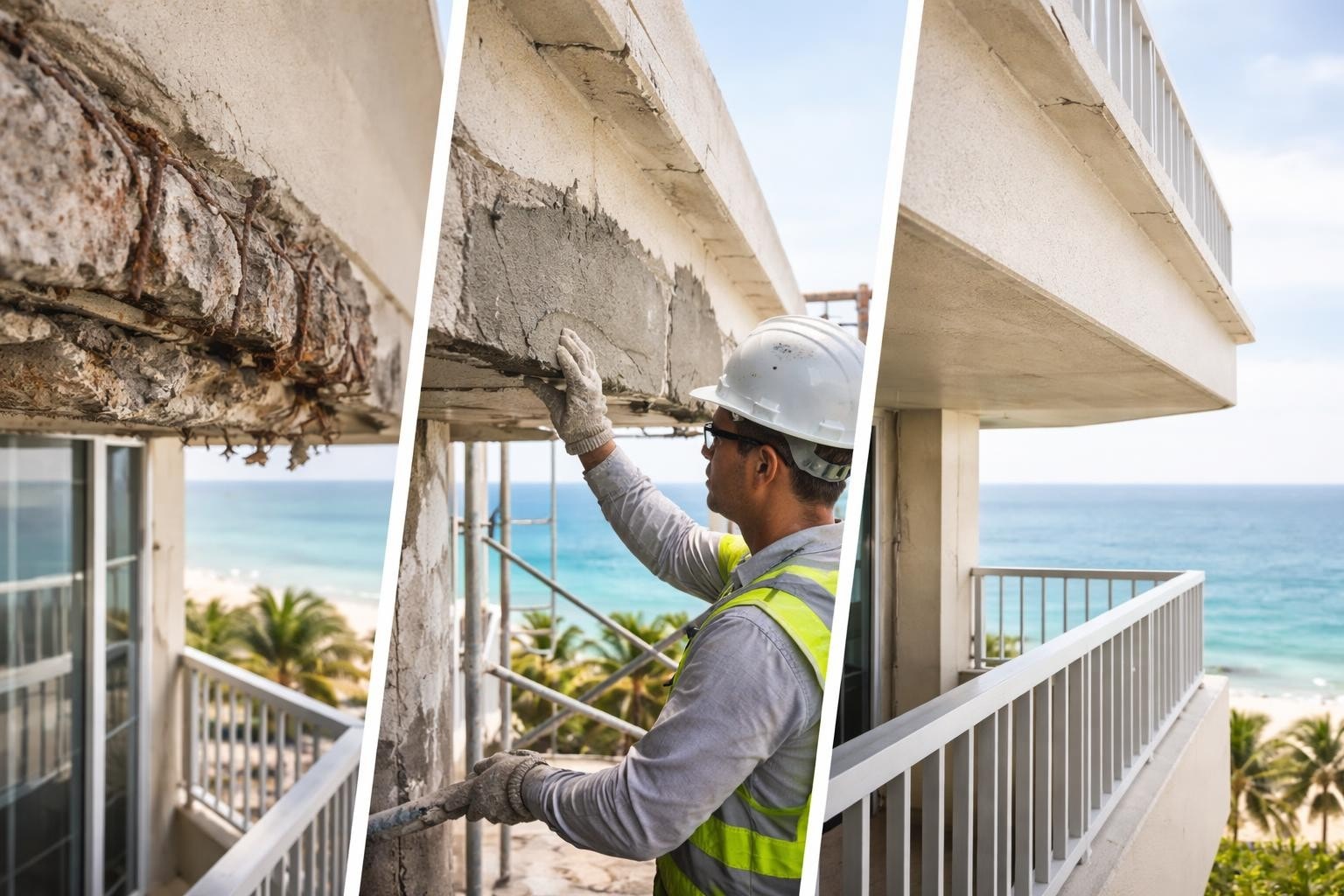
South Florida's unique coastal environment creates exceptional challenges for concrete structures. The combination of saltwater exposure, intense humidity, tropical storms, and relentless UV radiation accelerates concrete deterioration faster than almost anywhere else in the United States. For property owners, building managers, and homeowner associations across Miami-Dade, Broward, and Palm Beach counties, understanding concrete restoration south florida requirements isn't just about aesthetics-it's about structural safety, property values, and compliance with increasingly strict building codes. This comprehensive guide explores everything you need to know about preserving and restoring concrete in one of America's most demanding climates.
Why South Florida Concrete Deteriorates Rapidly
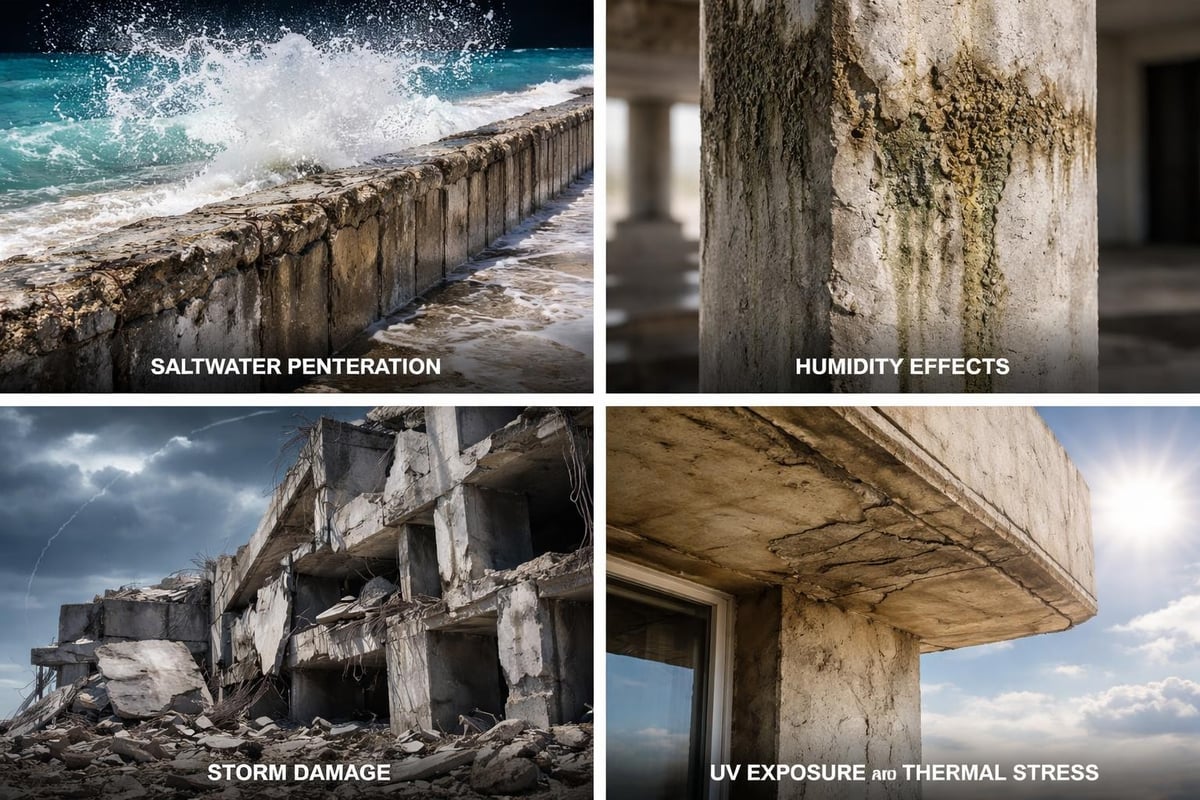
The coastal climate of South Florida creates a perfect storm for concrete damage. Unlike inland regions where freeze-thaw cycles dominate deterioration patterns, coastal structures face constant assault from chloride-laden air.
Salt from ocean spray penetrates concrete pores and attacks the steel reinforcement bars (rebar) embedded within. When rebar corrodes, it expands up to ten times its original volume, creating internal pressure that cracks and spalls the surrounding concrete. This process, known as chloride-induced corrosion, represents the primary threat to concrete structures in South Florida.
Environmental Factors Accelerating Damage
Beyond saltwater exposure, several environmental factors compound deterioration rates:
- High humidity levels (70-90% year-round) maintain constant moisture in concrete pores
- Tropical storms and hurricanes drive water and chlorides deep into concrete surfaces
- Intense UV radiation degrades surface sealants and protective coatings
- Temperature fluctuations between air-conditioned interiors and exterior heat create thermal stress
- Acid rain and pollutants weaken alkaline protection around rebar
Understanding these factors helps property owners recognize when professional concrete restoration services become necessary. The American Concrete Institute provides detailed research on how environmental conditions affect concrete longevity in coastal regions.
Common Concrete Problems in South Florida Buildings
Concrete restoration south florida projects typically address several recurring issues that plague both residential and commercial properties. Identifying these problems early prevents minor damage from escalating into structural failures.
Spalling and Delamination
Spalling occurs when concrete surface layers break away, exposing the underlying reinforcement. This creates safety hazards from falling debris and accelerates further deterioration once rebar becomes exposed. Property managers often discover spalling on balconies, parking structures, and building facades-precisely where water exposure combines with structural stress.
Delamination represents a more insidious problem where concrete separates from rebar without visible surface damage. Infrared thermography inspection can detect these hidden defects before they cause sudden failures.
Cracking Patterns
Different crack types indicate specific underlying problems:
| Crack Type | Cause | Urgency Level |
|---|---|---|
| Hairline cracks | Normal shrinkage, minor settling | Low |
| Horizontal cracks | Structural overload, foundation issues | High |
| Vertical cracks | Thermal expansion, minor settlement | Medium |
| Diagonal cracks | Shear stress, structural movement | High |
| Map cracking | Surface deterioration, poor mix | Medium |
Addressing concrete crack repair promptly prevents water infiltration that leads to more extensive damage. The U.S. Environmental Protection Agency provides resources on how water infiltration compromises concrete structures.
Efflorescence and Staining
White, powdery deposits on concrete surfaces indicate water movement through the material. While efflorescence itself doesn't damage concrete, it signals ongoing moisture problems that require investigation. Rust staining typically accompanies corroding rebar and warns of structural concerns beneath the surface.
Concrete Restoration Methods for Coastal Environments
Concrete restoration south florida specialists employ various techniques depending on damage severity, structural requirements, and budget constraints. Modern restoration methods balance durability with cost-effectiveness.
Concrete Resurfacing and Overlays
For surface-level damage without structural compromise, resurfacing provides an economical solution. Contractors remove deteriorated material, prepare the substrate, and apply polymer-modified overlays that bond to existing concrete. These systems create waterproof barriers while restoring aesthetic appearance.
The success of resurfacing concrete patio installations and other horizontal surfaces depends heavily on proper surface preparation. Learning about concrete spalling helps property owners understand when resurfacing remains viable versus when complete replacement becomes necessary.
Cathodic Protection Systems
For critical structures with extensive rebar corrosion, cathodic protection offers long-term corrosion control. This electrochemical method applies a small electrical current that counteracts the corrosion process. NACE International provides comprehensive resources on corrosion control methods specifically designed for coastal concrete structures.
These systems require initial investment but can extend structure life by decades in aggressive marine environments.
Structural Repairs and Reinforcement
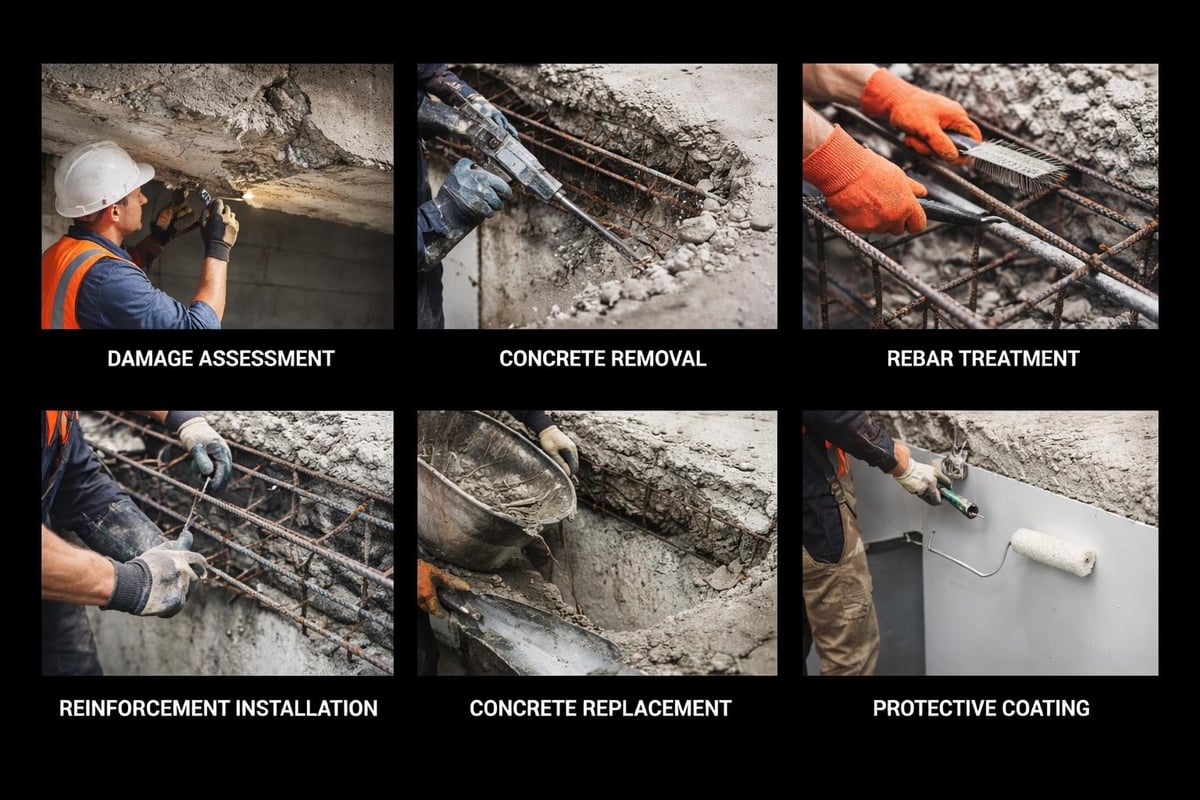
When concrete deterioration compromises structural integrity, restoration extends beyond cosmetic repairs:
- Removal of damaged concrete using hydrodemolition or manual methods
- Rebar cleaning and treatment with anti-corrosion coatings
- Supplemental reinforcement installation where original steel has lost capacity
- High-performance concrete placement using sulfate-resistant mixes
- Protective coating application to prevent future moisture intrusion
Professional structural building inspections determine appropriate repair strategies based on engineering analysis rather than visual assessment alone.
Building Code Requirements and Milestone Inspections
South Florida's building codes have become significantly more stringent following high-profile structural failures. Property owners must understand compliance requirements that directly impact concrete restoration projects.
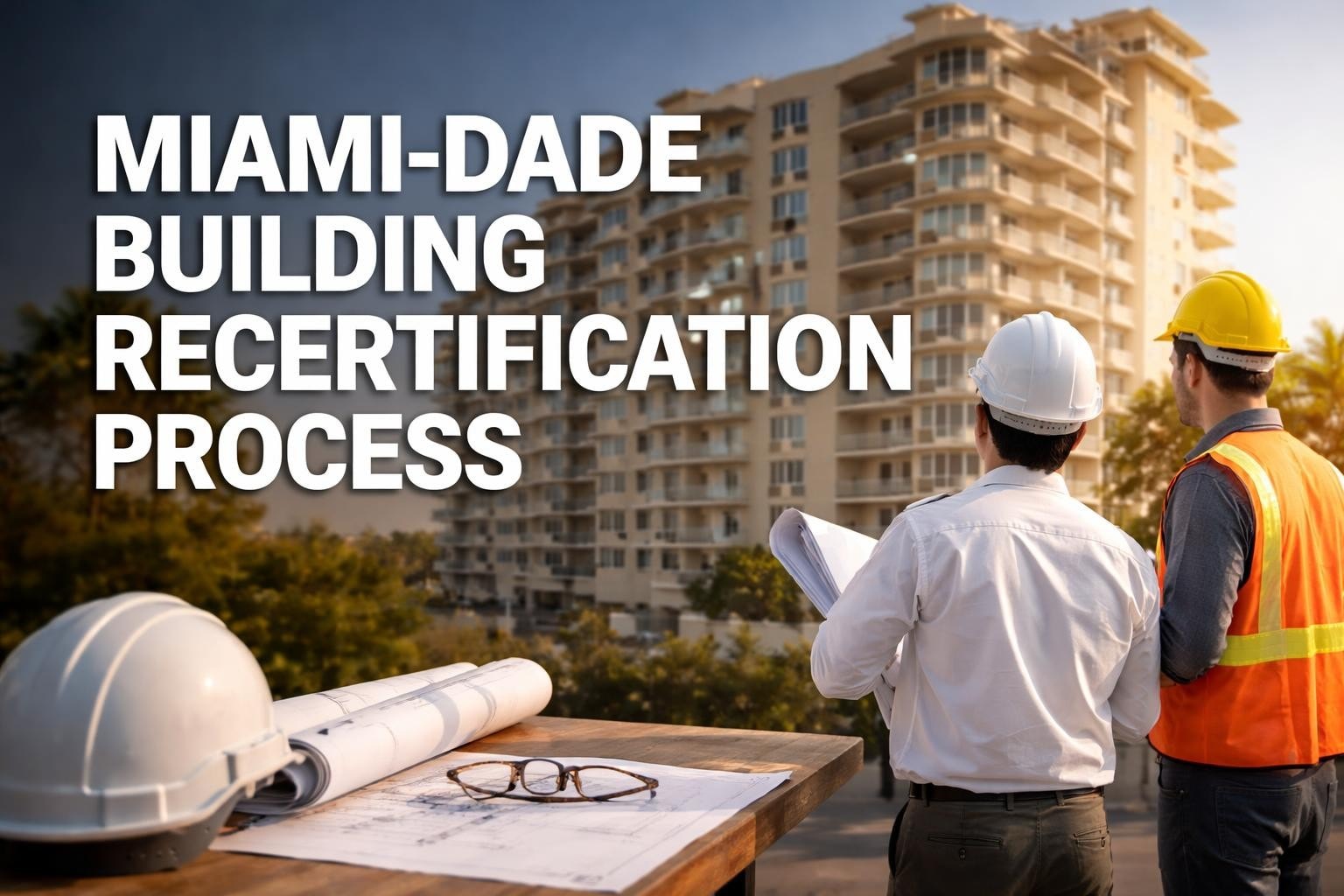
Milestone Building Recertification
Florida law now mandates comprehensive building inspections at specific intervals for structures three stories or higher. These milestone building inspections require licensed engineers to evaluate structural integrity, including concrete conditions.
Properties reaching 30 years (or 25 years within three miles of coast) undergo initial milestone inspections. Subsequent inspections occur every ten years. The Florida Building Code establishes minimum standards for these assessments and resulting repairs.
40-Year Recertification Process
The traditional 40-year recertification program continues for older buildings, requiring thorough evaluation of concrete structures, electrical systems, roofing, and plumbing. Understanding how Surfside condo collapse changed 40-year recertification helps property managers prepare for enhanced scrutiny.
Engineers conducting these inspections identify concrete deficiencies requiring immediate attention versus items that can be monitored. The resulting reports often trigger extensive concrete restoration south florida projects to achieve compliance.
Structural Integrity Reserve Studies
Recent legislative changes require condominium and cooperative associations to maintain reserves for structural repairs based on engineering studies. These structural integrity reserve studies project concrete restoration costs over extended timeframes, helping associations budget appropriately.
Reserve studies complement milestone inspections by providing financial planning tools that prevent special assessments when concrete repairs become necessary.
Selecting the Right Concrete Restoration Contractor
Not all concrete contractors possess the expertise required for complex restoration work in South Florida's challenging environment. Property owners should evaluate several critical factors when selecting restoration partners.
Licensing and Certification Requirements
Legitimate concrete restoration south florida contractors maintain appropriate state licenses. For structural repairs, verify the contractor employs or collaborates with licensed engineers who can design repair systems and certify completed work.
Key credentials include:
- Florida General Contractor license or Building Contractor license
- Engineering licenses for structural design work
- Concrete Field Testing Technician certifications
- OSHA safety compliance documentation
- Insurance coverage including general liability and workers' compensation
The Occupational Safety and Health Administration provides safety standards that contractors must follow during restoration projects.
Experience with Coastal Construction
Concrete repair techniques that work inland often fail in marine environments. Contractors should demonstrate experience with:
- Chloride contamination assessment and treatment
- Marine-grade materials and protective systems
- Tidal zone and splash zone restoration
- Cathodic protection installation and monitoring
- Post-tensioned concrete systems common in South Florida
Request references from similar coastal properties and verify the contractor's track record with projects matching your building's specific challenges.
Engineering Support and Warranty Coverage
Quality contractors provide engineering analysis before proposing repairs. This ensures restoration addresses root causes rather than symptoms. Detailed specifications should reference relevant Florida Department of Transportation guidelines and industry standards.
Warranty terms reveal contractor confidence in their work. Comprehensive warranties cover both materials and workmanship for minimum five-year periods on structural repairs.
Cost Factors for South Florida Concrete Restoration
Budgeting for concrete restoration south florida projects requires understanding multiple cost variables. Prices fluctuate based on damage extent, building access, material requirements, and regulatory compliance needs.
Price Ranges by Repair Type
| Repair Category | Typical Cost Range | Duration |
|---|---|---|
| Cosmetic resurfacing | $8-15 per sq ft | 1-2 weeks |
| Spall repair (minor) | $150-300 per location | 2-4 weeks |
| Structural restoration | $75-150 per sq ft | 4-12 weeks |
| Balcony replacement | $15,000-40,000 each | 6-10 weeks |
| Parking deck restoration | $25-60 per sq ft | 3-6 months |
| Complete facade restoration | $100-250 per sq ft | 6-18 months |
These estimates vary significantly based on building height, access complexity, and required structural enhancements. Obtaining detailed request a free quote assessments prevents budget surprises.
Hidden Costs and Contingencies
Initial visual inspections rarely reveal full damage extent. Once contractors remove deteriorated concrete, they often discover additional problems requiring expansion of original scope. Experienced property managers budget 15-25% contingency allowances for unforeseen conditions.
Additional cost factors include:
- Engineering design fees (typically 8-12% of construction cost)
- Permitting and inspection fees
- Building department plan review charges
- Testing and quality control expenses
- Temporary shoring and safety systems
- Resident relocation during restoration (for occupied buildings)
The National Park Service offers guidance on restoration approaches that balance preservation goals with budget realities.
Preventive Maintenance to Extend Concrete Life
Proactive maintenance programs significantly reduce long-term concrete restoration south florida costs. Regular inspections and minor interventions prevent small problems from escalating into major structural issues.
Regular Inspection Schedules
Establish systematic inspection protocols that examine concrete conditions before damage becomes visible:
- Annual visual surveys of all exposed concrete surfaces
- Biennial professional assessments including testing for chloride contamination
- Post-storm inspections following hurricanes or severe weather events
- Quarterly drainage system checks to ensure water moves away from structures
- Monthly resident reporting systems encouraging occupants to report cracks or spalling
These proactive measures often identify problems addressable through minor repairs costing hundreds rather than major restoration requiring thousands.
Protective Treatments and Sealers
Applying high-quality penetrating sealers creates barriers against moisture and chloride intrusion. Modern silane/siloxane products penetrate concrete pores without creating surface films that trap moisture. Reapplication every 3-5 years maintains protection in harsh coastal environments.
Consider additional protective measures:
- Corrosion-inhibiting admixtures in new concrete work
- Waterproofing membranes on horizontal surfaces like balconies
- Breathable coatings that allow moisture vapor to escape while blocking liquid water
- Expansion joint maintenance to prevent water infiltration at vulnerable connections
Understanding the difference between concrete spalling and scaling helps maintenance teams recognize early warning signs requiring intervention.
Material Selection for Long-Term Durability
Concrete restoration south florida projects achieve maximum longevity when contractors specify materials engineered for marine environments. Standard concrete mixes and conventional repair mortars often fail prematurely in coastal conditions.
High-Performance Concrete Specifications
Modern concrete technology offers significant improvements over traditional mixes:
- Low water-cement ratios (0.40 or less) reduce permeability
- Supplementary cementitious materials (fly ash, slag, silica fume) densify pore structure
- Corrosion-inhibiting admixtures protect embedded steel
- Sulfate-resistant cement prevents chemical attack from seawater
- Shrinkage-reducing admixtures minimize cracking during curing
The Portland Cement Association provides comprehensive resources on selecting appropriate concrete materials for challenging exposure conditions.
Reinforcement Upgrades
Traditional black steel rebar continues corroding even after concrete restoration unless contractors address the root cause. Consider enhanced reinforcement options:
- Epoxy-coated rebar with fusion-bonded coatings resisting chloride penetration
- Stainless steel reinforcement providing superior corrosion resistance
- Fiber-reinforced polymer (FRP) bars eliminating metallic corrosion entirely
- Galvanized reinforcement with zinc coatings protecting steel
While these materials increase initial costs 20-40%, they dramatically extend service life in aggressive environments, often providing better lifecycle economics than conventional steel.
Integration with Building Recertification Requirements
Property owners facing milestone inspections or 40-year recertification requirements should coordinate concrete restoration south florida projects with compliance deadlines. Strategic planning prevents rushed repairs and allows phased approaches that minimize financial impact.
Coordinating Inspections and Repairs
Engineers conducting threshold inspection assessments identify concrete deficiencies requiring remediation before certification approval. Smart property managers use inspection findings to develop comprehensive restoration plans addressing immediate needs while planning future maintenance.
This integrated approach provides several advantages:
- Reduced mobilization costs by combining inspection and repair contracts
- Comprehensive engineering oversight ensuring repairs meet structural requirements
- Permit efficiency when engineers who designed repairs also conducted original assessments
- Documentation continuity creating complete records of building conditions and improvements
Working with firms offering both engineering assessment and general contracting services streamlines the recertification process significantly.
Phased Restoration Strategies
Large-scale concrete restoration south florida projects often exceed association reserves or building owner budgets. Engineers can prioritize repairs based on safety criticality, allowing phased implementation:
Phase 1 (Immediate): Life-safety issues including loose concrete, exposed rebar on occupied areas, and structural deficiencies
Phase 2 (1-2 years): Moderate deterioration with high risk of progression, waterproofing failures, and cosmetic issues affecting property values
Phase 3 (3-5 years): Preventive repairs, protective treatments, and enhancement projects improving long-term durability
This approach spreads costs over multiple budget cycles while addressing critical needs immediately. Understanding 40-year recertification cost factors helps associations develop realistic financial plans.
Specialized Concrete Restoration Applications
Beyond general structural repairs, South Florida properties often require specialized concrete restoration south florida solutions for specific building elements and conditions.
Balcony and Railing Systems
Balconies experience the most severe exposure in multi-story buildings, combining structural loading with direct weather exposure. Water pooling on inadequately sloped surfaces accelerates deterioration, while railing attachment points create vulnerable penetrations through waterproofing.
Complete balcony restoration typically includes:
- Removal of failed concrete and waterproofing systems
- Structural slab repairs with proper drainage slopes
- New waterproofing membranes rated for occupied areas
- Corrosion-resistant railing installations meeting current building codes
- Protective coatings and sealers extending system life
Many older buildings require complete balcony replacements when deterioration has progressed beyond economical repair thresholds.
Parking Structure Rehabilitation
Multi-level parking structures face unique challenges from vehicle traffic, standing water, and concentrated de-icing chemical exposure (in northern zones) or constant moisture (in South Florida). Restoration projects address:
- Traffic deck waterproofing and surfacing
- Expansion joint replacement
- Ramp and stair repairs
- Drainage system upgrades
- Structural column and beam restoration
- Lighting and electrical system improvements
These complex projects require specialized contractors experienced with occupied structure restoration and traffic management during construction.
Pool Deck and Recreational Area Restoration
Swimming pool decks, patios, and recreational concrete surfaces deteriorate rapidly from chlorinated water exposure combined with barefoot traffic. Beyond structural concerns, these areas require slip-resistant finishes meeting accessibility standards.
Modern pool deck restoration employs specialized overlay systems providing:
- Chemical resistance to chlorinated water
- Slip-resistant textures even when wet
- Cool surface temperatures despite intense sun exposure
- Aesthetic finishes complementing architectural styles
- Rapid curing allowing quick return to service
Property managers should review garage floor resurfacing techniques that often apply to other horizontal concrete surfaces requiring durable protective systems.
Quality Control and Testing Protocols
Professional concrete restoration south florida contractors implement rigorous testing programs ensuring repairs meet engineering specifications and building code requirements. Property owners should understand these quality assurance measures when evaluating proposals.
Pre-Repair Assessment Testing
Before beginning restoration, comprehensive testing establishes baseline conditions:
| Test Type | Purpose | Frequency |
|---|---|---|
| Chloride content analysis | Determine contamination depth | Every 1,000 sq ft |
| Concrete strength testing | Verify structural capacity | Per engineering plan |
| Carbonation depth | Assess alkalinity loss | Representative locations |
| Half-cell potential | Map rebar corrosion | Grid pattern coverage |
| Delamination survey | Identify hidden damage | 100% of areas |
These investigations inform repair designs and help contractors develop accurate scope definitions preventing change orders during construction.
Construction Quality Testing
During restoration work, ongoing testing verifies material performance and installation quality:
- Fresh concrete testing (slump, air content, temperature)
- Compressive strength cylinders (7-day and 28-day breaks)
- Bond strength testing for overlays and repair mortars
- Chloride permeability testing for new concrete placements
- Coating thickness measurements for protective systems
Engineers review test results throughout construction, ensuring work meets specifications before contractors proceed to subsequent phases. Understanding concrete coring procedure helps property owners appreciate the thoroughness of proper quality control programs.
Emerging Technologies in Concrete Restoration
Innovation continues advancing concrete restoration south florida capabilities, offering property owners more effective and economical solutions for preserving aging structures.
Advanced Diagnostic Tools
Modern assessment technologies detect problems invisible to visual inspection:
- Ground-penetrating radar maps rebar location and identifies voids
- Ultrasonic testing measures concrete thickness and detects delamination
- Infrared thermography reveals moisture intrusion and hidden defects
- 3D laser scanning documents existing conditions and tracks deterioration over time
- Drone inspections provide safe access to high-elevation areas
These technologies reduce inspection costs while improving accuracy, particularly for tall buildings where traditional access requires expensive scaffolding or swing stages.
Sustainable Restoration Materials
Environmental consciousness drives development of concrete repair materials with reduced carbon footprints:
- Geopolymer concretes using industrial byproducts instead of Portland cement
- Recycled aggregate from demolished concrete
- Self-healing concrete with embedded bacteria that precipitate limestone in cracks
- Carbon-negative concrete products sequestering CO2 during curing
- Bio-based admixtures replacing petroleum-derived chemical additives
While some technologies remain emerging, others have achieved mainstream acceptance in restoration applications, offering environmental benefits without compromising performance.
Robotic Application Systems
Labor shortages and safety concerns drive adoption of robotic concrete repair equipment. Automated systems now handle tasks including:
- Concrete removal using robotic hydrodemolition
- Shotcrete application with consistent quality
- Surface preparation and coating application
- High-elevation facade repairs reducing fall risks
These technologies improve consistency while reducing project durations and safety incidents.
Protecting South Florida concrete structures requires understanding the unique environmental challenges, appropriate restoration methods, and evolving regulatory requirements that property owners face in 2026. From minor spall repairs to comprehensive building recertification projects, addressing concrete deterioration promptly prevents safety hazards while preserving property values. Whether you're managing a commercial property, condominium association, or residential building, Souffront Construction and Engineering provides the expertise, engineering capabilities, and construction services needed to restore and protect your concrete structures with professional, code-compliant solutions tailored to South Florida's demanding coastal environment.