Building Recertification Inspection Florida Guide 2026

Florida's building recertification inspection requirements have become increasingly critical for property owners, condominium associations, and property managers across the state. Following the tragic Surfside collapse in 2021, which resulted in enhanced statewide regulations, understanding the building recertification inspection Florida process is no longer optional but mandatory for aging buildings. These inspections ensure structural integrity, identify potential safety hazards, and maintain compliance with evolving Florida Building Code standards. Whether you manage a high-rise condominium in Miami-Dade County or a commercial building in Broward, navigating the recertification landscape requires knowledge of local ordinances, inspection timelines, and qualified engineering professionals.
Understanding Florida's Building Recertification Requirements
Building recertification programs originated in Miami-Dade and Broward counties decades ago, but recent legislative changes have expanded these requirements statewide. The building recertification inspection Florida mandate applies primarily to buildings that meet specific age and occupancy thresholds, typically reaching 30, 40, or 50 years from their original certificate of occupancy.
County-Specific Programs and Variations
Different Florida counties implement building recertification inspection Florida programs with unique requirements:
- Miami-Dade County: Requires recertification at 40 years for most buildings, with subsequent inspections every 10 years
- Broward County: Implements 40-year recertification with decade intervals similar to Miami-Dade
- Palm Beach County: Various municipalities have adopted recertification ordinances with timeline variations
- Homestead: Maintains specific building recertification guidelines with detailed reporting requirements
- Boca Raton: Operates comprehensive recertification inspection programs for qualifying structures
The Surfside condominium collapse fundamentally changed how Florida approaches building safety. This catastrophic event prompted Senate Bill 4D, which established mandatory milestone inspections for buildings three stories or higher throughout the state.
Threshold Buildings and Milestone Inspections
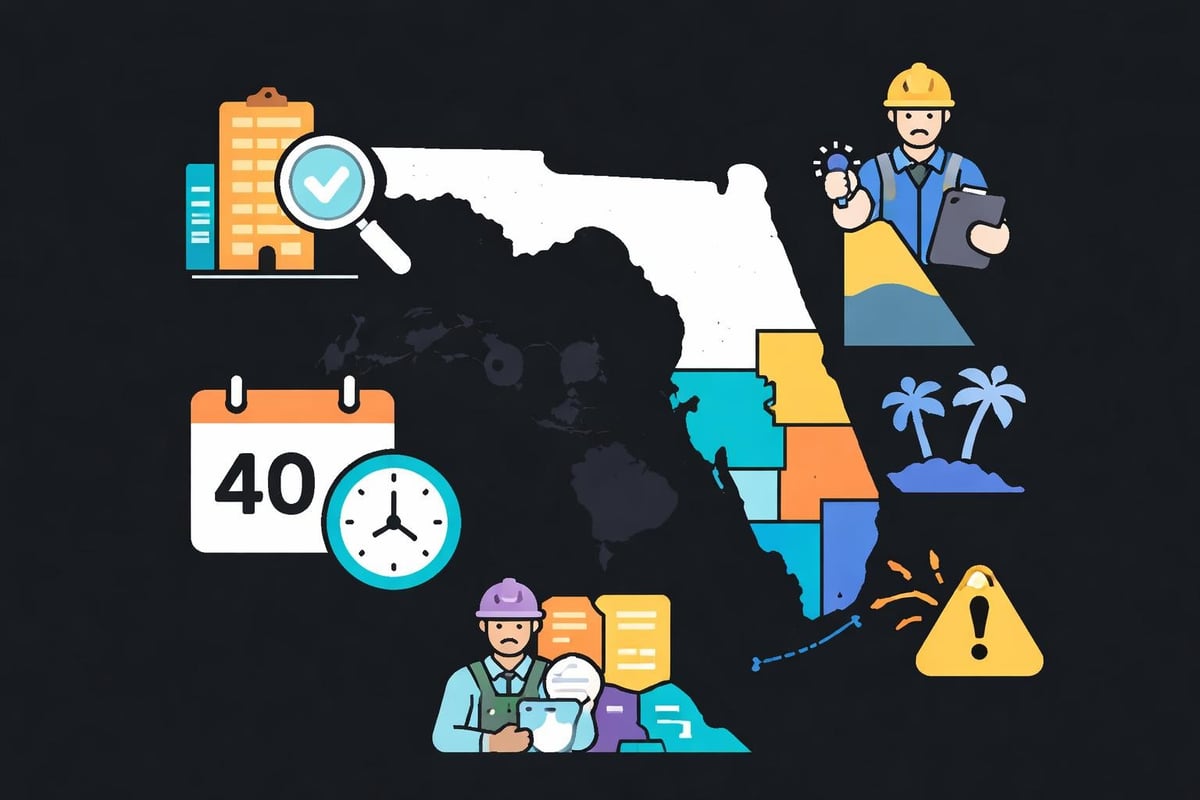
Not every building requires recertification. Florida law defines "threshold buildings" as structures greater than three stories or exceeding 50 feet in height, containing multiple dwelling units. Understanding whether your property qualifies requires careful examination of:
- Building height and story count: Measured from the lowest level of fire department access
- Occupancy classification: Residential versus commercial distinctions
- Original construction date: Determines initial inspection milestone
- Structural modifications: Major renovations may reset timelines
- Local jurisdiction requirements: Municipal ordinances may be more restrictive than state law
The City of Tampa's condominium recertification program exemplifies how municipalities implement these standards while adding local specificity. Property owners must consult both state statutes and local building departments to ensure complete compliance.
The Building Recertification Inspection Florida Process
Initiating a building recertification inspection Florida project involves multiple phases, each requiring coordination between property managers, engineers, and local authorities. The process typically spans several months from initial engagement to final approval.
Phase One: Engineer Selection and Engagement
Choosing qualified professionals is the foundation of successful recertification. Florida law mandates that inspections be conducted by licensed engineers or architects with specific credentials:
Required Qualifications:
- Active Florida Professional Engineer (PE) or Registered Architect (RA) license
- Specialized knowledge in structural systems and building codes
- Experience with similar building types and construction methods
- Errors and omissions insurance coverage
- Familiarity with local jurisdiction reporting requirements
Souffront Construction & Engineering provides comprehensive 40-year recertification services across Miami-Dade, Broward, and Palm Beach counties with the expertise necessary for complex assessments.
Phase Two: Comprehensive Structural Evaluation
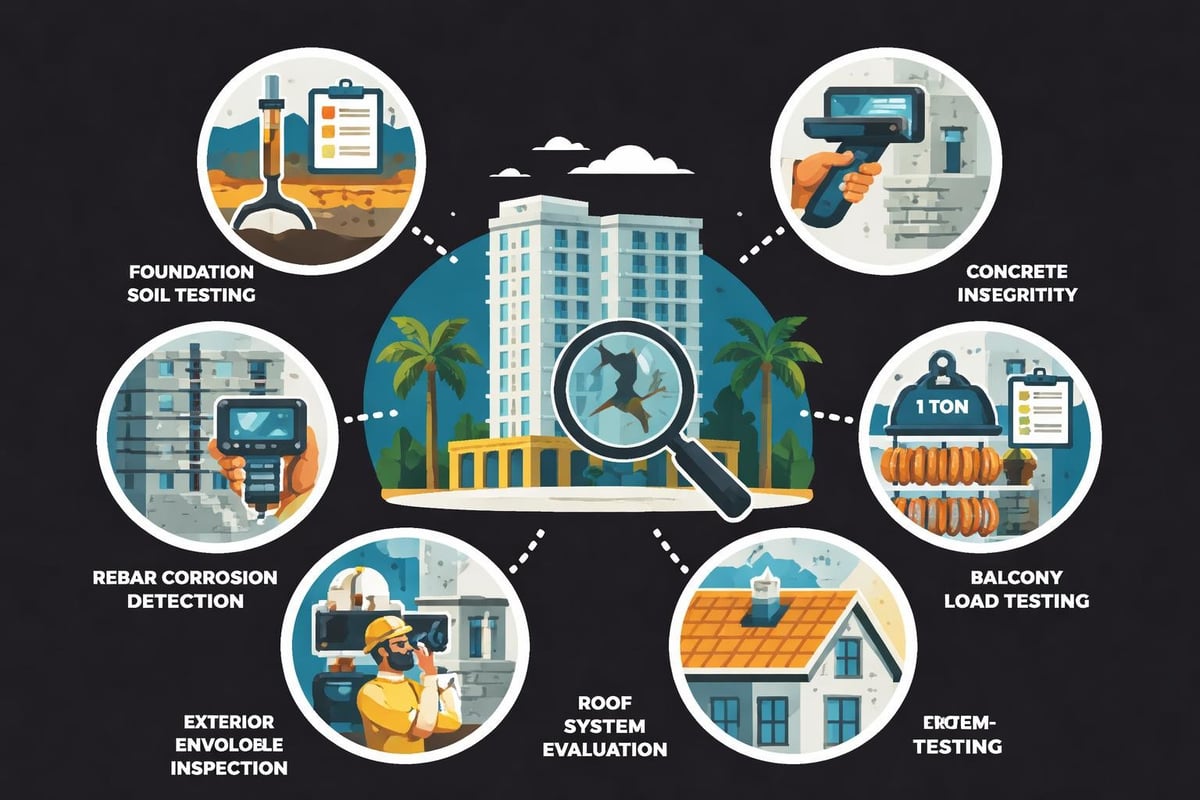
The actual inspection encompasses both visual assessments and invasive testing when necessary. Engineers evaluate critical building components systematically:
| Building Component | Inspection Method | Common Issues Identified |
|---|---|---|
| Structural Frame | Visual and Load Testing | Corrosion, cracking, deflection |
| Foundation | Soil boring, Ground penetrating radar | Settlement, water intrusion |
| Exterior Walls | Visual, Thermal imaging | Spalling, delamination, water damage |
| Roof System | Physical inspection, Core samples | Membrane failure, drainage problems |
| Balconies/Walkways | Load testing, Concrete coring | Rebar corrosion, structural weakness |
| Parking Structures | Visual, Hammer testing | Concrete deterioration, joint failure |
Modern technology enhances inspection accuracy. Thermal infrared imaging identifies moisture intrusion invisible to the naked eye, while concrete coring procedures reveal internal deterioration. The combination of traditional inspection methods with advanced diagnostics provides comprehensive property assessments.
Phase Three: Documentation and Reporting
Following field inspections, engineers compile detailed reports that serve multiple purposes. These documents must satisfy local building department requirements while providing property owners actionable information for repairs and budgeting.
Essential Report Components:
- Executive summary of findings and recommendations
- Detailed condition assessment by building system
- Prioritized repair recommendations with severity classifications
- Cost estimates for identified deficiencies
- Timeline recommendations for remedial work
- Certification statements and professional seals
- Photographic documentation of deficiencies
The building recertification inspection Florida report becomes part of the permanent building record. Property managers should maintain copies for association records, potential buyers, and future recertification cycles. Understanding 40-year recertification costs helps associations budget appropriately for both inspections and subsequent repairs.
Common Findings and Remediation Requirements
Building recertification inspection Florida projects consistently reveal specific deterioration patterns, particularly in coastal environments where saltwater exposure accelerates concrete degradation. Understanding these common issues helps property managers anticipate inspection outcomes and budget accordingly.
Concrete Deterioration and Restoration
Florida's subtropical climate creates ideal conditions for concrete deterioration. The building recertification inspection Florida process frequently identifies:
- Spalling concrete: Surface delamination exposing internal reinforcement
- Rebar corrosion: Oxidation causing expansion and concrete cracking
- Scaling: Surface flaking from freeze-thaw cycles or chemical exposure
- Structural cracking: Fissures indicating load distribution problems
Addressing these issues requires specialized concrete restoration techniques ranging from surface patching to complete structural member replacement. Engineers distinguish between cosmetic deficiencies requiring monitoring and critical failures demanding immediate remediation.
The difference between various concrete conditions matters significantly. Understanding the distinction between spalling and scaling helps property managers communicate effectively with contractors and establish appropriate repair scopes.
Waterproofing and Envelope Failures
Building envelope integrity directly impacts structural longevity. Inspections routinely discover:
- Failed expansion joints allowing water infiltration
- Deteriorated sealants around windows and penetrations
- Compromised waterproofing membranes on balconies and terraces
- Inadequate drainage systems causing ponding
- Damaged stucco or exterior cladding systems
Remediation often requires comprehensive waterproofing replacement rather than temporary patches. Property managers should consult with engineers about long-term solutions versus short-term fixes when developing repair strategies.
Navigating Compliance Timelines and Deadlines
The building recertification inspection Florida system operates on strict deadlines that property owners must respect to avoid penalties. Missing deadlines can result in significant consequences including fines, certificate of occupancy revocation, or even building closure orders.
Timeline Requirements by Jurisdiction
Florida counties implement different notice periods and grace periods for recertification completion:
Miami-Dade County:
- Building department mails notice 6 months before deadline
- Property owners have 90 days to submit initial inspection report
- Phase I electrical and Phase II structural reports required separately
- Extensions may be granted for active remediation projects
Broward County:
- Notice issued one year before recertification due date
- Initial report due within 90 days of receiving notice
- Conditional certificates available during repair periods
- Annual progress reports required for ongoing remediation
Other Municipalities:
- Timelines vary by local ordinance
- Some cities require earlier inspection triggers
- Coastal communities may have enhanced requirements
- Florida Senate analysis documents detail county-by-county variations
Planning ahead prevents last-minute rushes. Property managers should calendar recertification deadlines years in advance and begin engineer selection at least 18 months before mandatory submission dates.
Managing Extensions and Conditional Certificates
When inspections reveal significant deficiencies requiring extensive repairs, completing all work before deadline expiration may prove impossible. Most jurisdictions provide mechanisms for compliance during active remediation:
- Conditional Certificates: Issued when repairs are underway but incomplete
- Time Extensions: Granted for projects meeting specific progress milestones
- Phased Compliance: Allows critical repairs first, cosmetic items later
- Financial Hardship Provisions: Some jurisdictions offer payment plan options
Documentation is critical. Building departments require evidence of contractor engagement, permit applications, and demonstrated progress toward completion. Regular communication with local officials prevents misunderstandings about compliance status.
Cost Considerations and Budgeting Strategies
Understanding the financial implications of building recertification inspection Florida requirements helps associations and property owners plan effectively. Costs vary dramatically based on building size, condition, and required remediation scope.
Inspection Fees and Professional Services
Initial inspection costs represent the smallest portion of total recertification expenses, yet they're the unavoidable starting point:
| Building Size | Typical Inspection Range | Additional Testing |
|---|---|---|
| Small (<50 units) | $5,000 - $12,000 | $2,000 - $5,000 |
| Medium (50-150 units) | $12,000 - $25,000 | $5,000 - $10,000 |
| Large (>150 units) | $25,000 - $50,000+ | $10,000 - $20,000+ |
Additional testing including concrete coring, structural load analysis, and soil boring substantially increases inspection costs. However, comprehensive initial assessments prevent surprises during remediation planning.

Remediation and Repair Budgeting
The building recertification inspection Florida process often reveals repair needs exceeding initial expectations. Typical remediation projects include:
Common Repair Categories:
- Concrete restoration and spalling repair: $50-$150 per square foot
- Balcony waterproofing replacement: $15-$40 per square foot
- Structural reinforcement: $100-$300 per linear foot
- Parking garage restoration: $15-$50 per square foot
- Roof replacement: $8-$25 per square foot
- Painting and coating systems: $2-$8 per square foot
Reserve studies become essential planning tools. Florida's recent legislative changes mandate structural integrity reserve studies for many buildings, requiring associations to fund future repairs adequately. These studies project long-term maintenance needs and establish appropriate contribution levels.
Selecting Qualified Engineering Firms
The building recertification inspection Florida market includes numerous engineering firms, but expertise levels vary significantly. Property managers must evaluate potential partners carefully to ensure quality inspections and useful reporting.
Evaluation Criteria for Engineering Partners
When selecting firms for building recertification inspection Florida projects, consider these factors:
- Local Experience: Familiarity with specific county requirements and building departments
- Project Portfolio: History with similar building types and sizes
- Response Time: Ability to meet tight deadlines and communicate promptly
- Technology Integration: Use of modern inspection tools and digital reporting
- Restoration Capabilities: Access to qualified contractors for identified repairs
- Insurance Coverage: Adequate professional liability protection
- References: Verifiable track record with similar properties
Firms specializing exclusively in recertification work often provide superior service compared to generalists. They understand jurisdiction-specific nuances and maintain established relationships with local building officials, streamlining approval processes.
Questions to Ask Potential Engineering Partners
Before engaging an engineering firm for building recertification inspection Florida services, property managers should ask:
- How many recertification inspections have you completed in our jurisdiction?
- What is your typical timeline from engagement to report submission?
- How do you handle unexpected findings requiring additional investigation?
- What format do your reports take, and how detailed are recommendations?
- Do you provide cost estimates for identified deficiencies?
- Can you assist with contractor selection for remediation work?
- What happens if the building department requests report revisions?
- How do you communicate findings to board members and residents?
Transparent communication about processes, timelines, and potential outcomes indicates professional operation. Firms should provide clear engagement agreements outlining deliverables, timelines, and fee structures before beginning work.
Maintaining Compliance Between Recertification Cycles
Successfully completing a building recertification inspection Florida project provides temporary relief, but ongoing maintenance determines structural longevity. Property managers should implement proactive strategies to minimize deterioration between mandatory inspection cycles.
Preventive Maintenance Programs
Regular maintenance prevents minor issues from becoming major deficiencies. Effective programs include:
Annual Inspection Activities:
- Roof membrane condition assessment
- Drainage system cleaning and testing
- Expansion joint inspection and sealant replacement
- Concrete surface monitoring for new spalling
- Waterproofing integrity verification
- Structural crack monitoring and documentation
Detailed maintenance logs create valuable records for future recertification inspections. Engineers reviewing maintenance documentation can better understand building history and deterioration patterns, leading to more accurate assessments.
Technology-Enhanced Monitoring
Modern technology enables continuous building health monitoring between formal recertification cycles. Property managers should consider:
- Thermal imaging surveys identifying moisture intrusion early
- Structural monitoring systems tracking movement or deflection
- Digital documentation platforms maintaining photo records
- Cloud-based maintenance management systems
- Automated inspection scheduling and completion tracking
These tools transform reactive maintenance into proactive preservation, potentially reducing long-term costs while enhancing building safety.
Post-Inspection Action Planning
Receiving a building recertification inspection Florida report represents the beginning, not the end, of the compliance journey. Property managers must translate engineering findings into actionable repair programs while maintaining resident communication and financial responsibility.
Prioritizing Repairs and Remediation
Engineering reports classify deficiencies by severity, but property managers must balance safety requirements, budget constraints, and board priorities:
Repair Priority Framework:
- Immediate/Emergency: Structural failures posing imminent safety risks requiring immediate action
- Critical: Significant deficiencies requiring completion within 6-12 months
- Important: Moderate issues needing attention within 1-2 years
- Routine: Standard maintenance items addressable within normal budget cycles
- Monitoring: Conditions requiring observation but not immediate repair
Developing realistic implementation timelines requires collaboration between engineers, contractors, and association boards. Phased approaches spreading costs over multiple budget years may provide financial relief while maintaining safety compliance.
Contractor Selection and Project Management
Executing remediation work demands qualified contractors experienced with building recertification inspection Florida requirements. Selection processes should include:
- Verification of appropriate licensing and insurance
- Review of similar project experience and references
- Evaluation of proposed methodologies and materials
- Competitive bidding among pre-qualified firms
- Contract terms protecting association interests
- Payment schedules tied to completion milestones
Project oversight by qualified professionals ensures work meets engineering specifications and building code requirements. Many property managers engage their inspection engineer for construction administration services, providing continuity between assessment and remediation phases.
Building recertification inspection Florida compliance protects property values, ensures resident safety, and maintains legal standing with local jurisdictions. Understanding requirements, timelines, and best practices positions property managers and building owners for successful navigation of this complex regulatory landscape. Souffront Construction & Engineering specializes in comprehensive building recertification inspections throughout Miami-Dade, Broward, and Palm Beach counties, offering licensed professional engineers, advanced inspection technology, and streamlined compliance processes to help property stakeholders meet mandatory recertification requirements efficiently and effectively.